

Is It Legal To Do Your Own Electrical Wiring? Here's What To Know
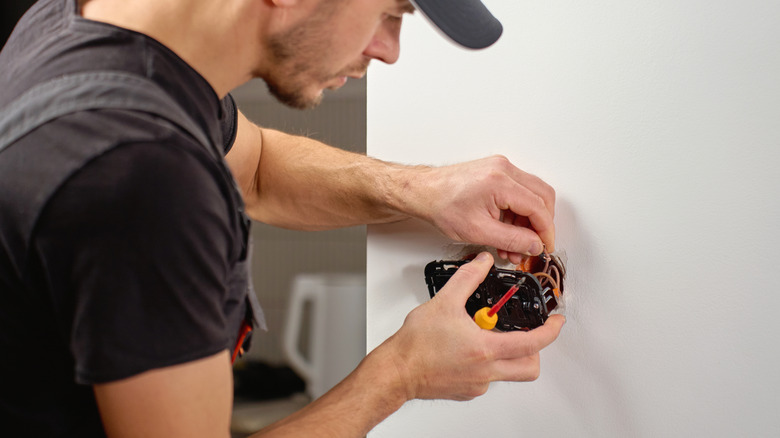
Electrical contractors are highly skilled individuals, and there are definitely some projects at home that you should leave to professionals. However, since the service call fee for the first hour is likely to cost a minimum of $100, then anywhere from $50 to $130 per hour thereafter, it's understandable that some people wonder whether they can save money by doing their own electrical wiring. The good news is that in most cases it is legal for you to do minor work inside your home. That said, it's important to look at the details that apply to your area so you don't unknowingly break the law.
First, let's assume you have the skills necessary. If you don't know the basics, like what the blue color means on electrical wires in your home, then you shouldn't do the wiring yourself — not just because of legal risks, but because you'd be putting you and your family's lives at risk. A fault could electrocute someone or start a fire.
What you can legally do very much depends on where you live. What is allowed in Colorado, for example, may not be permitted in Texas. It can even vary down to city level, so you'll need to check online or with your local permit office. In many states, you must be the homeowner, meaning you can't work on a rental property or the home of a buddy, even if they ask you. You will almost certainly need a permit, and you must follow National Electrical Code guidelines.
What electrical DIY you likely can and can't do legally
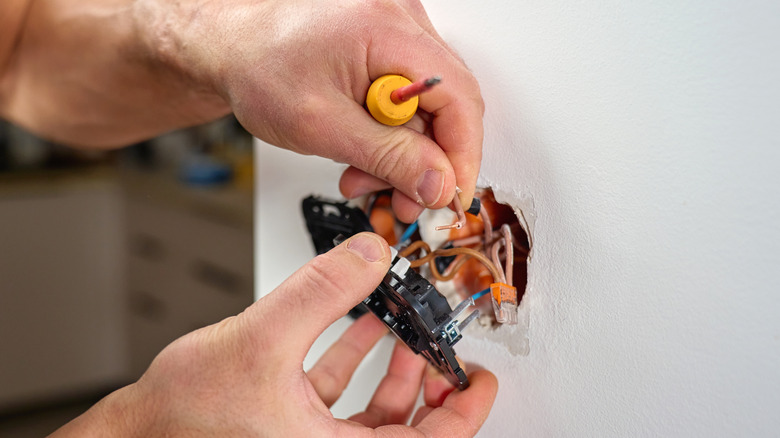
While reiterating that it very much depends on your location, generally speaking, it is legal to change things like lights, ceiling fans, outlets, and switches as long as you're swapping like for like. Bathrooms and kitchens may be off-limits, though, because of the presence of water. It is often illegal to add circuits or new wiring, or to tinker with your breaker box. Whatever you do will need to be inspected and signed off by local officials once it's finished. You can never work with the cables outside your home that connect it to the grid since those are mostly the responsibility of the utility company, although qualified professional electricians may be allowed to carry out minor works.
There are always people who say they did their wiring themselves and everything turned out okay. That may be true, but if illegal electrical DIY work is discovered, you could owe a fine, and you'll have to pay to correct your work. If there is a problem, your insurance probably won't cover it, and if a third party is injured, you could be sued. It will also be almost impossible to sell your home without remedial work and certification.
Not every job requires an electrician. For example, there are numerous ways to install exterior lights without hard wiring. However, a lot of the time it's worth paying a professional. The consequences of getting it wrong are often not worth the trouble.