

If You Are Planting A Clover Lawn, Here's Just How Fast It'll Grow
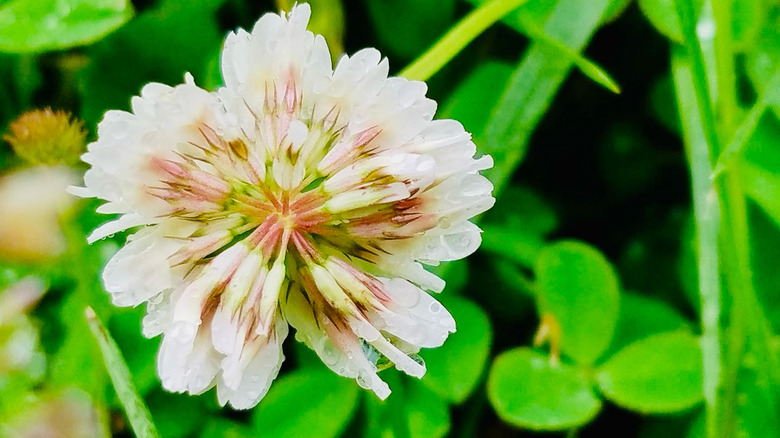
Swapping out a patchy, high-maintenance turf lawn for clover (Trifolium repens) sounds like an easy win — less mowing, less watering, and more pollinators. The catch is that most guides skip the part homeowners actually want to know before they commit — what the timeline really looks like once seed hits soil. Clover is a bit of a tease because it germinates and sprouts quite quickly, but its spread into actual lawn status is more gradual. Not to worry, because you can expect lawn establishment between 60 and 90 days after germination.
You may get excited when you see sprouts at 14 days or earlier but grow impatient as the new plants focus on developing complex root systems that will later help them fight weeds. Meanwhile, you're seeing sprouts here and there, minimal change above ground, and patchy spreading. If you've integrated clover into an existing lawn, the area will look lawn-like sooner. Check seed packets, as some clover varieties may establish faster than others, and your location also influences growing time.
If you're wondering if you should plant a clover lawn, know that the payoff for waiting for it can be highly worthwhile. Clover is drought-tolerant and retains moisture well. The plant can be effective against both runoff and erosion, is cushy to walk on, and even edible. It's an inexpensive ground cover that can deter rabbits from destroying landscaping. Clover's most useful trick is to grab nitrogen from the air and fix it in the soil, thus improving soil and reducing or eliminating the need for synthetic fertilizer. Even better, you can optimize clover's journey from seed to lawn with some easy care.
Nurture your clover lawn to help it establish in 90 days
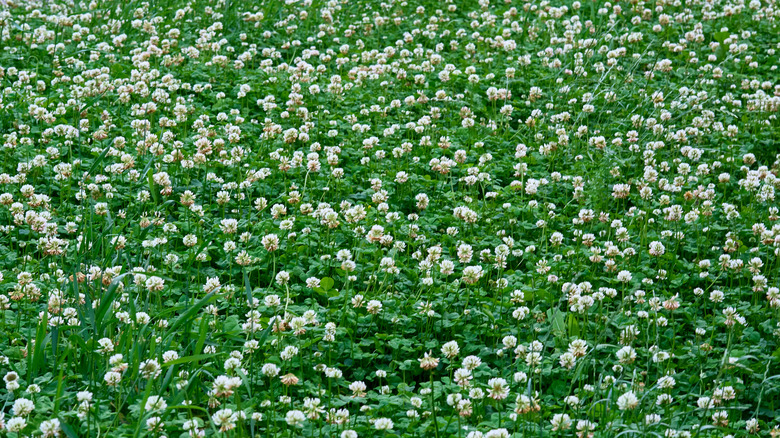
The best time of year to plant a clover lawn is in late winter or spring following your area's last frost date. For a new clover lawn, you'll need to clear the area of turfgrass, weeds, and debris. To integrate clover with an existing lawn, cut the grass as short as possible. Discard clippings and aerate your lawn before planting clover.
Soil temperature is key for germination, and needs to be at least 55 degrees Fahrenheit for seedlings to emerge. For even seed distribution, mix seeds with sand. Plant in full sun to partial shade. Seeds need solid contact with the soil to germinate; it's fine to broadcast them, but you'll need to walk on the seeded area or use a seed roller to press the seeds into the soil.
Give seeds a soaking watering after planting, and continue to water lightly but consistently during the germination period. To ensure timely lawn establishment, don't let the soil dry out. You should begin to see clover patches spreading to meet each other at one to two months of growth and the beginnings of a dense lawn at two to three months. If you plant in spring, you should be able to stroll barefoot through your soft clover by summer.