

Add This Common Pet Waste To Soil For Thriving Leafy Greens
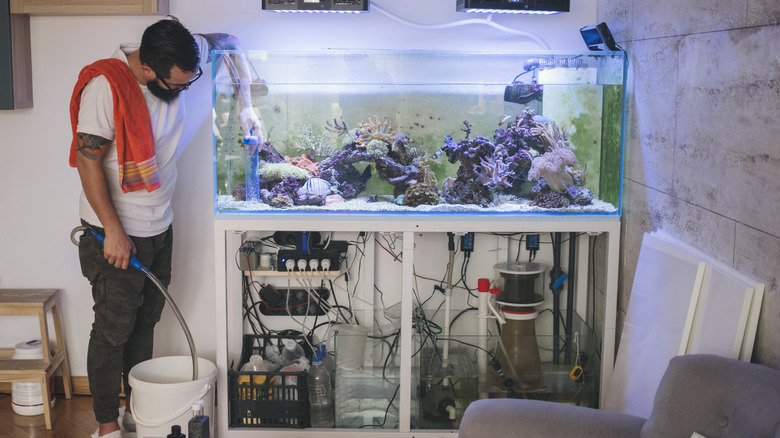
For the sake of our gardens, our energy bills, and the wider environment, we should all do better with our water usage. Even that bucket of murky water that you siphon out of your fish tank every couple of weeks shouldn't go down the drain. Instead, I use it to water garden beds that are growing leafy greens. You can use it for any other bed too, but leafy greens will really benefit from fish tank water. I'm a master gardener who specializes in permaculture, so any time I can reuse or repurpose something natural in my garden, I'm extremely happy.
While there are plenty of kitchen scraps you can use for thriving leafy greens, fish poop water is a uniquely excellent option. Even if it sound a little gross, it actually makes really good sense. It's the whole principle behind aquaponics, a system where where vegetables are grown in a hydroponic setup, but the water intentionally contains fish. This is because fish waste is very high in certain nutrients that plants crave. Fish produce ammonia and once a tank is cycled, a healthy balance of bacteria converts the ammonia into nitrite and then nitrate, which feeds plants. Therefore, the fish tank in your living room contains lots of nitrate (a compound of nitrogen and oxygen) that your plants will benefit from. It's not, however, as strong as the nutrients in an aquaponics system because those systems use far more fish per gallon than the average household fish tank. Regardless, your leafy greens will be happy to receive both the water and the nitrogen boost.
Why use fish tank water on leafy greens and not other veggies?
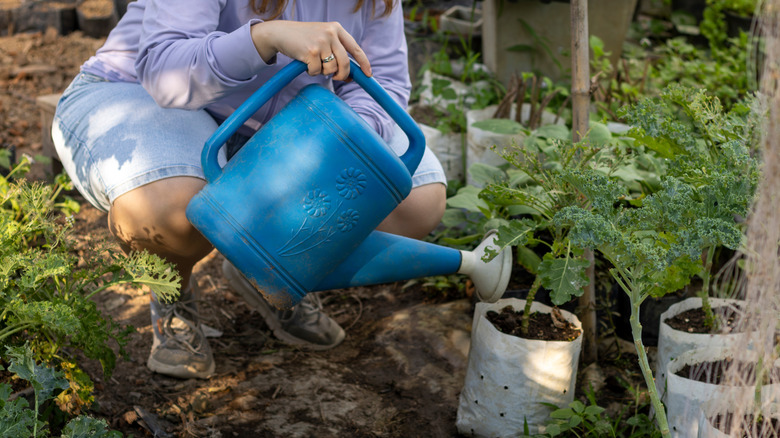
Water from your fish tank will benefit pretty much any plant, but to put it simply, you grow leafy greens for their leafy greens. Fish tank water contains nitrogen, which is precisely what fuels such lush, verdant growth. A steady supply of nitrogen builds leaf volume and the depth of color in leafy green vegetables, including chard, lettuce, collard greens, spinach, cabbage, kale, and more. With plants like cavolo nero, which is a black kale and one of my favorite leafy greens, you can achieve a really deep green-to-black coloring and large, thick leaves with the help of a little fish water.
Fish tank water is so wonderful because it contains a nice supply of nitrogen without being overwhelmingly strong. Applying too much nitrogen is a fertilizer habit many gardeners overlook. Even for plants like leafy greens that are hungry for it, excess nitrogen can cause problems like too much rapid leaf growth, sacrificing flavor and quality. Water from your fish tank is a great compromise. Do remember though that fish tank water is not a complete feed. It's a weaker version of an aquaponic set-up, and even in those systems potassium, iron, and calcium, among other nutrients, are added separately, as the fish waste doesn't provide these in significant enough quantities.
When you should avoid using fish tank water
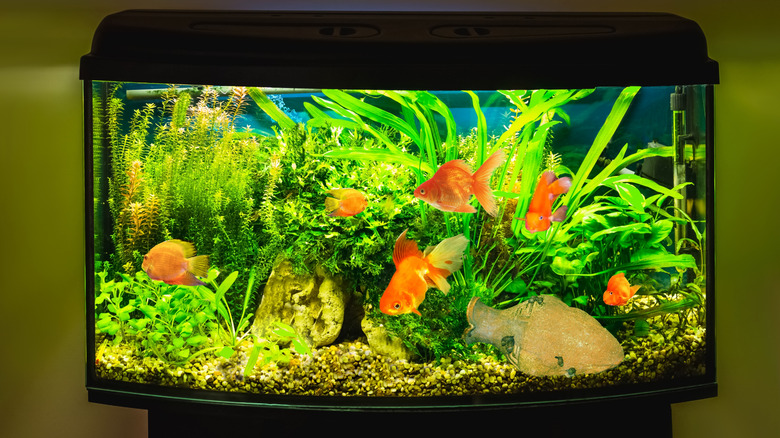
It's important to know when to apply fertilizer to your leafy greens — and when not to. If you are treating your tank for anything, don't use the water in the garden. Whether you're treating fin rot, a parasite, or an algal bloom, adding chemicals to your tank introduces unknown substances into the water. While the treatment might be necessary to keep your fish tank and its inhabitants thriving and healthy, you don't want to introduce those same chemicals into your garden.
Copper, for example, is common in treatments for algae and some parasites because it's effective and doesn't discolor the water. However, you don't want copper accumulating in your garden beds, where it stays in the surface layer and doesn't wash away like many other soluble nutrients. In excessive amounts, copper can overwhelm a plant and stop photosynthesis. If I'm dealing with an issue in my tanks that requires chemical intervention, I don't use the water in my garden for at least three months. Just changing the water once won't get rid of it from the tank. It can cling to gravel and decorations and leach back out into the water weeks later, so I'd recommend at least three tank changes before using the water in a garden bed.
Salty setups are a no-go too. If you have a saltwater marine tank, then empty your water safely down the drain and don't use it in the garden, as you really don't want a buildup of salt in the soil. This advice isn't just for marine tank owners either. If you have a fresh water aquarium but you dose it with aquarium salt as a general tonic, again you will need to discard your water rather than reusing it in the garden.