

Can You Pressure Wash A Rug?
If you're looking to transform a living area in your home, a rug is a simple but effective way to add style, depth, and fill what might be considered an empty space. Depending on the rug you go with, it can be a significant investment, and so how it is maintained becomes important. If your rug is in a high-traffic area, dirt will build up over time, which means it will need a good clean.
Outside of the dust, sand, and other bits and pieces that come into your home, there are other reasons to give your rug a solid wash. Over time, it will become home to a few unwanted critters, like dust mites, fungi, and fungal spores, which is good for neither you nor the kids. If that's triggered you and you're about to take your rugs outside and set them on fire, there are cleaning methods that will get rid of both the dirt and the nasties that have set up home. One way that some people consider is to use the high-pressure method, but is it safe to pressure wash a rug?
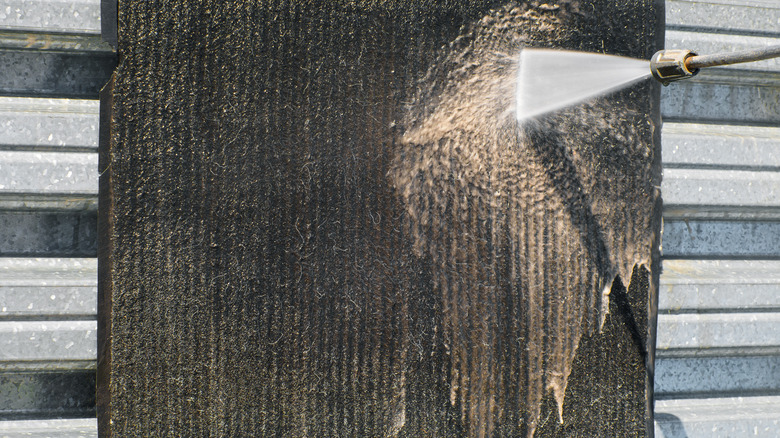
The great benefit of using a pressure washer (also called a power washer) is that the water gets down deep into the material, forcing the dirt and grime out. What's important to note first, though, is that you can't use a pressure washer on just any old rug. The force of the water can cause damage to fibers and cause them to break down, or the color of the rug can bleed. So, which rugs can you pressure wash safely?
Synthetic vs. natural fibers: Knowing which rugs can take the pressure
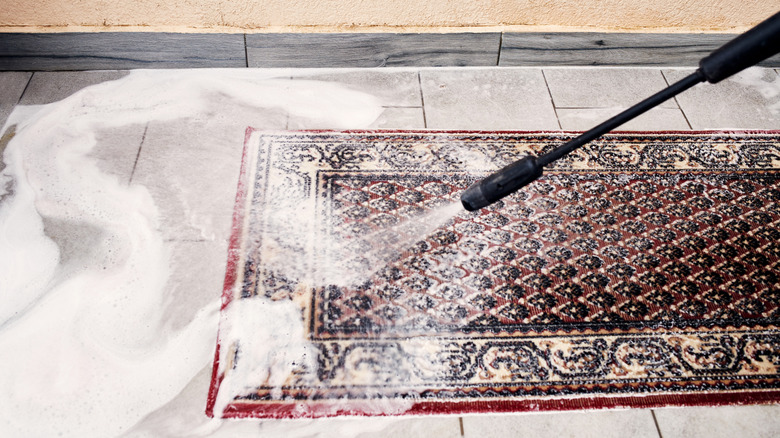
You'll find rugs made of a variety of materials, with each one having its own pros and cons. Rugs come in cotton, wool, nylon, polyester, polypropylene, and sometimes a blend. The good news is that you don't have to get the most expensive rugs on the market to be able to pressure wash them — the opposite, in fact. If you've inherited Grandma's rug that was passed down to her, the one made with silk, wool, or any other natural fiber, you'll want to steer clear of using a high-pressure washer. This is because they come with a lot of power, and when you force jets of water at high pressure onto the delicate natural fibers, you can damage them. For rugs made of natural fibers like wool or silk, you're better off using a professional cleaning service or simply hand washing them, if the label tells you that it's okay.
Where you can use a power washer is for rugs that are made of synthetic materials that can handle the pressure. We're talking about those made with polyester, polypropylene, or other synthetic materials. You'll often find outdoor rugs are made with these fibers so that they can handle the added moisture that they're exposed to. As they're outside, they'll often get exposed to the most dirt as well. So, before you grab the pressure washer, make sure that it's a synthetic rug, and you should be good to go. Just check the label first to make sure the colors won't run.
What ways can you clean a rug made with natural fibers?
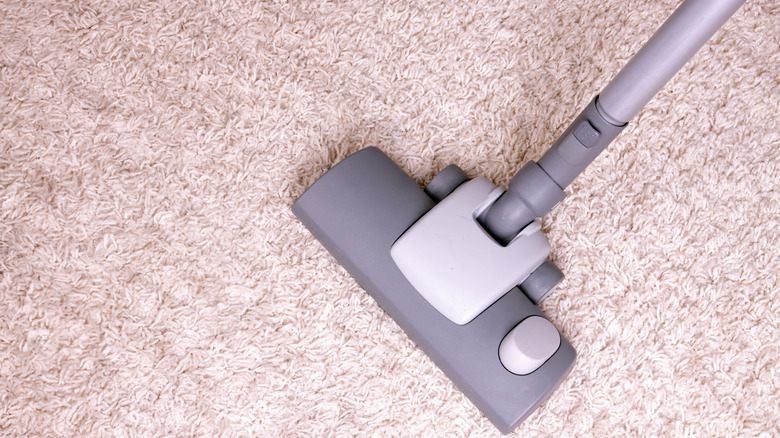
Now that you know pressure washing is pretty much off limits on rugs made with natural fibers, what other cleaning options do you have available? Sure, you can send it off to a professional rug cleaner to get the job done, but that often comes with a hefty price tag. It's also not ideal having to cart around a dirty rug and then have to go back and collect it. There are a few DIY natural rug cleaning hacks that can get the job done that don't involve any harsh chemicals or hours of labor. To start, with a natural fiber rug you'll want to make sure that you vacuum it often to avoid dirt and other bits and pieces building up over time. This isn't only important to avoid the dirt damaging the fibers, but it also makes cleaning up any spills far easier.
Even with a well-vacuumed rug, at some point that much-dreaded spill is going to happen. Speed will be key here. Avoid the urge to douse it with dish soap and water, but rather get a dry, clean cloth and blot the area where the spill is. Whatever you do, don't rub it around. The blotting will soak up the spill where it has collected. For stains that persist after the blotting, you can make a homemade stain removal solution by mixing one teaspoon of white vinegar with one teaspoon of detergent and adding two quarts of tepid water. Mix it up and then use a clean cloth to blot the stain until it's gone. Again, avoid rubbing it.