

What The Color Red Means In Flower Beds (& It's Not Just Love)
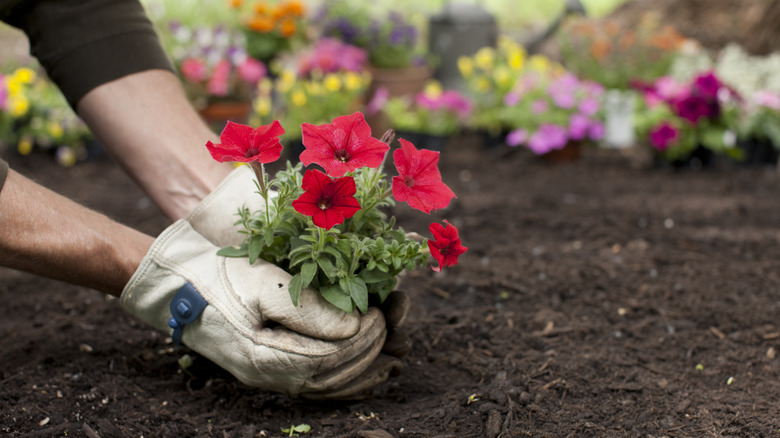
Red is a color that's absolutely drenched in meaning, but across cultures and time periods, our impressions and associations with it are far from uniform. It makes sense — after all, the color's striking appearance in nature can evoke a wide range of reactions. From warning signs to fresh fruit, blood to autumn leaves, red feels almost contradictory. One thing remains consistent, though: its intensity. Red is a bold choice no matter how you perceive it, but if you're trying to plant a garden with deeper meaning, learning more about this shade's common cultural associations can allow you to create a display that others will feel, too.
In Western cultures, red is most commonly tied to love and romance, but it also carries associations with anger and danger. Across the entire color spectrum, it's the shade that has the deepest tie to the idea of passion. Not everyone has the same perspective, however — in East Asian and some Middle Eastern cultures, red is seen as lucky, symbolizing prosperity and success. In India, it's a symbol of femininity and fertility, often finding its way into weddings. In some African cultures, it's seen as a color of mourning and bloodshed.
Things become even more layered when we consider the meanings behind individual kinds of flowers, whether that's through interpreting Victorian flower language or exploring the long-held traditional symbolism behind these plants. One thing's for sure, though — whichever message you compose, there is a wide range of red flowers that will look stunning in your garden.
Which red flowers should you plant?
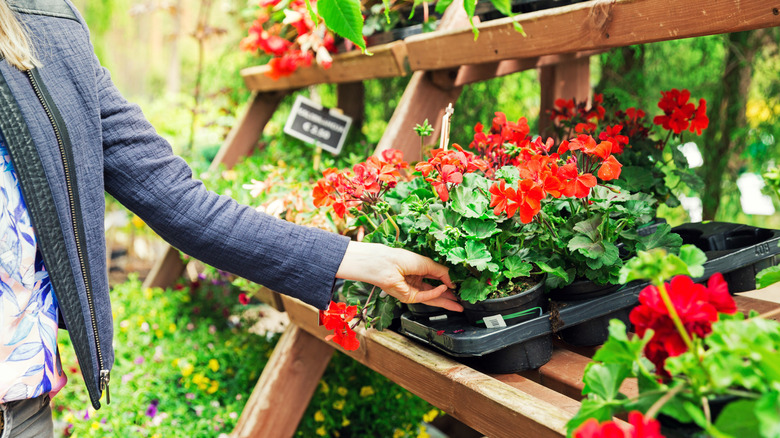
Before you start picking flowers for your garden, it's necessary to consider a few things. Nail down your desired theme, and learn more about your USDA growing zone and local growing conditions, such as soil, sunlight, and moisture. You'll only get gorgeous, crimson blooms if your plants are healthy, and that process starts with choosing flowers that have a higher chance of thriving in your space.
If you decide to lean into the Western perspective of the color red, consider choosing flower species that also have ties to love and passion. Red roses, chrysanthemums, carnations, tulips, and asters all fall into this camp in the world of Victorian flower language. They can also be paired with other-colored flowers with similar meanings — think daisies, yarrow, and heliotrope. The Indian perspective on red can be bolstered by opting for flowers that are associated with femininity. Red roses work here as well; hibiscus is also a good pick. Potential pairings in other colors include jasmine and speedwell, but orchids and lilies are great if you're focusing on the fertility aspect.
Looking for luck? There are also plenty of red picks to achieve this. Chrysanthemums, orchids, peonies, anthurium, and gladioli are popular picks for Chinese New Year celebrations that can be found in red shades. Pair them with narcissus, goldenrod, or even clover (if well-controlled) for a multi-tonal display. Finally, there's the symbolism of mourning. Deep crimson roses would be beautiful in a memorial garden — pair them with other flowers that tie into African traditions of mourning, like marigolds and lilies, to create a space that honors grief while celebrating life.