

The Ancient Fruit Tree Most Gardeners Have Never Heard Of
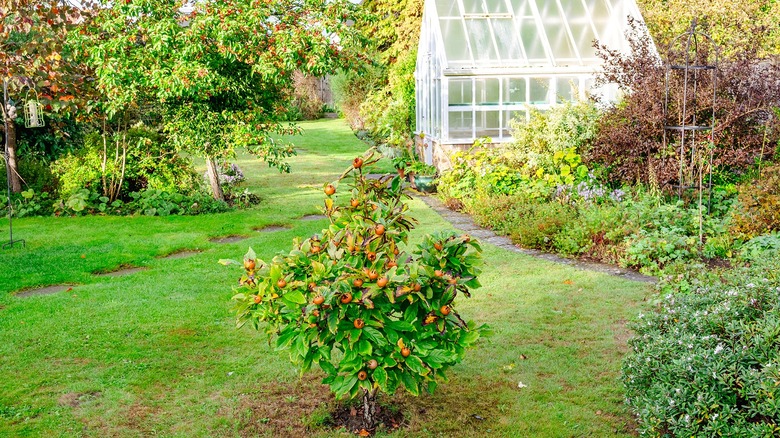
Ready to take your taste buds on a trip back in time? By planting a medlar (Mespilus germanica) tree in your garden, you can do just that. This ancient fruit tree has been around for thousands of years, with its origin most likely starting in southeastern Europe and/or southwestern Asia.
Some highlights from medlar's history include being grown in ancient Greece and Rome, planted through Charlemagne's empire, and referenced in Shakespeare's work (e.g., "Romeo and Juliet," Act 2, Scene 1). Today, these trees are nowhere near as popular as they were in medieval times, and they're also relatively unknown in the United States, which is why this is maybe the first time you've ever heard of them.
Here's more on them. Did you know medlar trees belong to the rose family (Rosaceae)? Also, they are considered a pome fruit, a group that includes apples, quinces, and pears. The fruit is quite unique, both in terms of taste and appearance. Some people who've tried it say it's somewhat similar to applesauce with hints of cinnamon. Will Bonsall, writing in 2014 for the Maine Organic Farmers and Gardners Association, reported, "One comparison to baked spiced applesauce is much closer to my experience."
Because of its unfamiliarity here in the U.S., a medlar is likely among the trees you didn't know actually produced edible fruit. But here's another fact: It also produces gorgeous flowers. In late spring, large white or pale pink blooms will come to life on the branches. Once autumn rolls around (in October or November), the leaves turn gold or reddish-brown, and the fruit becomes ready for harvesting. Though they won't be ready to eat quite yet; they'll need to go through "bletting" first.
What to know before growing a medlar tree
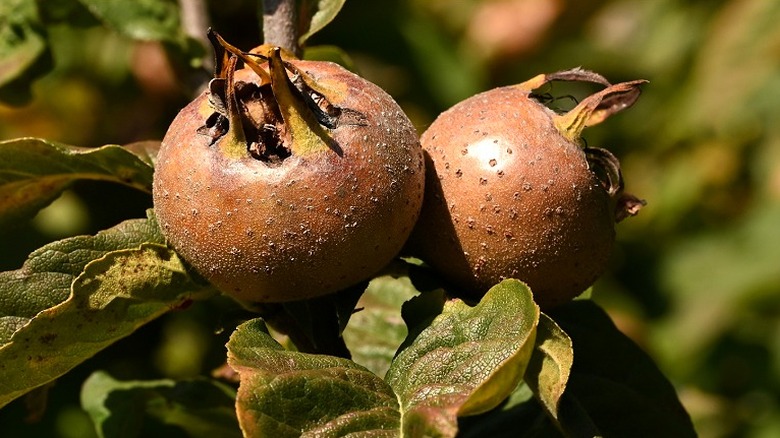
First things first: Can you grow medlars in your garden? It depends on where you live. These trees grow best in hardiness zones 5 to 9. Assuming you're in one of the places where medlars can survive, your next step is buying one to plant in your yard. You can find several cultivars — including 'Nefle de October' and 'Dzevera Garde' – from nurseries and garden centers. Medlar trees thrive in full sun (but can grow in partial shade if necessary) and well-drained soil.
Medlars are self-fertile, so they don't require any cross-pollination, and you won't need to plant multiple trees to produce fruit. That's great news if you only have room for one in your yard. Keep in mind, though, that some medlars can get up to 20 feet tall, so a medium-sized tree.
Even though you can pick the fruit in October or November, as mentioned, they won't be ready to eat right away. Instead, medlars need time for "bletting," or softening, which involves leaving the fruit in a cool, dry place for two to three weeks until it ripens. After that, it'll become soft and sweet, but a heads up, it'll also turn brown and may appear rotten.
If you're willing to look past that, there are a couple of ways to enjoy the fruit. One option is to discard the skin and seeds and simply eat the uncooked flesh as you would any fruit. Other ways to enjoy medlars is to make medlar jelly for your toast, turn it into fruit cheese using the medlar pulp, or use it as an ingredient in a pudding like medlar sponge pudding or medlar sticky toffee pudding. (Discover tips and tricks to help your fruit trees grow and produce faster.)