

Climbing Vs Hanging: How To Decide How To Grow Your Pothos Plant
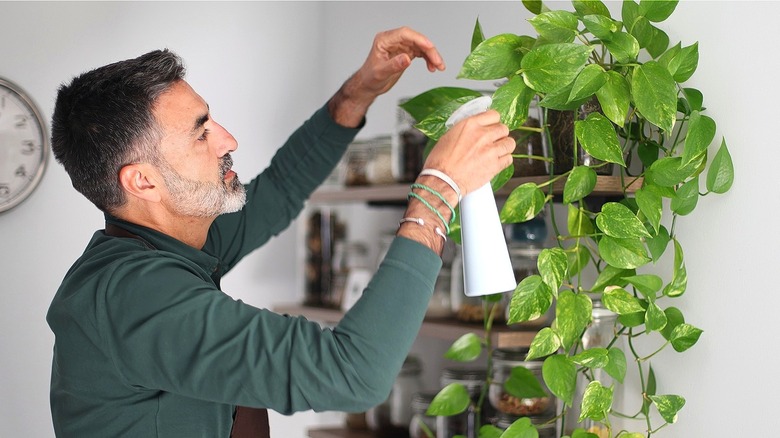
Pothos are one of those incredible houseplants that are so low maintenance you can forget you even have them. And they look good no matter what direction they're going in — you may have some long dramatic vines falling from a shelf, or you may have one on the floor growing up a moss pole. The decision to grow your pothos one way or another really just comes down to what you prefer, the amount of space you have, and how much training you're willing to do, as the plant itself is happy either way.
With that in mind, there is something to be said from a natural perspective about letting pothos climb. Pothos (scientifically known as Epipremnum aureum or colloquially as devil's ivy) are more than happy to hang, but in the wild these tropical vines use their aerial roots to climb up tree trunks in the forest. When grown indoors, the plant will use those same roots to attach itself to whatever support you provide, turning into an upright vertical plant that looks quite different to its hanging counterpart.
Hanging, on the other hand, is what pothos will naturally do without any support. With long stems that can actually reach up to 10 feet, turning pothos into a hanging plant with trailing vines is certainly a striking feature for your home. And it's an easy-to-grow choice as well; you can end up with a lush curtain of foliage that works as a wall feature or a door alternative that brings the garden indoors without having to think about maintenance or support because you can just let gravity do its thing.
How to train a pothos to climb indoors
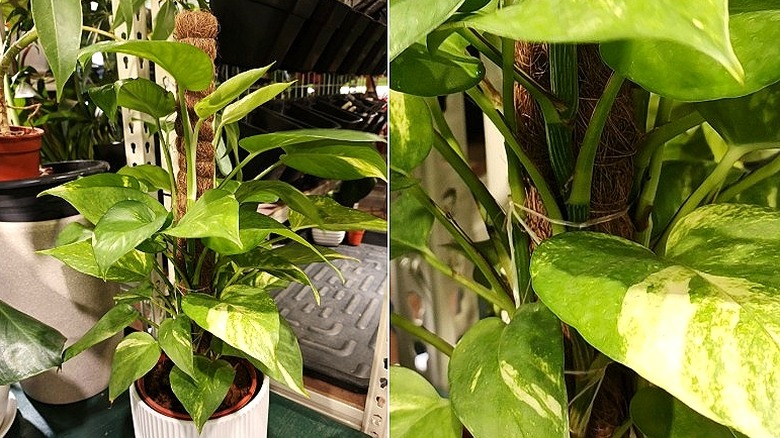
If it's a climbing pothos you're looking for, you need to guide your pothos into position first. Place a moss or coir-covered pole near the plant, and then gently secure any runaway vines to the pole with twine (above right image), twist ties, or plant Velcro while the vines establish themselves against it. If using a moss pole as a climbing support, keep it damp; this will create an environment similar to how the plant grows in the wild. The pothos will attach its aerial roots to the pole, just as it would to a tree.
Given that this is the houseplant's more natural state of being, there's also a belief that training them to climb like this can net you bigger leaves on a pothos. While supports like a trellis, wire, or wall hooks will work also, the vines will need to be attached (tied or hooked) the entire time.
But if you're still feeling quite indecisive between trailing or climbing, there's always the fabulous third option: adopt both approaches. You can let some vines climb up a support and others trail off the sides of the pot. Truthfully, pothos plants are wonderfully unfussy about styling. Whichever direction you choose, the same basic principles of care apply.
While pothos are low-maintenance plants, if you want them to really thrive, then keep them in bright, indirect light (avoiding harsh direct summer sun) and let the top of the potting mix start to dry out before watering again. (Check out other popular house and garden plants that thrive on neglect.)