

Is It Okay To Hose Down An AC Unit?
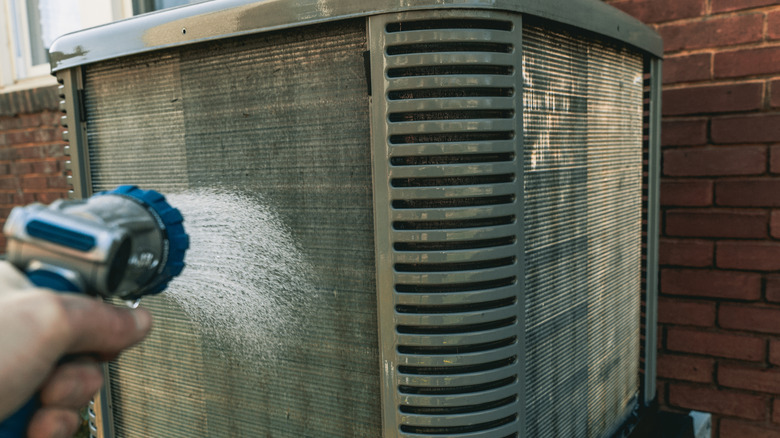
We should all know by now that a bit of dusting, scrubbing, and wiping can help keep our homes in working order. Yet while you're degreasing your stove or removing dryer lint, there might be some appliances you're forgetting to clean. Namely, your air conditioner. Swapping out the filter regularly is an important maintenance step, but most of us don't interact with the actual unit often, if at all, unless something is going wrong. Thankfully, cleaning your outdoor AC unit is a fairly simple process, and yes, it is safe to hose it down — just be sure to turn the power off and let the unit dry before turning it back on.
It's understandable to be wary about drenching your AC with water, but outdoor condensers are designed with regular exposure to the elements in mind. While it isn't always necessary to completely soak every part of the unit, a simple garden hose can be a valuable tool for removing stubborn buildup and dirt that naturally collects over time. Of course, there are some limitations to this — shutting off power to your AC can help to reduce any electrical risk and ensure that things don't start moving while you're cleaning. Additionally, you should never use a power washer on your air conditioner. It might seem like a more efficient solution, but the high water pressure can cause the condenser's delicate fins and coils to bend and leave you with more problems than you started with. Finally, you'll want to make sure you're cleaning at a time that's optimal for drying. You should always wait until it's fully dry to power it back up, and if it's cloudy, rainy, or particularly humid outside, this could take a while.
Why should you clean your AC unit?
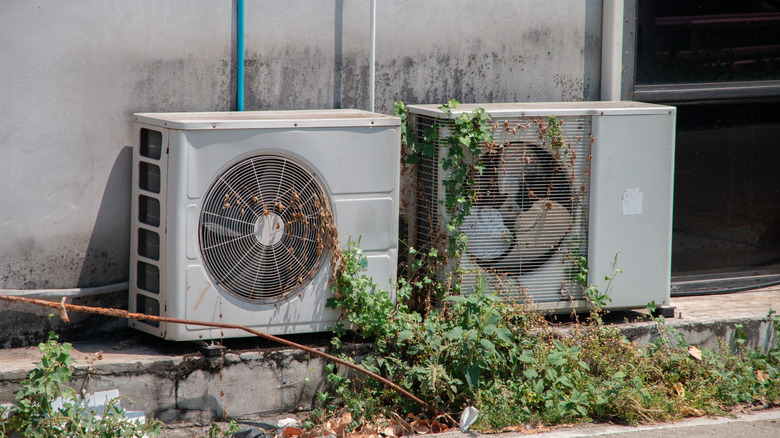
Thanks to the fact that it's out of sight, cleaning your AC unit regularly can easily end up at the bottom of your to-do list. Don't let it fall to the wayside, no matter how tempting — it's an important task if you want to prolong the life of your HVAC system. Dirt, dust, and debris buildup can greatly reduce the efficiency of your air conditioner, causing it to work much harder to maintain a comfortable temperature. This can lead to spikes in your electricity bill in the short term and increased wear and tear on the internal components over time. If you don't want to have to buy a new unit after a few years, schedule regular tune-ups, change your filters, and keep everything clean.
There's also the consideration of air quality — if your unit is attempting to pull in outdoor air through layers of dirt, grime, and mildew, some of that is going to naturally find its way into your home. Sure, that might just mean a touch more dust here and there, but in severe cases, your AC unit might be secretly making you sick. Mold and bacteria can multiply on a unit that's dirty and flow through your home, and increased levels of dust can trigger allergies for those who are sensitive. While an air purifier can act as a band-aid for this problem, long-lasting change necessitates a deep clean right at the source.