

What Is The 1/3 Rule For Hydrangeas To Encourage Growth?
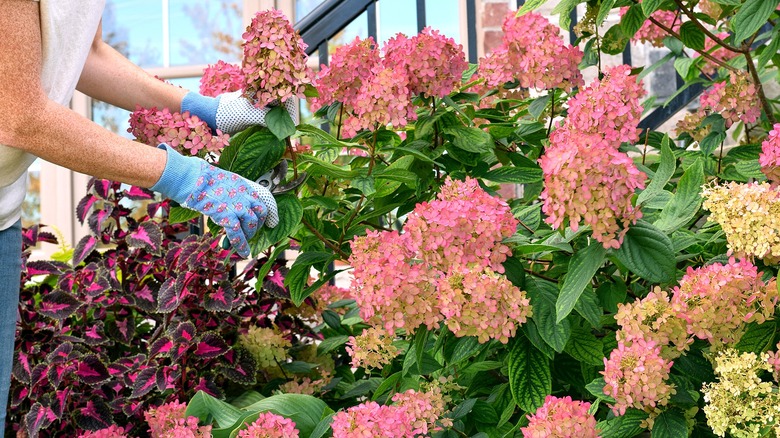
While pruning most flowering shrubs isn't all that difficult, with hydrangeas, you need to know what type you have so that you get it right. For example, pruning them at the wrong time of the year is one of the crucial hydrangea pruning mistakes to avoid if you want to see big blooms the following season. One rule you may have heard of is the one-third rule. This rule applies to those specific species that bloom on old wood, like mophead, oak leaf, big leaf, and lacecap varieties. Basically, the rule states that you should cut around a third of the oldest stems down to the ground to encourage lots of new growth.
If you have been growing one or more of these old-wood bloomers, you'll know that they need to be pruned immediately after they've finished flowering, which is usually early summer. By removing some of the older stems while still maintaining around two-thirds of the overall growth, the plant still has plenty of old wood left to produce the following year's blooms, but doesn't become too overcrowded, so that new stems can be produced.
These new stems will then become next year's old wood, and so the cycle continues with the plant being continuously rejuvenated without losing those stunning blooms. If you're not entirely sure which type of hydrangea you have, as a general guide, those that flower in spring are blooming on old wood and those that flower over summer are blooming on new wood.
The 1/3 rule for new-wood hydrangeas
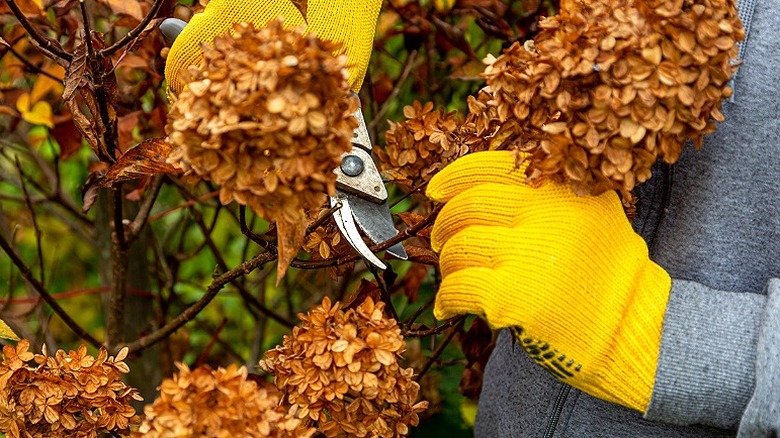
New-wood bloomers, like panicle hydrangeas, are pruned differently because they bloom on new wood. These are the only types of hydrangeas you can prune in the fall, but they can also be cut in late winter or early spring (around February or March) because you won't be removing any flower buds.
Although you could prune these varieties down to the ground, if you're after a plant that is sturdier and produces more upright stems, you may want to only cut back one-third of the plant each season. This means that the old wood at the base will remain and grow thicker and stronger each year. Taking off no more than a third of top growth is actually recommended for many other types of flowering shrubs, too, besides new-wood hydrangeas. Plus, this approach is the best way to prune hydrangea plants suffering from winter damage.
In comparison, the new stems that will produce the flowers will be much thinner and will need the support of the thicker stems further down, so that they can hold up those lovely large blooms. On the other hand, if you did cut these varieties down to the ground each year, you would end up with long, thin stems that would need to be staked to keep them upright and off the ground.