

How To Clean Solar Panels (& When You Need To)
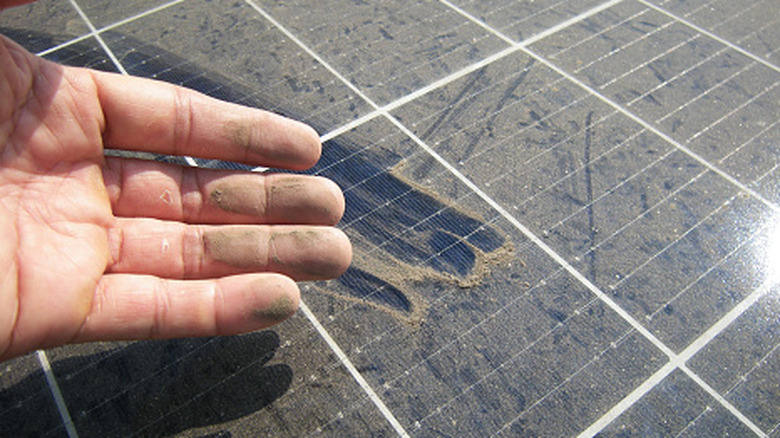
There are plenty of easy ways to make a more eco-friendly home. But if you want to make that home one where you rely more on Mother Nature than your local electric company, solar panels are a must. While they do come with an initial investment, a solar panel system will pay itself off while helping you embrace a green living lifestyle. But such a system will inevitably require some maintenance. While there are no oil filters to change like a car, you'll still have to worry about dust, pollen, bird excrement, dirt, and pollution settling on the panels over time. A new solar panel with its shiny cells looks great, but when a film of debris builds up, they can become quite an eyesore.
There's more to it than just how it looks, though — a dirty solar panel will also lose power. When your solar panels get dirty, the amount of sunlight that is allowed to reach the photovoltaic cells will become limited. This causes less power to go into the system. If your panels are mounted on your roof, you may not even become aware that the system isn't functioning at 100%, which is why it's important to grab a ladder and check them every few months. If your solar panels are visibly dirty, there are simple ways to can clean them that don't involve calling out professionals. All you'll need is a long hose plugged into a water source, a soft brush or mop, and some dish soap.
Cleaning your solar panels yourself
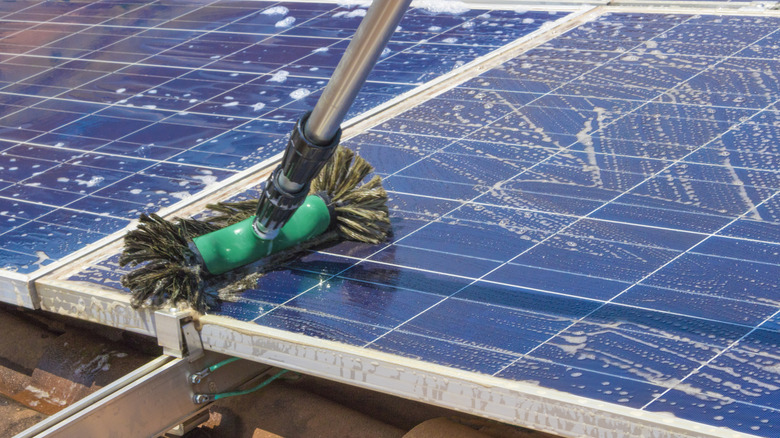
Before you start to clean your solar panels, it's important to understand the difference between tilted and flat solar panels. While their function is more or less the same, how they are angled becomes important in the context of solar panel cleaning. Solar panels fitted at an angle on a roof, which are designed to capture more sunlight, will require less cleaning than those that are installed horizontal. This is because rain, wind, and gravity will naturally clean some of the debris off of angled solar panels. With flat panels, especially if they're horizontal, dirt and rainwater can pool on them, limiting their effectiveness. Whether your panels are flat or angled, the cleaning process remains more or less the same.
Once you've checked your panels and found that it's time for a clean, make sure you're in a safe position to take care of them without hurting yourself. Then, use a soft brush, broom, or mop to gently remove leaves and other larger debris off the panels. Give the panels a thorough rinse with a hose for dust and other dirt that has accumulated over time. Don't use a high-pressure hose at its maximum setting, as the power of the water can damage the system. For stubborn debris, like bird excrement and tree sap, mix up some water and dish soap, and give the panels a light clean with the soft brush. Once you're done, rinse them off with the hose. If you have flat panels and find that water has pooled after cleaning, use a large cloth or towel to dry them off.
Important factors to consider when cleaning your solar panels
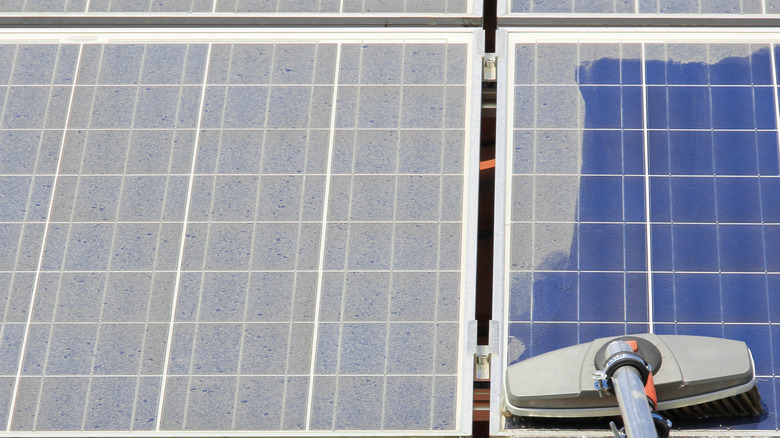
The very top layer of most solar panels is made of tempered glass. If you are overly aggressive with the cleaning process, you can scratch the surface of the panels, which can permanently damage them. It's the same with the cleaning agent you go with. Harsh chemicals will cause havoc with these systems, not only to the tempered glass but to other components as well. It's best to stick with simple dish soap, water, and a soft brush — or you can use a certain WD-40 product to keep your solar panels clean and efficient.
Even with a soft brush, make sure that you use it carefully, not being aggressive as you clean each panel. When you do get up close to the system, it's always a good idea to look for any damage that might have occurred. Falling branches, birds, and materials blown into them during a strong wind can damage the panels and the various components connecting them to your solar system.
In terms of how often you should clean your panels, this depends on a few factors. If you live in a dusty area, where dirt is likely to settle on your panels in higher volume, it's a good idea to check them every three months or so. For your standard suburban home, it's advised to clean them at least twice a year. If you watch the panels regularly and clean them when needed, you'll be in the best position to keep your solar panels running efficiently.