

Boomers Are In Agreement: This Cozy, Functional House Trend Needs A Comeback
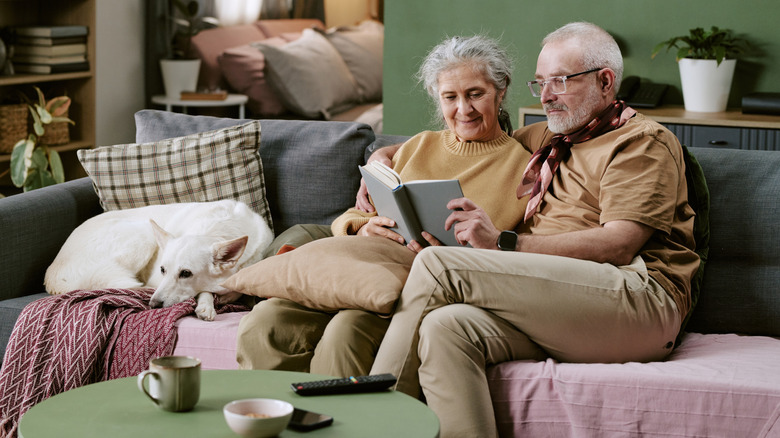
There are some home decor essentials you'll likely find in any boomer's home. For instance, you might notice pieces from the person's youth that carry a story or two. However, home design for this demographic isn't just about nostalgic objects. Boomers crave spaces that feel cozy and functional. Think: comfortable sofas in place of statement furniture. Folks who embrace this trend emphasize items that serve a purpose rather than the stylized decor associated with modernized homes.
Christine Gachot of Gachot Interiors told Vogue that the overly-curated look of minimalism and modern interiors is on its way out in favor of layered "treasures." Gachot noted their own decor additions, saying, "I've added a carpet over my sofa back, proudly displayed my mother-in-law's silver collection (and used her dishes, too)." A living space that performs its duties as a place to unwind, relax, and entertain? A novel concept, we know. But sarcasm aside, the trend more broadly speaks to a desire for lived-in spaces rather than rooms that feel highly curated or designer. For many boomers, that is a must.
Functional spaces that feel lived-in are a must
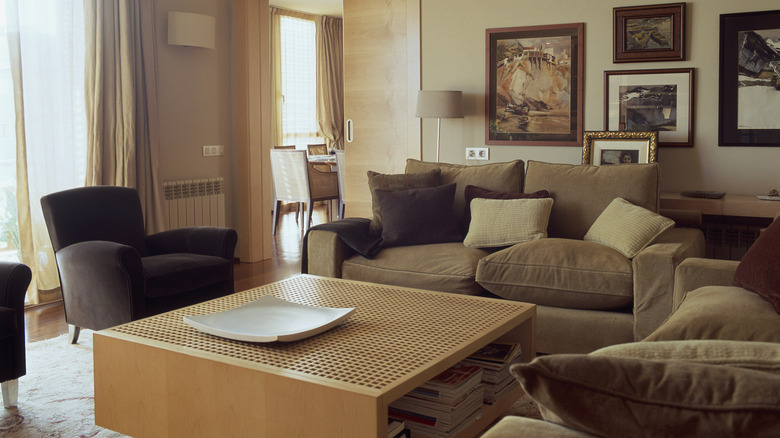
There are a few tricks to giving your home an older, lived-in feel instead of appearing cookie-cutter. But if you're looking for inspiration, you can follow in the boomer's footsteps. Consider choosing rugs, not just for style, but for the comfort they'll add underfoot. Incorporate plenty of lamps in your living areas to offer comfortable evening lighting rather than always opting for an overhead light.
Additionally, you might consider turning rooms into multi-use spaces. For example, add an office nook to the kitchen or a small reading corner to the main living room. Another aspect that can transform how "lived-in" your space feels is zoning. Many boomers can't stand certain millennial home design trends, such as open concept living. A setup that emphasizes flexibility and connected spaces, it forgoes the use of traditional room divisions like walls. An open concept floor plan doesn't provide the same private environment as a closed concept space. Boomer design might give each part of a room a specific job. For example, you might see additional rugs or furniture to separate a dining area from a kitchen.
When it comes to seating, you might choose multiple chairs and sofas instead of one large sectional to create conversation spaces. Position furniture items to face one another rather than a television. Your seating should also be small and easy to walk around. Avoid pieces that take up too much space or plush cushions that make it difficult to rise from them.