

Are Electric Riding Mowers Worth Buying?
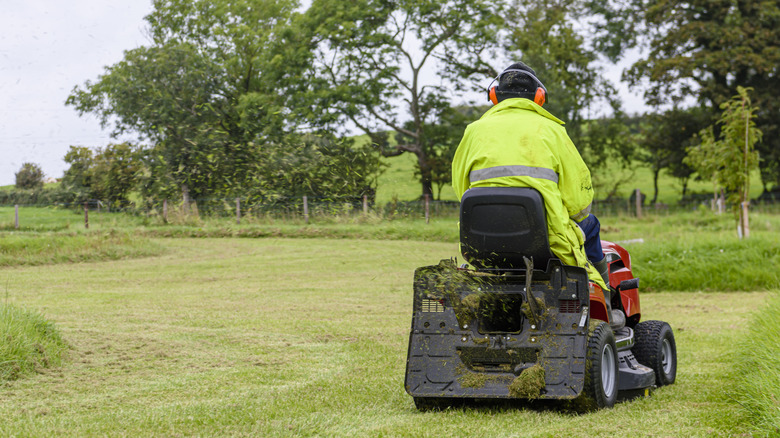
Wherever you stand on the gas vs electric lawn mower debate, there's no denying that electric lawn-maintenance tools have risen in popularity in recent years. And really, it's no surprise. They don't require a complicated gas engine; you don't need to remember to buy and mix gasoline; and for eco-conscious gardeners, they produce precisely zero emissions during use. But is it worth buying an electric lawn mower? The answer depends largely on how much you're willing to spend upfront, how you plan to use the mower, and whether the long-term savings make up for the higher purchase price.
The first consideration that crosses the mind of most who are in the market for a new lawn mower is the money they'll need to pay for it. And in the case of electric riding mowers, they rarely come cheap. For example, Ryobi's 42-inch 80V Zero Turn Riding Lawn Mower costs $3,999 at Home Depot. Compare that to the John Deere 42-inch Gas Hydrostatic Riding Lawn Mower, which is $1,500 cheaper.
This difference in up-front cost alone can be enough to put off budget-minded homeowners. However, purchase price is only part of the equation. You might argue that, in the long run, electric mowers will save on costs for things like maintenance and fuel, which are both more involved and expensive for gas engines. And that is kind of true. The real question is whether those savings are enough to justify the higher initial investment for your particular yard.
The benefits of electric riding mowers
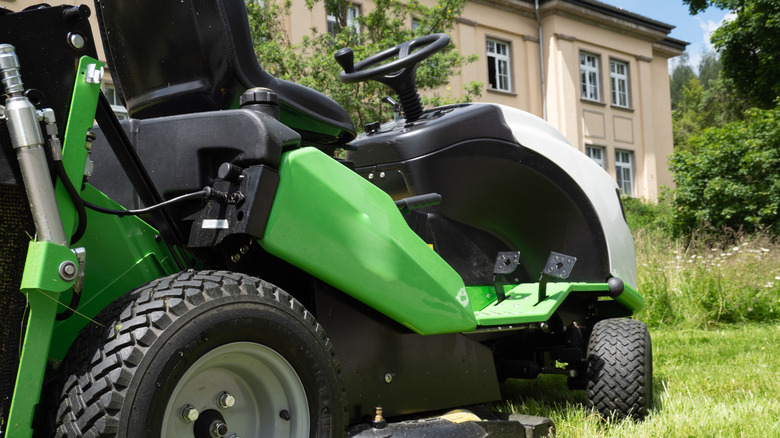
For many gardens, an electric riding mower will feel like an excellent choice. They're considerably quieter than gas-powered mowers, and they don't produce fumes, which your neighbors will appreciate. You don't need to worry about fuel cans when safeguarding your shed's storage, nor do you need to remember to buy fuel, since you can simply plug the battery in to charge. Since electricity prices are generally more stable (and cheaper) than gas, you'll likely save on operating costs over time. What's more, if you're not mechanically savvy, you won't have to worry about forking out for regular engine maintenance — which is recommended for gas mowers.
They're also appealing because they're easy to use. You generally use a key or a button to turn the unit on, without needing to strain your back pulling a cord. They generally start much more easily regardless of the conditions, too, compared to gas mowers that can falter slightly or take a while to warm up on cooler mornings. Finally, provided that you have a level lawn — and that you match your lawn mower spec to the true size of your garden — you should find an electric mower reliable enough.
Is an electric riding mower right for you?

This is where the answer to whether an electric riding mower is worth buying gets complicated. Along with costing more upfront, some electric riding mower buyers find that, despite brand promises to mow up to an acre on a single charge, the batteries fall well short of that mark. This can depend on your landscape, though. For example, if you have a sloped yard, your electric mower will need to use more juice for the job. This can reduce your mower's acreage per charge and can even slow the blades down — both issues that you won't run into with gas. A flat lawn is therefore a much better match for an electric riding mower than a steep one. Of course, you could always buy a spare battery. However, taking Ryobi's 80V range of riding lawn mowers as an example, a spare one costs an eye-watering $699. That extra expense can quickly erase some of the savings from the operating costs. And because batteries eventually need replacing, which is another long-term expense.
Ultimately, the only way to decide whether an electric riding mower is worth buying is to look at your own circumstances. If you can afford it — and your yard is fairly flat — then an electric mower may be worth it. It may cost you less to maintain and fuel over time, meaning that you should eventually be able to close the gap in up-front cost. However, if you need to mow a steep, hilly lawn, this may not be a worthwhile purchase. Alternatively, if up-front cost is your limiting factor, and you want to ensure your money is still spent on a quality machine, then a gas-powered mower may well be the better choice.