

Why You Should Put Gravel Behind A Retaining Wall
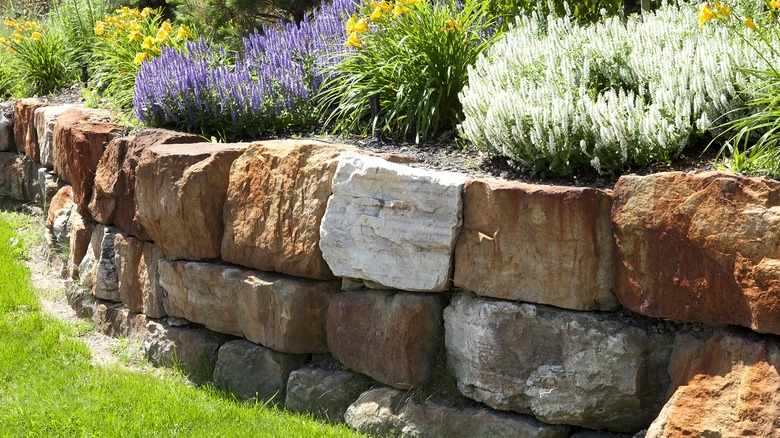
A retaining wall might look beautiful in your backyard, but aesthetics isn't the principle reason for having it there. The main goal, especially on a sloping yard, is holding back the soil, water, or rocks on the higher ground and therefore preventing soil erosion or a landslide. At the same time, this wall helps create level areas that are more functional. For example, you can DIY a low retaining wall to create a planting bed that will allow you to start a vegetable garden quickly. Now, after erecting the wall structure, why do people fill the back side with gravel? Well, it's all about achieving proper drainage and ultimately preventing wall failure.
If the soil behind a retaining wall becomes waterlogged, your wall structure can weaken over time and even collapse due to hydrostatic pressure. This happens more often in places that experience heavy rains and have poor draining soils. In such instances, the ground tends to retain water longer and the weight from the saturated soil behind the retaining wall becomes a hazard waiting to happen. In fact, lack of a proper drainage system is one commonly overlooked mistake that will cause your retaining wall to collapse. That's where proper backfilling with gravel comes in to create a drainage zone for your retaining wall.
Gravel's role in proper retaining wall drainage
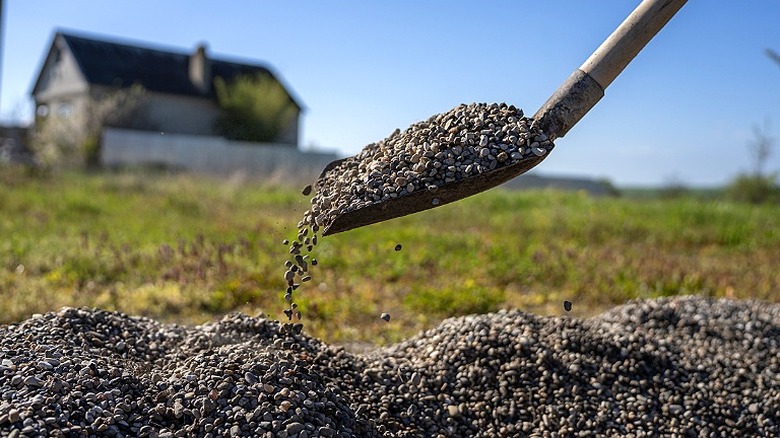
Gravel's permeability is what makes it a go-to material to put behind a retaining wall. Unlike regular soil like clay or silt, gravel comprises small rocks with larger gaps between them that allow water to flow more freely. Any water that flows behind the wall instead passes through the gravel, then drains to the bottom where it can collect in an installed drainpipe — a pipe that will take the water away from the wall.
Gravel rocks also won't compact together in the way soil does during heavy rains. That means no waterlogging, so way less hydrostatic pressure, and therefore no need to worry about that lateral pressure pushing against your wall.
Further, the angular shape of fractured gravel means that once it's been added during installation, that zone will stay put. The angles make it less likely the gravel rocks will slip or shift, or maybe even get through any small holes in the wall, especially during the rainy season. That's one more reason your entire retaining wall structure will last longer.
How to backfill a retaining wall with gravel
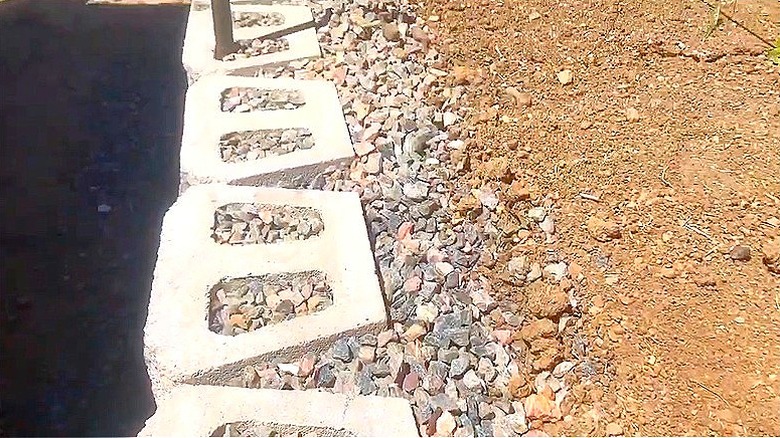
When building a retaining wall, the backfilling step comes after you've started installing the wall structure and have placed a drainpipe at the base. Pour the gravel layer by layer after each course of the wall material. Spread the angular crushed rock on the back side of the wall, up to the wall's height at that point, and press down and compact each layer progressively. This way, you avoid leaving hollow spots behind which can potentially happen if you dump the gravel in one go after building the entire wall.
But how much gravel do you add? For optimal drainage, the gravel should extend out at least 12 inches from the wall. If you're erecting a taller retaining wall (more than 4 feet), this should be 12 to 16 inches deep.
Besides putting gravel in the retaining wall's drainage zone, you will also want to place geotextile fabric between the backfill and the native soil. This will prevent shifting of the regular soil into the gravel which can eventually compromise the draining capacity of the gravel rocks. For the final layer of backfill, keep it just below the top of your wall, and then cover it with soil.