

Skip Gravel Driveways: The Material That's Rustic And Cost-Effective
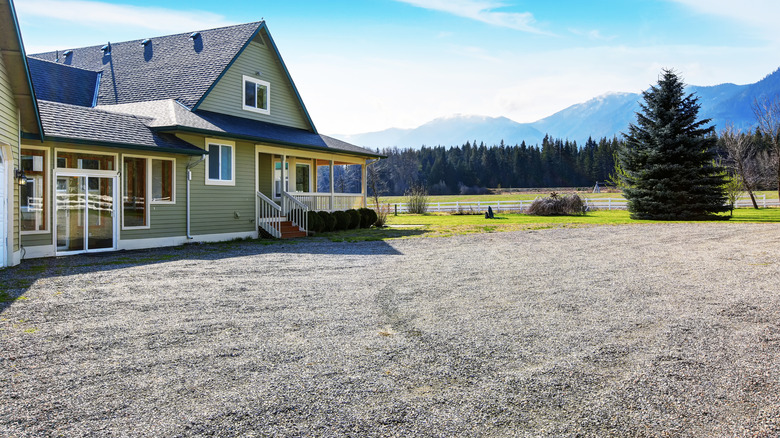
There are lots of materials to use on your driveway that go beyond concrete, and gravel is one of the most popular. However, even gravel comes with a number of disadvantages, not least the need to constantly maintain it. It can form potholes that need repairing, and especially if it becomes decompacted, it can easily become displaced, leading to annoying afternoons spent spreading and leveling fresh stones. As for looks, it's hardly worlds away from concrete, either, and can easily detract from your home's curb appeal if it's a rustic vibe you're going for.
For this reason, wood-chip driveways remain a popular choice among homeowners hoping to infuse the fronts of their homes with a rustic aesthetic. Wood chips have long been a popular and budget-friendly driveway edging idea. They offer a cheap, environmentally friendly way to mulch your beds and add some rustic charm to the borders around that dreary gravel or concrete driveway.
Wood chips come with a host of benefits that make them an excellent choice for the driveway as a whole. For example, wood chips are cost-effective and generally more budget-friendly than materials such as concrete and gravel. They're eco-friendly, since the chips are biodegradable and, being wood, regenerative. Add to this the distinct, warm, earthy look that they bring to a driveway, and opting for wood chips over gravel begins to feel like a no-brainer. However, there are some important considerations to bear in mind before you go ahead and place your order.
Considerations to bear in mind before installing a wood-chip driveway
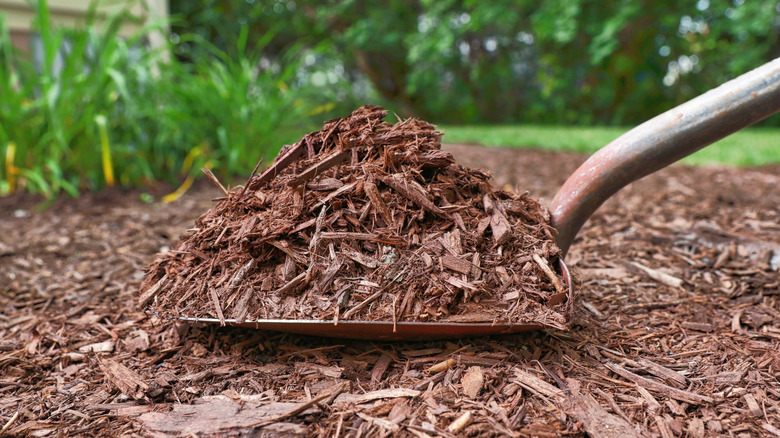
The first thing to note before you add wood chips to your driveway is maintenance. Like gravel and any other loose substrates, weeds can eventually start to poke through the surface, meaning you'll need to keep your trusty weeding tools sharp. Another important point to remember is that, just like gravel, wood chips can move and shift when used frequently. Heavy traffic is a big contributor to this, but so, too, is heavy rain and bad weather, which can displace the chips over time. This means that, depending on the climate in your area, you'll need to be vigilant with your rake to keep the driveway level.
The biggest disadvantage that wood chips have versus gravel is their biodegradability. Admittedly, this does make them more eco-friendly, since their source (trees) is regenerative. It also means that they change color with the weather — darkening when they're wet, and lightening when they're dry — which is great for year-round curb appeal. However, the organic nature that lends them this advantage does mean that they're ultimately less durable than gravel. In turn, this means you'll need to replace them more often, which could eventually cost you more over time in order to maintain your driveway.
With all of that being said, if you sign up for a service like ChipDrop, you may be able to get your wood chips without spending a dime. The only drawback is that you can't specify how many wood chips you're delivered, meaning it may not be the best way to build your driveway in the first place. But for regular top-ups, it could certainly help to keep the costs of ongoing maintenance from ramping up — making it a perfectly viable and deliciously rustic alternative to more expensive gravel driveways.