

Acrylic Vs Porcelain: What Are The Major Differences For A Bathtub?

When you're remodeling a bathroom, there's a lot to consider, from choosing the right flooring to picking the wall color; there are so many creative bathroom ideas to love. However, if you're doing a full remodel, you may come across choices you've never thought about before, including the material of your bathtub. While your initial instinct might be to choose either the option that's most aesthetically appealing or most affordable, that can be a mistake.
Different bathtub materials, such as acrylic and porcelain, have different characteristics, often making one a much better solution over the other. Acrylic, for example, is a lightweight and affordable material that offers an easy install for DIYers, although it is prone to scratches. Porcelain, on the other hand, is much heavier and requires professional installation. It has plenty of upsides, though, like a smooth, glossy finish that's scratch-free and a long lifespan when well-maintained.
Both come in many shapes and sizes, making it easy to choose the right bathtub style for your bathroom, regardless of the material you go with. However, your budget, household habits, and preferences can help you narrow down the best fit. If you're after a timeless look and a long-lasting material, porcelain is the way to go, as long as your floor can support its weight and your budget can handle the material plus installation costs. However, if you're on a time or budget constraint, acrylic is the better choice, especially if you're opting to handle the installation yourself.
When to choose a porcelain versus acrylic bathtub
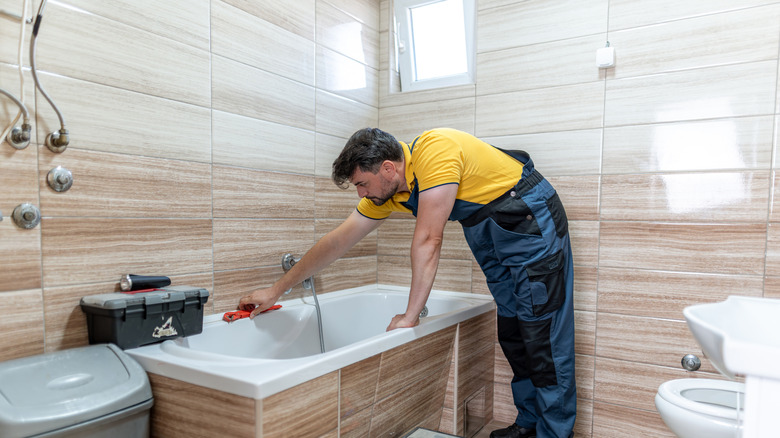
Before deciding on a bathtub, it's helpful to understand the basics of both materials. Acrylic bathtubs are made from sheets of plastic (acrylic) that are often reinforced with fiberglass to make them stronger. The resulting material is lightweight, making it a good fit for floors that aren't structurally sound enough to support the heavier weight of porcelain-coated bathtubs. These tubs last about 10 to 15 years and are priced at around $300 to $800, depending on the brand and style. In contrast, porcelain bathtubs feature a glossy porcelain enamel coating, often over a cast iron or stainless steel tub. A well-maintained porcelain tub can last over 20 years and can cost from $400 to $1,500+, not including installation.
Both materials are easy to clean, although you need to be more careful with acrylic, using only non-abrasive cleaners so that you don't scratch it. You should also be aware that using the wrong cleaners can lead to discoloration of the tub over time, as can a build-up of hard water and bath products. That means if you choose acrylic, you'll especially want to steer clear of the Epsom salt cleaning hack you should never try in the bathroom. Porcelain won't scratch as easily, but its enamel can chip or crack if something heavy is dropped on it, exposing the iron or steel underneath.