

11 Reasons You May Smell Burning At Home Or In The Garden
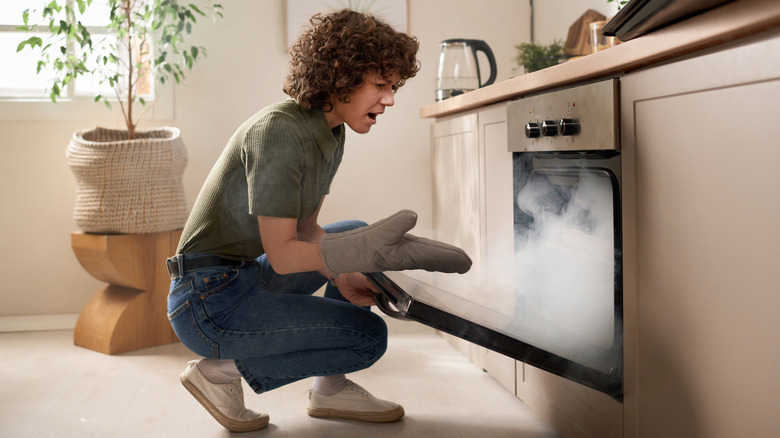
If anything is likely to get us out of our armchairs in the evening, it's the smell of something burning. That's because while there are various things that can give off such a scent, a burning smell in the home is almost never a good sign. It could be a faulty socket that needs replacing, or perhaps you've added one too many devices to that multi-plug adaptor. Your dryer may need cleaning out or, if it's more than a few years old, it may be on its last legs with failing electrical parts. Filters can become clogged in a whole host of appliances, and dust can collect on elements over time and give off an odorous smell when we eventually switch them on. Even some brand-new appliances can give off a burning smell when we plug them into the mains.
In other words, there are lots of reasons why you may have a burning smell currently offending your nostrils. Whether you're struggling to locate it, or need tips on what to do about the item in question, this guide is here to help. In it, we've identified 11 common reasons around the average house that burning smells can occur — from the living room and kitchen to the pond at the bottom of your garden.
An overloaded electrical circuit
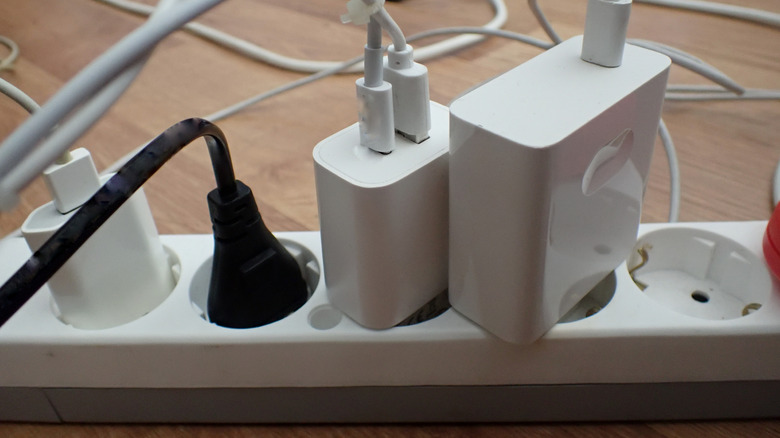
In busy family households, it's very easy to accidentally overload electrical circuits. One of the most common ways is with the use of multiplug adaptors, which enable us to plug several items into a single outlet. It could be a home theater set-up with a television, sound, and lighting. Or maybe you have a bunch of power tools that you need to keep charged for an ongoing DIY project. In either case, it's easy to overload circuits, and when that happens, it can lead to burning smells as components heat up and plastic begins to burn. If left unchecked, this can even lead to fires.
The best way to avoid this is to stick to just one appliance per socket. For larger appliances, it can be worth running a test to see just how much power it's drawing (or consulting the manual, if you have it). Most standard circuits can deliver a maximum of 1,800 watts — an amount that all appliances plugged into that circuit must share. Appliances like vacuum cleaners, kettles, and electric heaters can use over 1,000 watts by themselves — and that's before you try to run other appliances from the same circuit. This is why it's so easy to overload them. If that happens, and you start to smell burning, that's one of the surest signs that you need to call an electrician. They'll be able to diagnose and repair the problem for you, and advise on ways to prevent it happening in the future.
A failing electrical outlet or switch
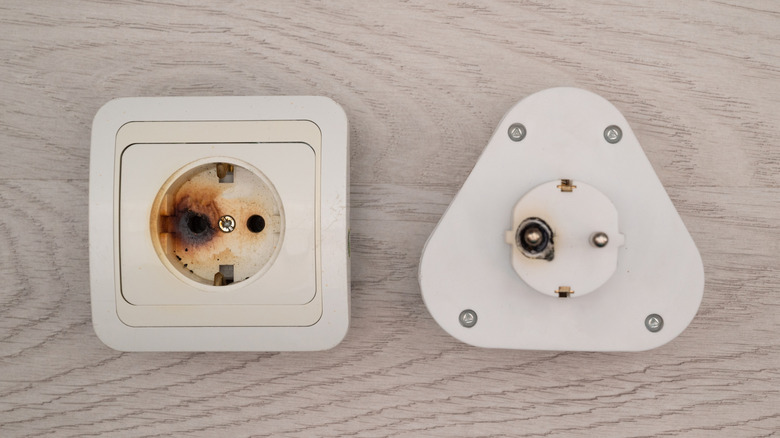
Even if you avoid overloading your electrical circuits, burning smells are possible. Loose connections can occur over time, which can lead to discoloration as heat begins to scorch the surrounding materials. Old outlets can generate heat and create a burning smell; and if any wires are damaged, those, too, can become a fire hazard. While all of these usually lead to burning smells, they may also be accompanied by other symptoms that are worth looking out for. For example, you should never ignore a buzzing sound around your outlets, as that could indicate that your wires are arcing, which can lead to fires. Oh, and if your switches are hot to the touch, then that, too, is a serious problem.
All of these are signs that your electrical outlet or switch is failing. And if you're not confident working with electrics, then it's always best to enlist the help of a professional. They'll be able to inspect the switch or outlet and make the necessary repairs. Alternatively, if the problem is beyond repair, they'll be able to source and install a replacement for you.
A malfunctioning appliance
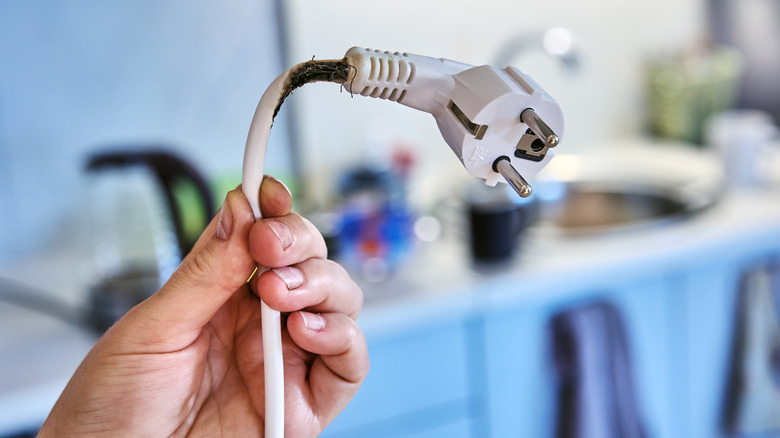
Regardless of the source, the smell of burning plastic usually means a problem somewhere in the house. But if it's coming from one of your appliances, it's potentially an expensive one to remedy. Unfortunately, it could point to one of several problems. For example, it could be that some of the wiring inside the appliance is failing. A vent could have become blocked, which can in turn cause appliances to overheat. Mechanical faults inside could also be to blame, causing components to overheat whenever the appliance is switched on.
As for what to do, the best advice is to switch the appliance off and have an engineer come out to inspect the appliance. In most cases, this won't be a problem. You can probably wash-up by hand if you're starting to notice a burning-plastic smell from your dishwasher. Similarly, you can always hang your clothes on a rack if your dryer is on the fritz. But if it's your refrigerator or freezer, then it can feel harder to justify switching it off. The thing is, some wasted food is a much better outcome than an electrical fire, so if you smell burning from your fridge, don't hesitate to pull the plug. Depending on your home insurance policy, you may even be able to reclaim the cost of food waste.
A new dryer
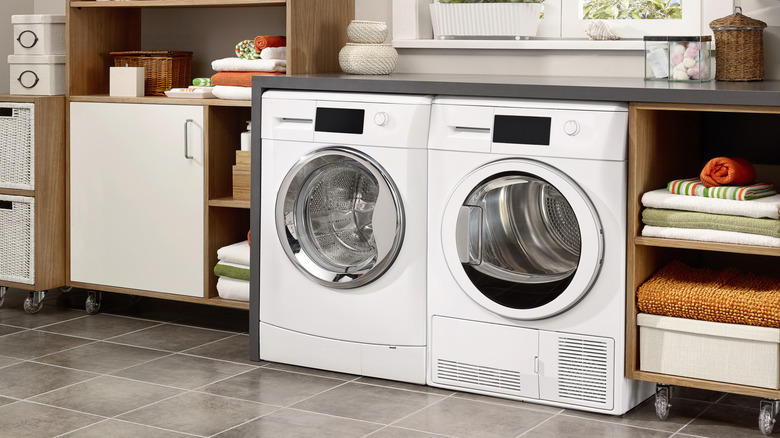
A burning scent from the dryer is one of the most common causes for a smelly laundry room. It can happen for several reasons, but if you have a new appliance, then know that it's typically completely normal to smell burning when you first use it. It can be somewhat alarming if you're not expecting it, but it usually happens as the heating elements inside burn off any residual chemicals from the manufacturing and packaging process.
As for how long it lasts, as a rule of thumb it should start to dissipate after just one or two uses. If it persists for longer than that, then you'll want to address the burning smell in your dryer by contacting your manufacturer. Depending on what's gone wrong, your engineer will either repair the appliance, or arrange for a replacement unit. But if you ignore the problem and continue to use it, then whatever is causing the burning smell could get worse. Not only will that potentially void your warranty, but could also lead to a fire in your home.
A clogged dryer lint drawer
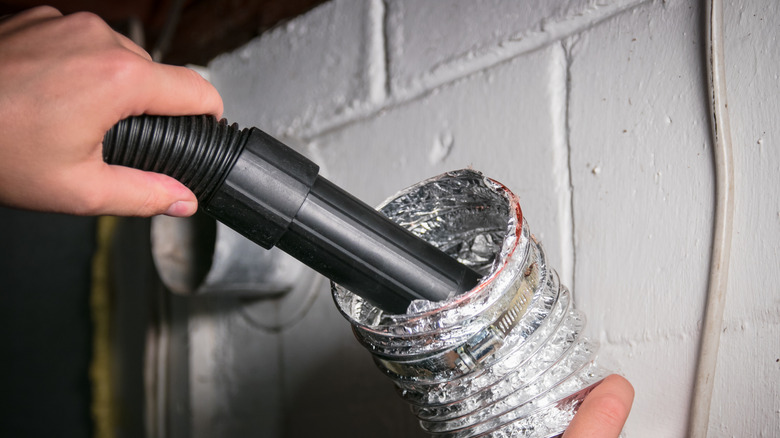
Given that they rely on heated elements to dry your clothes, it's no surprise that dryers appear twice in this guide. As we've discovered, new dryers can smell like burning when you first switch them on. But they can also begin to smell if you fail to keep them cleaned. Built-up lint in the collection drawer is incredibly dry, and if it does start to burn, it likely won't take long to ignite. Lint is also something of a hidden danger lurking in your dryer vents, and if not cleaned from time to time, can represent a serious — and fast-working — fire hazard.
Fortunately, it's fairly easy to keep your dryer lint free. Lint collection drawers should pull out easily from the appliance, and usually just need scraping off after each cycle. As for the vents, you may need to pull the dryer away from the wall in order to access the ducting. Once you've exposed it, use a long-reach nozzle on your vacuum to clear the pipes of lint. Alternatively, use a brush; there are various ways to repurpose unwanted dryer lint, so you may be better off bagging it instead of losing it to your vacuum cleaner.
Dust on your furnace or heating system
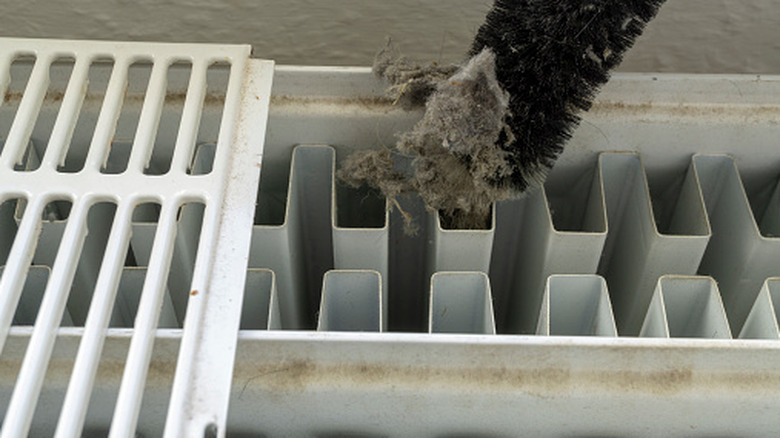
During the late spring and summer, chances are that you don't use your heating system. Why would you? When it's warm enough to sit outside on your patio, the last thing you want to do is spend money running the radiators. The thing is, during those idle months, your heating system will almost inevitably collect dust. And when you come to switch the system back on in the fall or winter, that dust will start to burn. Fortunately, this is fairly normal, and like the burning smell from a new dryer, it should begin to dissipate within just a few hours of switching the heating on.
Of course, there's more than one reason why heaters can start to smell like burning, and some are more concerning than others. If the burning smell is plasticky, that could point to overheating in the wiring or insulation, which can lead to fires. Similarly, a metallic burning smell can indicate a failing motor or component overheating, and if you're getting smoke or soot, you could have a blocked vent or a cracked heat exchanger. All of these are things you'll want to get fixed just as soon as you can. The best thing to do is switch the system off until an engineer is able to come out and take a look.
Grease in the oven
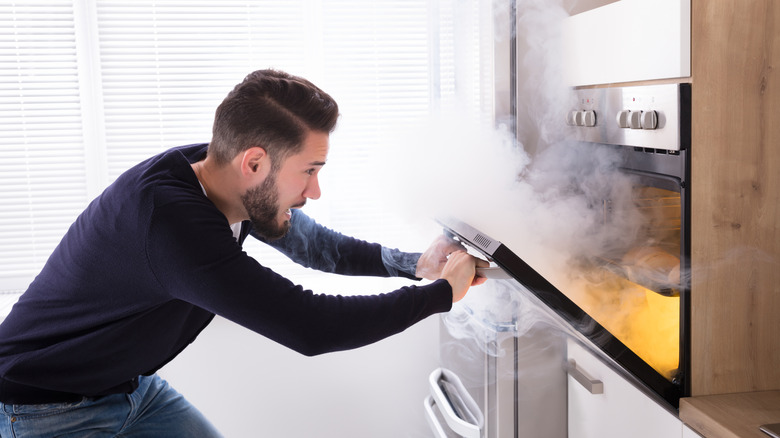
One of the most important precautions to avoid fires in your home is preventing greasy build-ups in your oven. Fortunately, it's quite easy to do — you just need to clean it regularly to ensure it doesn't happen! However, it's also quite easy to forget about, especially in busy family households. If you don't keep on top of things, layers of grease can build up and start to burn. Similarly, in your overhead broiler, fat can spit and begin to coat the elements, leading to a burning smell whenever you switch it on.
If you start to notice smoke or a burning smell coming from your oven, then the first thing to do is to switch off the appliance. If you also spot flames, then don't panic. The safest way to extinguish an oven grease fire is to simply switch off the heat and allow the oven to starve the flames of oxygen. Once that's done, you'll want to crack a window, switch on your extractor, and clear the oven out. Wait until it's cooled down to do this, and don't switch it back on until you've thoroughly cleaned out all of the residual ash and grease. If smoke or burning smells persist even after you've cleaned the oven, then switch it off again and have an engineer come out to inspect the appliance.
An overheating vacuum cleaner

How often do you remember to clean your cleaning tools? In fact, one of the cleaning habits that do more harm than good is cleaning your home with dirty appliances — especially the vacuum cleaner. It puts stress on the appliance, and if you're not careful, you can end up getting burning smells drifting up from your trusty cleaner. For example, if you notice a hot, acrid dust smell, then that often points to an airflow issue, which could mean that you need to clean out the filter.
Even if you keep the filter clean and the dust bag emptied, you also need to maintain your vacuum cleaner regularly in order to avoid other burning smells. For example, you may come across a burning rubber smell, which is unlikely to have anything to do with the filter. Instead, it can indicate that the belt is slipping, or that the brush roll has become jammed with hair. If it's the latter, you should be able to fix the issue yourself. But if the belt is slipping, then you may need to have the appliance professionally serviced. Another reason to enlist a professional is if you notice a burning plastic smell. This can point to wiring issues — especially if you've already ensured that the filters are clear and the unit isn't overheating.
An unswept chimney
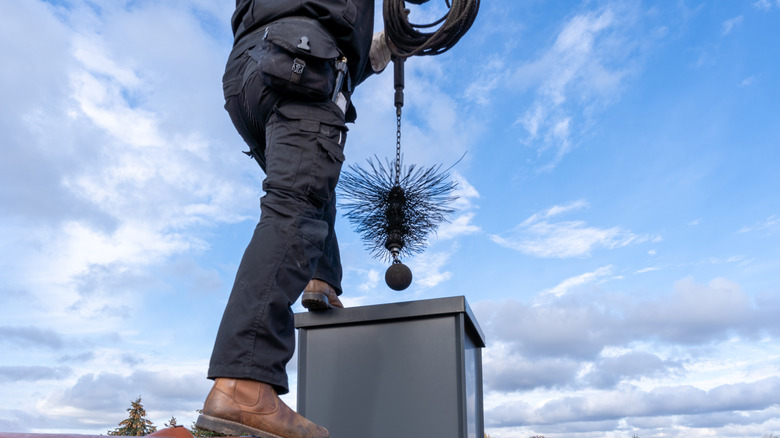
The smell of burning wood is to be expected if you have a wood burner or traditional fireplace. In fact, it's part of the enjoyment of a roaring fire in the winter — nothing quite beats that blend of sound and smell as your carefully seasoned logs catch and start to crackle. But if your room begins to fill with smoke, or you begin to notice a strong smell of soot or creosote, then something's not quite right.
If this happens, then you may well have an unseen issue in your chimney. For example, if the chimney cap has come loose or been damaged, birds may have found their way inside and decided to build a nest. This blocks airflow, can lead to smoky back-ups in your living space, and can even lead to chimney fires. Alternatively, if it's been a while since you had your chimney swept, you may have a build-up of soot that's causing the blockage. In either case, if you want to ensure your chimney isn't a fire hazard, it's best to have a professional come out and inspect it. They'll be able to identify any damage to the cap, clear the chimney, and ensure that it's safe to use.
An overheating gas-powered lawn mower

If your lawn mower is beginning to smoke while you go about your usual summer lawn maintenance routine, then that's sure to smell like burning. If you're mowing wet grass, or you left your mower out in the rain, then you may notice a white, steamy kind of smoke, which is totally normal. But if the smoke appears and smells more "fire" than "steam," then unfortunately, it could be happening because of one of several issues. For example, it could point to an overfilled oil reservoir — or, indeed, a reservoir filled with the wrong type of oil. If you suspect this is the case, then first inspect the amount of oil, and if it looks normal, then consult your manufacturer's instructions and compare them to your chosen oil. If there's a discrepancy, then drain the reservoir and start afresh with a new, more appropriate bottle.
If the issue isn't your oil, then it may be a blocked air filter. This is a commonly overlooked piece of lawn mower maintenance, but it's important to keep on top of it to avoid issues. When air filters block up, airflow drops, which leads to overheating and the inevitable smell of burning. You may need to either clean or replace the filter to get around this, but either way, you should be able to tackle the job yourself. Unfortunately, if it's not the filter or oil, then you may need to enlist the help of a professional. Burning smells can also occur as a result of worn piston rings inside the engine, blown gaskets, or damaged cylinders.
An overheating pond pump
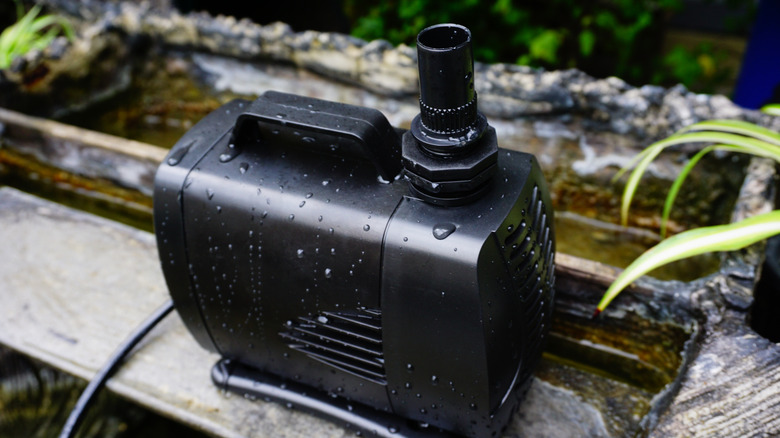
If the pump in your pond becomes blocked or even slightly clogged, then water won't flow as freely through the system as it should. If it doesn't, then this can lead to overheating, and when that happens — even with pumps that are submerged in water — it can lead to a burning smell. For this reason, good practice as a pond owner is to regularly check your pump and ensure that water is flowing freely through it. Even just placing a hand on the system can help to ensure that it isn't hot to the touch.
Other things to look out for include strange noises from your pump. Similarly, if it begins to turn itself off intermittently, then that's also a sign that something's wrong — especially if it's also accompanied by a burning smell. In either case, remove the pump, take it apart, and inspect the filter. Ideally, you should aim to clean your pump filter at least once every four weeks, and conduct a deep clean of your pond (pump, filter, and all) once per year. But if you forget, and you start to smell burning, then switch it off and check for damage. If you suspect that parts are damaged, either replace the pump, or at the very least, have a professional inspect the unit before you switch it on again.