

How To Clean Your Washing Machine (And How Often You Should)
We may receive a commission on purchases made from links.
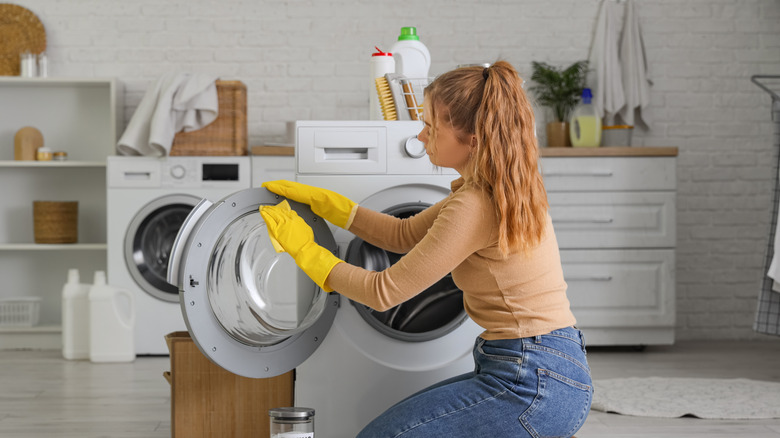
If you've ever pulled a freshly washed load out of the washer only to catch a faint, musty smell, don't blame your detergent — blame your machine. Even though it runs through soap and hot water constantly, that dark, damp drum is prime real estate for mold, soap scum, and limescale. Letting routine maintenance slide doesn't just leave your clothes smelling sour, it forces the motor to work overtime, wearing down parts and quietly driving up your electric bill. It all ultimately comes down to taking care of the machine that's doing the heavy lifting.
You should plan on deep cleaning your washing machine monthly (or after roughly 30 to 40 wash cycles) to stay ahead of odors and buildup. Households with shedding pets or frequent loads of heavily soiled clothes should increase that frequency to every two or so weeks. In between deep cleans, small maintenance habits make a major difference. Plan to wipe down exposed surfaces weekly, and always leave the door or lid propped open after a cycle to allow trapped humidity to evaporate.
Before tackling the buildup, you need to gather your supplies. You can grab a box of dedicated washer tablets (like Affresh Washing Machine Cleaner), reach for liquid chlorine bleach, or stick to everyday pantry staples like white distilled vinegar and baking soda. If you prefer natural remedies, there are plenty of clever ways to clean a washing machine using common household items that won't require a trip to the store. You'll also need a couple of microfiber cloths, a small scrub brush or old toothbrush, warm water, and mild dish soap. Before getting started, it's important to remember to never combine chlorine bleach with vinegar or acid-based cleaners, since mixing these chemicals generates toxic chlorine gas.
How to get your washing machine clean
With your toolkit assembled, the actual deep clean is straightforward and only takes a few steps. First, remove the detergent dispenser drawer, a well-known breeding ground for congealed fabric softener and black mold. Most models feature a small release tab near the back that allows you to slide the tray completely free. Submerge the drawer in warm soapy water for 10 to 15 minutes, wash any caked-on buildup with an old toothbrush, rinse, and dry it thoroughly before wiping down the housing cavity and sliding the tray back into place.
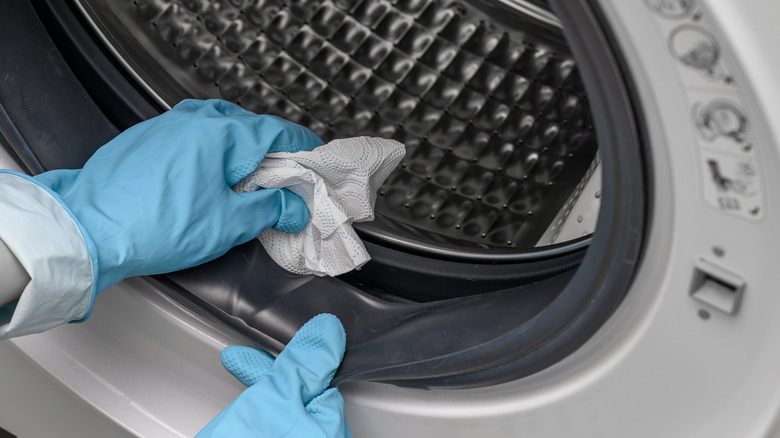
On front-loading machines, the rubber door gasket is a known spot for mold and trapped debris. Carefully peel back the flexible seal around the door opening to check the crevices underneath. Spray the rubber folds using warm water and dish soap or equal parts white vinegar and water, then scrub away any gunk with a cloth. Be thorough along the bottom lip where moisture sits, and wipe again with another damp microfiber cloth to remove any residual grime.
Finally, sanitize the drum and internal plumbing to flush out deep-seated grime and odors. If you are using a commercial washing tablet, place it straight into the empty tub. If you prefer a DIY solution, pour two cups of white distilled vinegar into the drum (or fill the detergent compartment to its maximum line) and sprinkle a half-cup of baking soda directly onto the tub floor. Select your machine's "tub clean" cycle or the hottest, longest regular wash setting. The combination of thermal heat and cleaning agents will dissolve hidden scum and scale clinging to the tub wall. When the cycle is complete, take a microfiber cloth and wipe up any remaining loose debris in the drum or on the gasket seal area.
Finish up with the filter and the exterior
Once the drum cycle is finished, turn your attention to the drain pump filter. Top-loaders generally have self-cleaning pumps or internal lint traps, while front-loaders usually have a filter that must be manually cleaned. Clearing this component is critical for preventing sluggish drainage, mid-cycle error codes, and foul odors — especially in homes with pets, where trapped fur can rapidly choke the drainage system. Unlike the drum, this doesn't need to be cleaned once a month. Instead, aim to clear this every three to four months (or sooner if your machine starts draining slowly).
Located behind a small panel at the bottom front of most front-loading units, the pump filter catches everything from stray coins to dense lint. Before opening it, lay a towel and a shallow tray underneath the access panel to catch standing water, which will spill out as the seal breaks. Carefully unscrew the cap, let the retained water drain into your tray, and pull out the filter basket. Clear away any trapped debris, rinse the mesh insert under warm running water (scrubbing with soap and a toothbrush if needed), and reinsert it. Be sure to screw the cap back on tightly so it doesn't leak during your next cycle, then close up the panel.
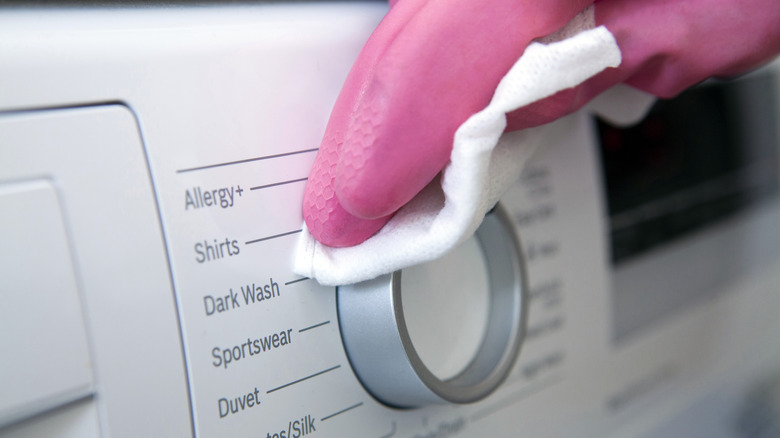
Once that's done, finish up by wiping down the outside of the machine. Clean off the control panel, glass door, and frame with a damp microfiber cloth. If you notice sticky soap residue or water spots around the dispenser or door rim, a little warm water and dish soap will cut through it without scratching the finish. Taking a few extra minutes for this routine keeps your washer running smoothly and will make your laundry stay fresher longer.