

The Popular Type Of Wood That's Considered The Hardest To Stain
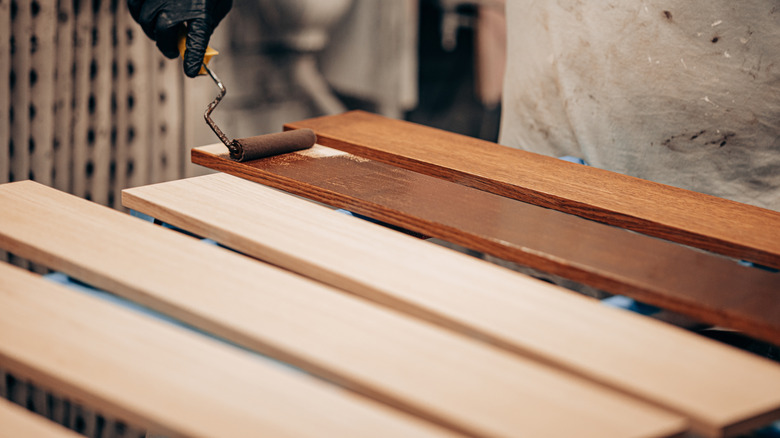
Refinishing wooden furniture or cabinetry is supposed to be one of the most rewarding home improvement projects on your to-do list — until you wipe on that first coat of stain and watch your gorgeous tabletop transform into a blotchy, patchy nightmare. While easygoing species like oak and walnut tend to absorb stain more evenly, hardwoods like maple can be notoriously stubborn. Even though maple is a versatile type of wood that works for a variety of home projects, its unique characteristics can make staining a challenge. But before you scrap your refinishing plans, learning why maple gives DIYers such a hard time can help you get a smooth, professional-looking finish instead of a splotchy tabletop.
Maple's stubborn reputation comes down largely to its dense, closed-grain structure. Unlike more open-pore woods, maple doesn't drink up stain without a fight, as its dense, fine grain can make it difficult for stain to penetrate evenly. To make things trickier, density and grain orientation can vary across the board. Some areas soak up more pigment, while denser sections take on less. That can leave you with an uneven mess of heavy dark splotches sitting beside pale, untouched wood — and when you add swirling grain into the mix, traditional liquid stains can make an even color especially difficult to achieve.
How to solve the stain issue
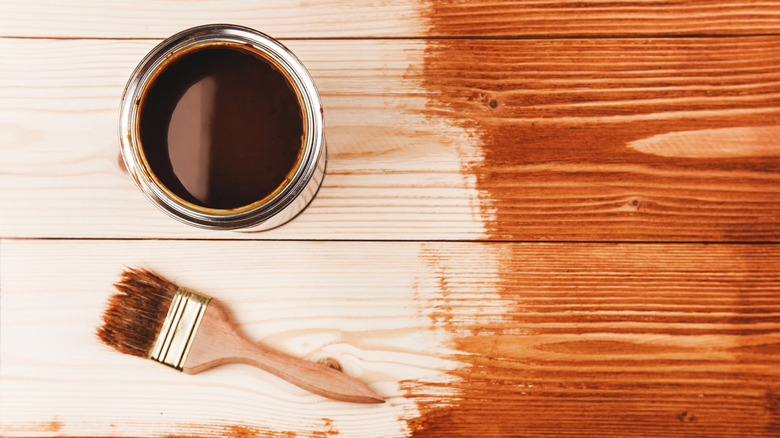
When it comes to staining maple, success largely depends on controlling how the wood absorbs pigment. Because its tight grain and inconsistent density can lead to blotching, you can't just slap on a standard wiping stain and expect perfectly even results. Reviewing a few helpful tips to know before using wood stain is a great starting point, but getting a smooth, even finish on maple also means paying close attention to surface prep and the right formulas.
Start by sanding the wood evenly, working through progressively finer grits — typically stopping at 150-grit. Going up to 220-grit or higher can burnish maple's dense fibers, polishing the surface flat, thus making it harder for the surface to absorb stain evenly. Once sanded, vacuum up the mess and wipe down the board with a clean, dry tack cloth to remove every last speck of dust. Next, consider applying a pre-stain wood conditioner. Let it soak in for up to 15 minutes before wiping away the excess. This crucial step fills in the wood's softer, extra-porous pockets so your color absorbs at a uniform rate across the entire piece.
While traditional liquid oil stains can be tricky on maple, gel stains and aniline dyes can deliver more even results. For gel stain, match your formula to your conditioner — oil-based within two hours or water-based within 30 minutes. Brush or wipe on a heavy coat as gel sits on top of the timber rather than soaking in, then wipe away the excess with the grain. If using aniline dye, skip the conditioner and apply the water- or alcohol-based formula directly to raw wood. Dyes tint the fibers directly, bypassing the heavy pigments maple's tight pores reject.
Finalizing steps for beautiful stained maple
Patience is key during the drying phase, so give your color coat plenty of time to set according to the product's instructions. If you're using gel stain and want a deeper hue, apply a second thin coat once the first is completely dry, wiping away any excess so the surface doesn't end up sticky. Skip the sandpaper between stain coats to avoid scratching the fresh color layer or stripping away pigment unevenly.
Once your stain is fully dry, it's time to protect your hard work with a durable topcoat. A water-based clear finish is a great choice if you want to preserve maple's bright, natural tone, whereas oil-based options can cast a warm, amber glow over the wood as time goes on. Plan on applying multiple thin topcoats, lightly sanding between applications. Always sweep away leftover dust with a tack cloth between coats. That quick wipe-down helps keep the finish smooth and free of trapped dust.
While taming stubborn maple takes a little extra elbow grease up front, the long-term payoff can be well worth the effort. Its durability is a major reason it ranks among the best types of wood for a DIY dining table, as well as a popular choice for custom cabinetry and dressers, which can go up to 30 years before needing another touch-up or refinish. Maple hardwood floors generally hold up for 10 to 15 years before requiring a fresh sand and restain to clear out signs of heavy foot traffic. And while maple isn't a great fit for exposure to the outdoor elements, covered porch furniture protected with a quality sealer will only need a tune-up every few years to keep UV damage at bay.