

No Garden Tool Needed: The Easier Way To Tell If Your Grass Is Dead Or Just Dormant
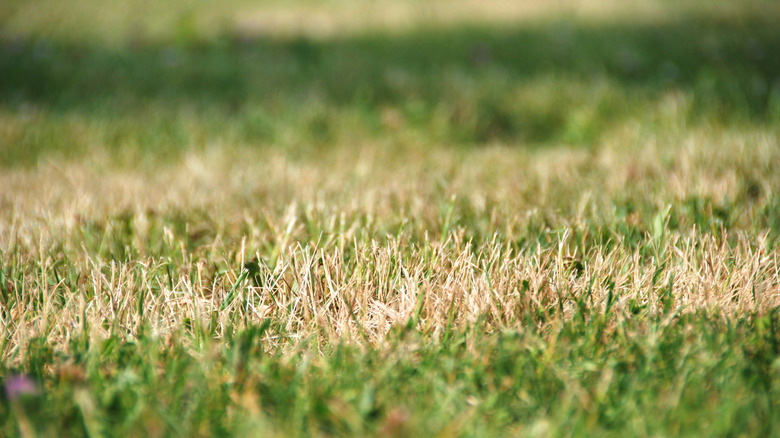
Looking out the window to see a yard full of brown, dry grass can be a nightmare for a homeowner. A withered lawn does more than just detract from your landscape's natural beauty — it can also be expensive to replace, especially if you want a quick result. Fortunately, brown patches aren't necessarily dead. In some cases, it simply means it's dormant. Dormancy doesn't mean the plant is dead. It can still be made lush again with proper care. Before you reach for a shovel or start tearing up those brown patches, there's a much easier way to find out which you're dealing with: give the grass a quick tug. The easier it comes out, the more likely it is dead; resistance is a good sign that it's simply dormant.
Your lawn can enter dormancy to protect itself from extreme temperatures, which is why it can be tough to keep your lawn from turning brown during a heat wave. It does this by conserving energy to focus on survival rather than growth. That means a lawn can look lifeless while remaining firmly rooted in the soil. Truly dead turf starts to decay and can be easily crumbled. Therefore, if you try to tug a tuft of dead grass out of the soil, it should pull away easily or break apart. Dormant blades are made of living cells that make them flexible and strong, so they should show more resistance if you pull on them, similar to healthy grass.
Give the grass a good tug
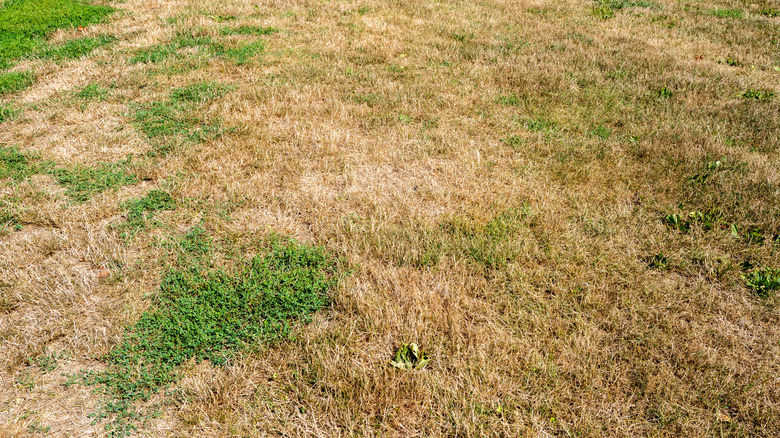
Pulling on the grass to see how easily it gives way is a pretty reliable way to check its status. If you're still unsure after the tug test, take a closer look at the roots. Healthy roots should be firm and pliable rather than brittle or decayed. This simple check can help you avoid removing living plants unnecessarily.
Dormant grass can be brought back to its former greenness with some thorough TLC. Thoroughly water any dormant areas at least once a week. Be sure to really soak the lawn so the water can work its way deep into the soil. You may also want to protect it from any usual wear and tear while it's healing. Don't cut it too short, and hold back on any running or rolling around in the area. Eventually, you should notice the color returning, at which point you can add fertilizer or aerate the soil a bit to further encourage growth. If all goes well, your landscape should recover its color in less than a month. From there, you can take the crucial lawn care step that will lead to healthy grass all season long.
Since dormancy is typically a result of harsh weather, there's not much you can do to prevent it other than keeping up with your regular lawn maintenance. Like any other plant, some grass species do better in certain climates than others, so planting heat- or cold-tolerant varieties, depending on your environment, will also help your yard stay green. Lawns are shrinking in 2026, though, so a few patches of dead or dormant grass can be an excuse to downsize.