

Can You Bring Your Countertop With You When Moving To A New Home?
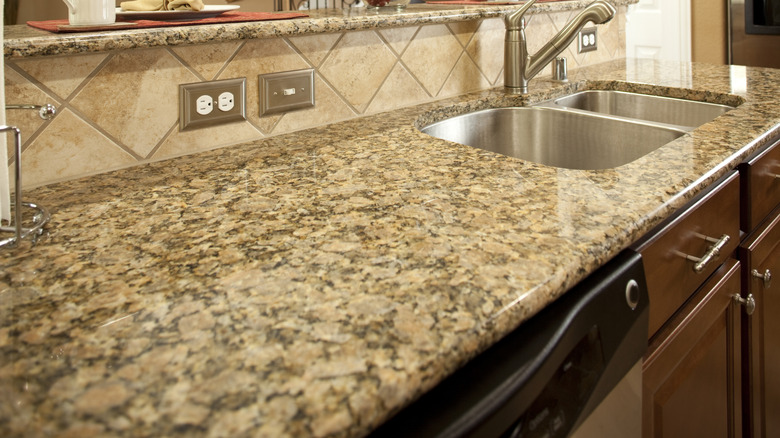
After spending thousands of dollars customizing your kitchen countertops, saying goodbye when you pack up and move can be a tough pill to swallow. It's natural to wonder if you can simply unseal those gorgeous quartz slabs, load them onto the moving truck, and give them a second life in your next home. If you rent an apartment or home, taking them is an immediate non-starter that will forfeit your security deposit. If you own a house, technically, yes — you can bring your countertops with you. Practically speaking, however, it's a massive logistical nightmare that is rarely worth the stress.
First, you have to clear a major real estate hurdle. Under standard real estate law, countertops are classified as "fixtures" because they are permanently attached to the home's structure. When you list and sell a property, all built-in fixtures are automatically included in the sale price. Taking them out without an explicit, written exclusion in your purchase agreement gives buyers every reason to stall closing or walk away entirely. Premium kitchen surfaces are a huge selling point, so pulling a bait-and-switch mid-deal can easily crush the transaction — especially since buyers often seek out specific countertop choices that are excellent for resale value.
If you're dead set on taking your counters, you'll need to do the swap long before the house hits the market. Pull up your high-end slabs and replace them with a clean, budget-friendly option (like an entry-level laminate) before your agent snaps listing photos or hosts an open house. That way, buyers fall in love with what's actually staying, and you can pack up your dream counters without causing a legal headache.
Other reasons you might want to rethink the move
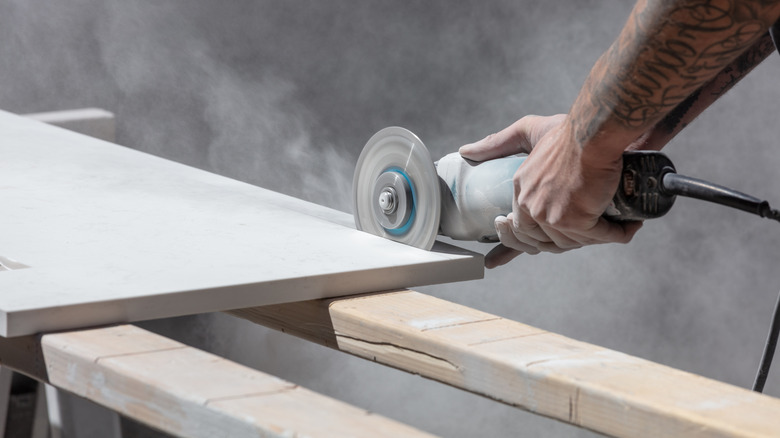
Outside of contractual headaches, the physical reality of custom sizing presents another roadblock. Countertops are custom-fabricated to fit precise cabinet footprints and specific cutouts for sinks and plumbing lines. The odds of an old countertop seamlessly aligning with a new kitchen's layout and appliance placements are extremely low. Attempting to recut a finished slab often leaves behind awkward, unsightly seams or ruins the natural pattern flow of the stone — just one of the many crucial mistakes you can make when choosing countertops for your home and managing their installation.
Moving heavy stone requires specialized A-frame transportation racks to prevent cracking. Standard moving trucks and cardboard packing supplies simply aren't equipped for unmounted stone, meaning one sudden bump on the highway could easily turn your high-end marble investment into expensive gravel. Heavy materials like granite are bonded to cabinet frames using industrial-strength adhesives and silicone. Prying them loose requires intense force that frequently causes long slabs to snap or chip. If you have laminate, the decorative surface is bonded directly to a particleboard substrate. Attempting to pry it up usually shreds the underlying wood.
Finally, there's the harsh financial reality. Between hiring specialized stone fabricators for delicate extraction, paying for custom transport equipment, and paying a technician to recut, re-edge, polish, and reinstall the salvaged slab in your new space, the labor fees almost always stack up to be prohibitively expensive. Unless you are relocating an irreplaceable heirloom butcher block, leaving your countertops where they are is almost always the smartest move. When planning a budget for your next kitchen, it is far wiser to invest up front in countertop upgrades that are worth the extra cost for the new space rather than paying to relocate an old slab.