

The Kitchen Essentials You Will Find In Every Amish Home
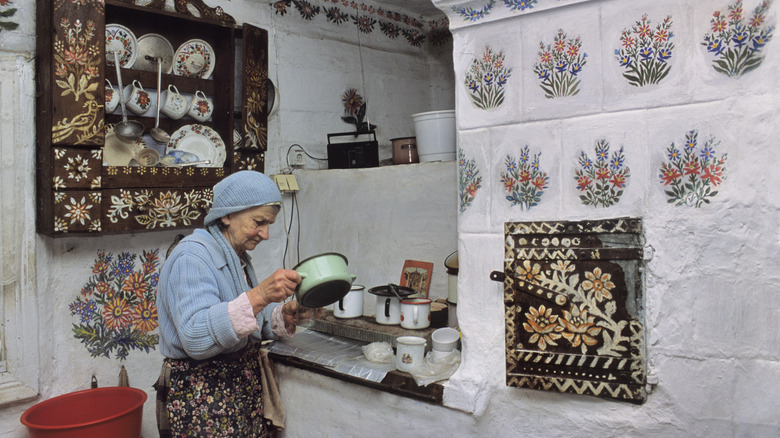
With roots in the Protestant Reformation, the Amish community has long inspired incredulity about their ways. Many Amish families lead self-reliant lives and keep a relatively simple home, disconnected from modern technology and the public electricity grid. This naturally makes one wonder: How do they manage their cooking without all the trendy kitchen appliances we commonly see in homes everywhere? After all, it's one thing to ditch the internet, but absolutely another to skip home appliances that are easy to use and make cooking up a storm a breeze. Not having a toaster to whip up a quick breakfast sure sounds like a crime!
Turns out, Amish families may stay off-grid, but many are open to tapping into alternative energy sources, like natural gas, propane, or white gas. So, kitchen essentials like refrigerators and ranges are commonly found in their homes. However, instead of being plugged into an electrical outlet, they're powered through other sources, which can include solar power where community rules permit it.
The hallmark for most Amish homes is perhaps a wood-burning stove. Aside from keeping their meals hot, it also helps keep the area warm, offering up dual functionality. In some communities, you may also find countertop appliances like mixers that run pneumatically — that is, using compressed air rather than electric current. Cast-iron cookware also seemingly enjoys a ubiquitous presence across Amish kitchens. That being said, the Amish aren't a homogeneous group but rather include numerous communities that run their households according to rules established by their specific church districts. So, ultimately, what they deem essential in their kitchens varies depending on the rules of their particular community.
Cook, bake, heat with Amish cookstoves
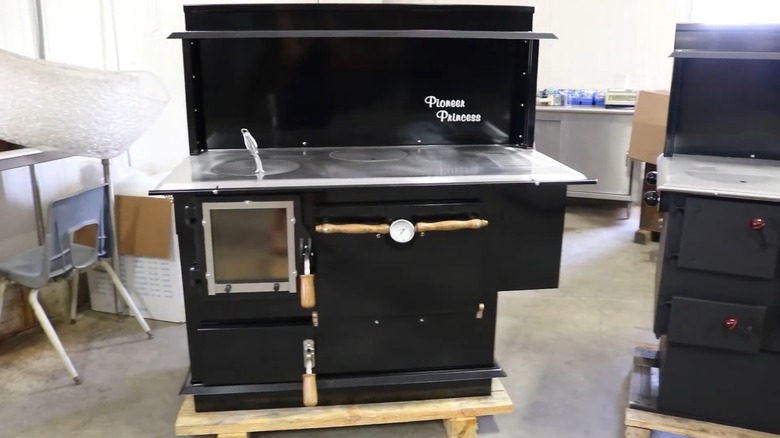
If you've ever seen snapshots of Amish kitchens, you may have noticed a big, black appliance, raised on legs and outfitted with a countertop. Essentially, these are modern-day equivalents of electric ranges and microwaves, though they offer utility in more ways than one. To avoid using grid electricity, most Amish households use cookstoves that typically burn wood or coal. Those on the conservative side may still use kerosene stoves and ovens, as was common in the 19th century. Where community rules permit them, people may use propane or gas-powered models. However, it isn't unheard of to switch between different fuel sources depending on the weather, with hotter-burning wood working well in winter and other fuels offering advantages during summer.
For a time, Mullet coal stoves were most common, though Pioneer Maid's wood cookstoves soon surpassed them. First produced in 1979 by two Amish brothers, it was their way to resolve the issue of limited space and fuel. Tired of running two different stoves to warm their home and cook food in frigid Canada, they combined the two features, capitalizing on downdraft ventilation, to make this present-day variant. Since then, models designed to burn efficiently have been produced by Amish manufacturers like Heco, including models marketed as EPA-exempt. In fact, they even offer the option to add a hot water boiler to these stoves, turning them into multifunctional kitchen appliances. Models from DS Machine and Hitzer remain popular.
Gas refrigerators, cast iron, and everyday items
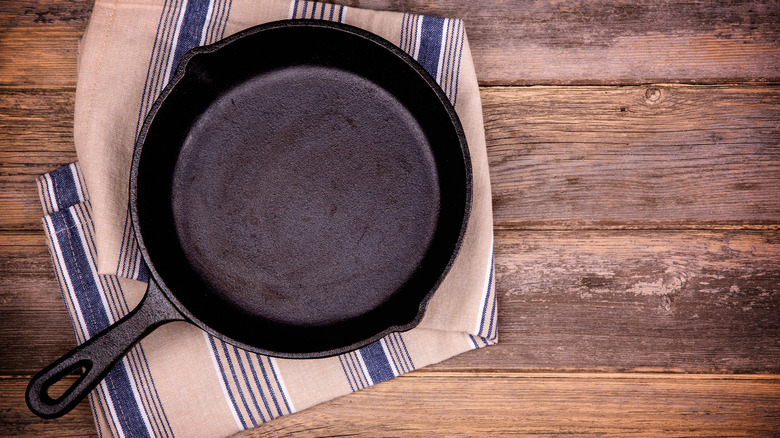
A lack of grid electricity certainly complicates refrigeration, though some Amish households get around the issue with gas- or propane-powered models. These units, including models from Crystal Cold or EZ Freeze, were a single-door refrigerator-freezer combo, the kind of appliance everyone had in the '80s. However, old-fashioned communities still use ice boxes. Cast-iron cookware, such as skillets and pans, is also well suited to Amish kitchens because of its durability. Unlike many nonstick pans, cast-iron cookware can last for generations, offers even heating, and works well with non-electric stoves.
Unsurprisingly, not every Amish kitchen essential is at odds with modern cooking. For instance, many Amish kitchens contain neatly arranged rows of glass or mason jars. The difference? These are used for canning and food preservation, ensuring their homegrown produce lasts through the winter. Some households may also maintain elaborate canning setups involving burner ranges and countertops.
Looking through the catalog from Lehman's, a store housed in Ohio's Amish Country, also reveals plenty of hand-crank and manual kitchen tools, like clamp-on apple peelers, cherry pitters, and strawberry hullers. How else would they create their staple applesauce and pies? Some Amish kitchens may also contain traditional tools like a chicken plucker or butter molds.