

Not Tea Or Coffee: The Colorful Kitchen Scrap You Could Be Using As A Natural Wood Stain
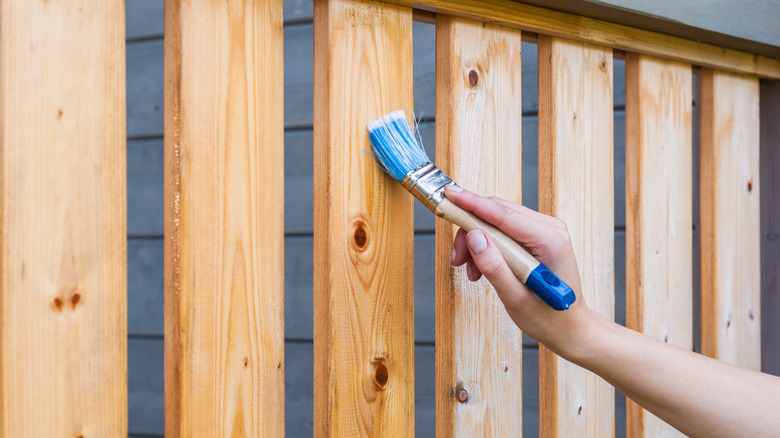
For many, most of the charm of wooden pieces comes from the material's natural beauty, which is why carpenters often opt to use a stain to finish wood projects. The stain allows the unique characteristics of each piece of wood, like its grain pattern, to shine through. To further enhance the organic appeal of wood, some folks will even use a stain made of natural materials. Even if you're not a regular woodworker, making your own natural wood stain is very easy. You could use a number of kitchen scraps to make bold wood stains, including berries and coffee grounds, but for a surprisingly striking hue, try making a stain using red onions.
Red onions have a rich reddish color that make them a perfect candidate for a DIY wood stain. The next time you find yourself chopping up this root vegetable, set aside the skins and any leftover chunks you don't end up using. Or, slice up any onions you've forgotten to use before they go bad — an onion slightly past its prime is fine for this project, but produce that has started to rot should be thrown away. Fill a glass jar with onion scraps, then cover them with either water or vinegar depending on how intense you want the final stain to be. Seal the jar, shake it up, and allow it to sit for a few days to allow the pigment to seep into the liquid. Before long, your new wood stain will be ready to brush over handmade furniture or customizable wooden wall decor.
Red onions create a beautiful rosy stain
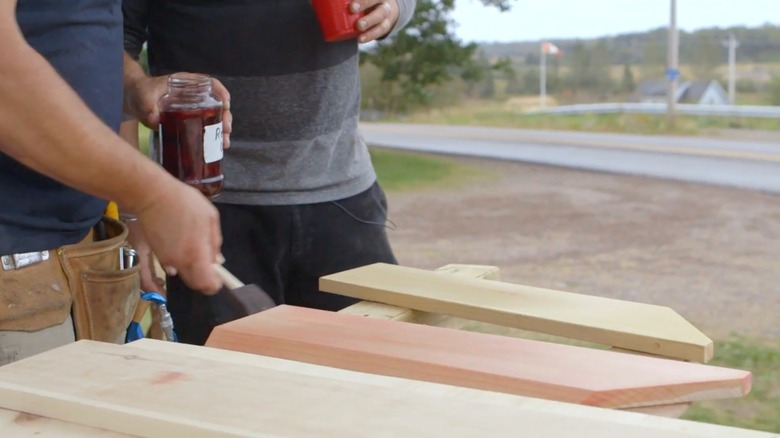
Give the onion jar a good mix again before you start working with it. A basic sponge brush should be perfect for applying the stain, but if you're having trouble transferring enough pigment to the wood, apply the mixture to an old cloth and use that to rub the color in more intensely. The stain's vibrancy will depend on a few factors, like how long the onions have been steeping and whether you used water or vinegar. Both are effective, but the latter seems to create a richer color. As with any other stain, be sure to brush it on in the same direction as the wood grain, and reapply until you're happy with the color. Be sure to do a test patch of the stain before using it, especially if you want the best results when staining antique furniture.
The red onion stain should dry to a lovely pinkish red color. Even if you only apply one or two light coats, you will notice a light blush on the piece, especially on a light wood. If you plan on frequently interacting with your new all-natural project, for example a shelf or chair, you should add a sealant coat to prevent the stain from fading or transferring. The vinegar smell will dissipate once dried, but sealing can help this too.
While red onions have the more dramatic color, you could also create a stain using yellow onions through the same process. They produce a lighter amber color, so you could potentially mix up the different onion varieties to produce a stain that's completely unique to your projects. By knowing how to turn onions into a wood stain, you can bring a whole new meaning to the phrase "farm to table."