

Two Home Improvement Staples You Can Use Instead Of Painter's Tape
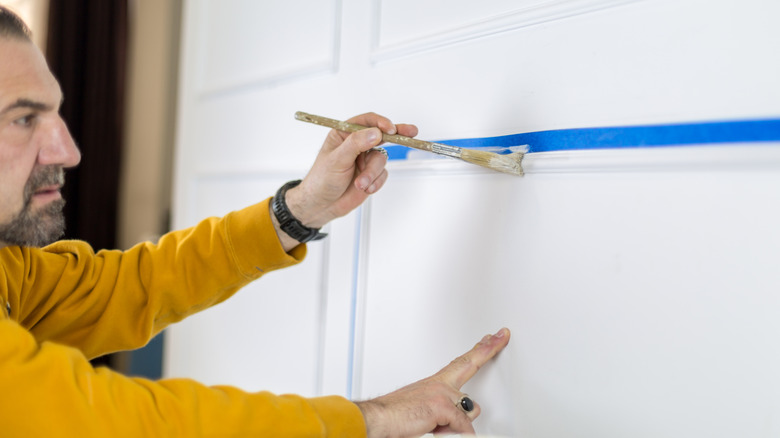
Classic painter's tape, be it premium or otherwise, has long been a staple accessory for both amateur and professional painters who consider it a must-have tool for a flawless home paint job. The idea is simple: The tape should provide a barrier to protect areas that don't need paint, and create a straight, crisp line once removed. However, as anyone who has worked with painter's tape can tell you, things don't always work out as intended, especially if you're working on a textured surface. If you've ever removed a strip of painter's tape only to be disappointed by the streaks of paint that have seeped through, rest assured that there is a better option. The next time you want to ensure clean lines when painting, swap out the painter's tape for regular masking tape and a caulking gun.
The problems with normal painter's tape arise when it can't form a tight seal against the wall or whatever surface it's stuck to. With a few exceptions, most walls tend to have at least some texture, which leads to gaps under the painter's tape. Paint leaks through those gaps, resulting in a shoddy-looking final result. A bead of caulk is all you need to solve this issue, and using masking tape makes the whole process cheaper. Before you start painting, make your outlines with masking tape instead of painter's tape. Then, lightly apply a line of caulk along the edge of the tape, and use your finger to smooth it down. The caulk will work its way into any gaps that may have formed under the tape, which will make painting straight lines much easier.
Masking tape and caulk are an effective combo
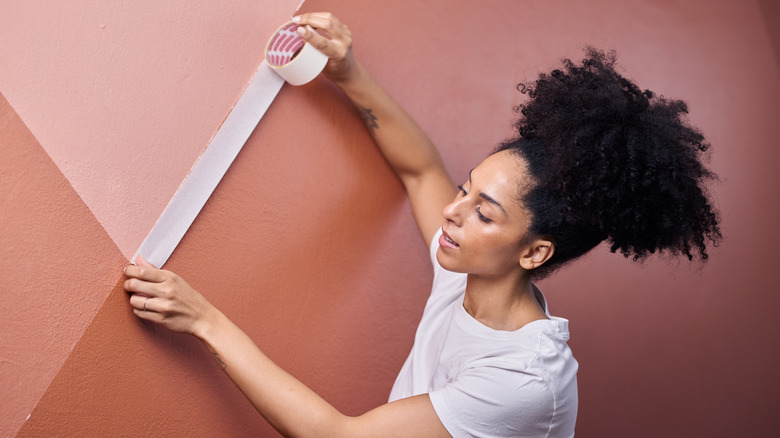
Painter's tape should be removed when the paint is still wet, and the same principle applies here. If you pull up the masking tape after the caulk has set, it could break off and take chunks of paint with it, so you will need to work quickly. Caulk dries quicker in the heat, so you may want to open the windows or turn on the AC to give yourself more time. Once you're satisfied with the tape's seal, go ahead and start painting, making sure to cover the edge of the tape. Afterwards, you can peel the tape away, and the line should be pristine. For large projects, it may be easier to work in chunks; focus first on creating the straight lines around your painting surface so you don't have to rush filling in the rest.
You can grab a bottle of caulk and some masking tape for the same price, if not less, than regular painter's tape, especially if you usually go for a premium, heavy option. You can use caulk to better seal painter's tape, which may be a good option if you're dealing with a super bumpy surface, but you'd be losing out on a couple of saved dollars. It's also likely you already have a roll of masking tape sitting around somewhere, so you may as well put it to good use. We're painting more than just walls and floors in 2026, so this method is sure to come in handy.