

Not Regular Wood: The Durable Material To Use For Stronger Raised Garden Beds
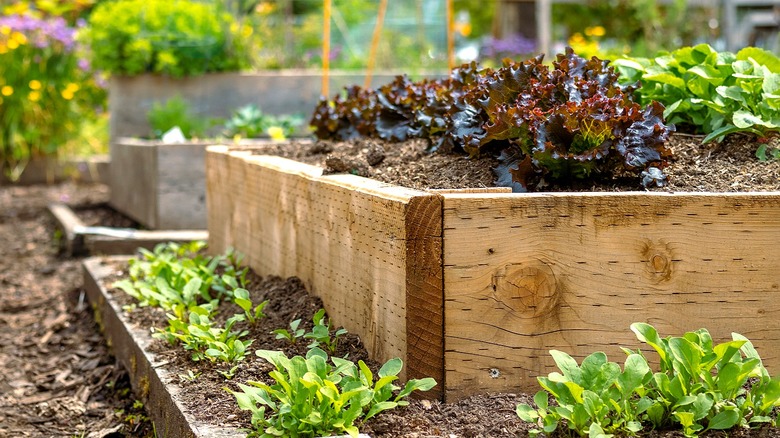
A natural material, wood offers a number of benefits when it comes to constructing raised beds for your plants and/or vegetables. Yet, wooden raised garden beds have some disadvantages all gardeners should know about – especially in the areas of a longevity and durability. Sure, a wooden raised bed, especially one made from cedar, can last a good 10 to 15 years if it's maintained well. But wouldn't you prefer a raised-bed material designed to last 20 years and that requires minimal maintenance? That material would be composite lumber, aka composite decking boards. It offers strength and durability that you may not find in wood.
Composite lumber is made from wood fibers and recycled polypropylene plastic and fashioned into boards with a wood-grained look and available in multiple colors. The lumber is easy to assemble into a raised bed, using flanged corner joints. Expansion, re-assembly, and reconfiguration are also simple with composite lumber.
Consider composite lumber for an enduring raised bed
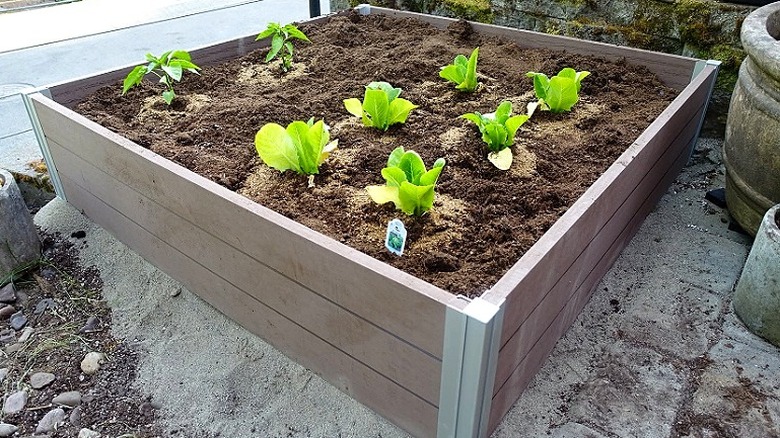
In most areas, composite lumber stacks up well against both decay-resistant wood, like cedar or redwood, and wood that's been treated with preservatives. The material is lightweight because it's mostly hollow; with some users equating this characteristic with flimsiness. Though subject to some deterioration, composite lumber doesn't rot in the way wood like fir or pine would, and it resists the ravages of weather. Wood typically requires a protective coating, such as sealer, stain, or paint, when used outdoors, but composite lumber does not.
The two criteria in which composite lumber loses out to wood are cost and environmental impact. Composite is significantly more expensive than wood, though these costs may even out somewhat if you have to spend money replacing wooden raised beds. (Note that building a raised garden bed is an efficient and economical use of composite lumber scraps from another project, perhaps a new deck.)
Secondly, not only is composite lumber not biodegradable the way wood is, but its manufacturing process results in a greater negative environmental impact than treated wood, especially in the area of greenhouse gas emissions. Composite lumber does get environmental points for being made from recycled materials.
Lastly, the possibility of chemicals leaching into the soil from composite lumber hasn't been studied by researchers, so look for lumber with a certification of non-toxicity, and ask your dealer if the lumber is food safe. Some users line the inside of the raised bed with food-grade plastic sheeting to protect soil from leaching chemicals.
Consider our curated designs for raised garden beds as you get ready to assemble your composite lumber beds. Once it's assembled, check out our ultimate guide to starting a raised-bed garden.