

12 Critical Bird Bath Cleaning Dos And Don'ts
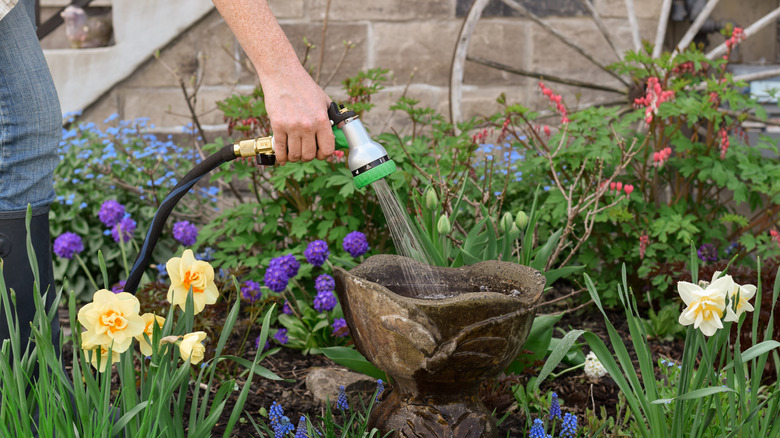
As a permaculture specialist and master gardener, a big part of my practice is supporting and caring for the wild creatures who show up in my garden — and that very much includes birds. I've spent decades building healthy garden ecosystems, working alongside all of the wild things that Mother Nature sends to visit. Birds are critical to garden health and to long-term sustainability. Many birds serve as pollinators. Others perform important tasks like pest control, plucking aphids right off plants or foraging in the leaf litter for grubs. I'm thankful for the birds that visit and want to encourage them to come back, so I make my outdoor space as hospitable as possible. Providing a clean, regular supply of drinking water is a pivotal part of that.
Bird baths are an easy way to attract more birds to your yard and to support the birds and other wildlife, depending on where you place them. Do remember that birds don't just drink from them. They bathe, preen, and sometimes relieve themselves while also having a drink, and these water receptacles can get dirty very quickly. So you do need to keep on top of keeping them clean and replenished. A dirty bird bath doesn't sound like a big deal, especially given that birds will bathe in all kinds of bodies of water out in the wild. However, small containers of water concentrate contaminants, so it becomes a much bigger problem much quicker. A dirty bird bath can breed mosquitoes that carry West Nile virus, and pass a multitude of other diseases between birds. Some of those can also pass to humans and other animals, so basic cleanliness is essential, and thankfully it's pretty easy.
Do scrub the basin at least once a week
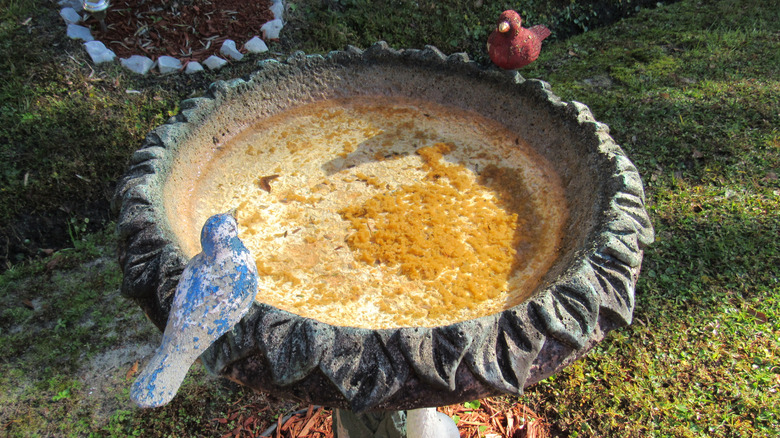
Bird baths get dirty fast from dirty feet and poopy butts. Plus, some birds will actually wash off their food in a bird bath before they devour it. The sheer number of critters that are sharing that small basin of water, plus the debris they carry into the bath, can create a very dirty water source quite quickly. The sun also gets to work and you can quickly end up with algae forming and germs breeding.
At a minimum, scrub the basins every week to remove any debris, even if they don't look too bad. If I see mine get particularly gnarly during the week, then I'll clean them then as well. It only takes a couple of minutes and ensures that no algae is forming and that bacteria isn't left to breed. I do my baths as part of my Saturday morning routine. Keeping things clean is one of the easiest ways to bring more birds to your bird bath.
Do change the water every two to three days
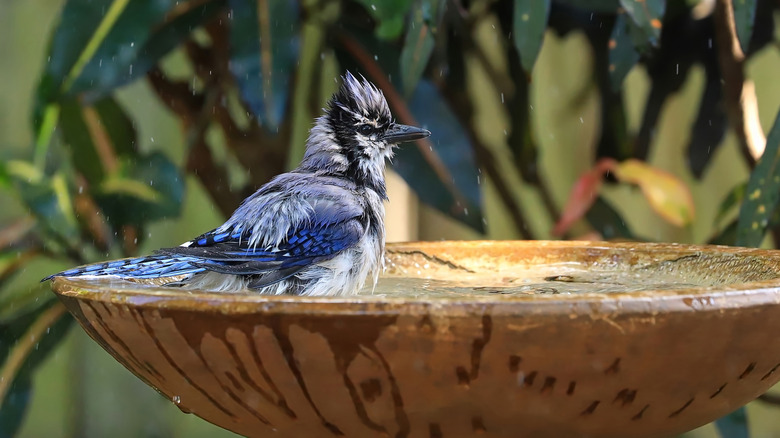
If your bird baths get moderate use, I recommend you change the water, even if you're not doing a full scrub, every two or three days. If they get a lot of use, which can happen during the summer, then daily changes are the better option. It stops the water from turning stale and prevents the baths from turning into a nursery for mosquito larvae, which reduces the risk of mosquito-borne diseases. Not to mention, reducing their breeding grounds and overall numbers also lessens how many times you'll likely get bitten by the pesky blighters while trying to enjoy your garden. Plus, during warmer weather, the sun heats the water, and algae and bacteria grow rapidly. Daily water changes help stop this.
Don't be wasteful though. Tip any unused water onto whatever garden bed looks like it needs it most, then give the bath a quick rinse, dump the water again, and refill. Even if you have half a dozen watering stations set up around your property, changing them daily really only takes five minutes, and it makes cleaning much less problematic.
Don't be tempted to reach for soap or detergent
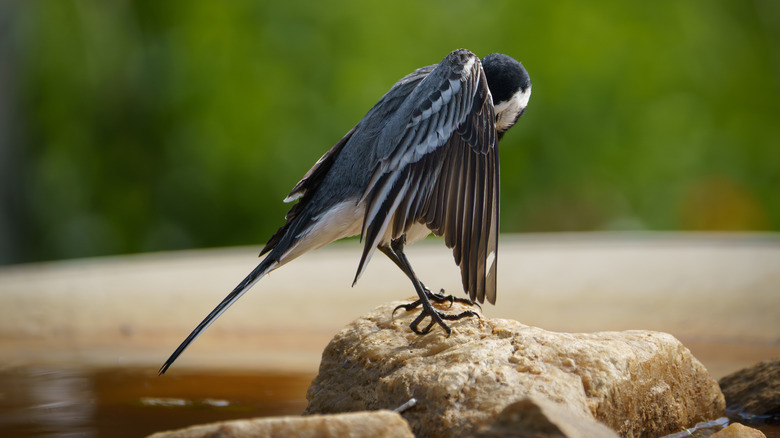
Normally, if you're trying to clean something, the first thing you do is reach for the dish soap, but please don't do that for a bird bath. Soap and detergent are some of the household cleaning ingredients you should always avoid using on your bird bath. Even a gentle detergent formula can leave behind a residue that strips a bird's plumage of its natural waterproofing. It's the same as when you wash your dirty dishes. The soap you use is designed to cut through the grease, and a similar action occurs with a bird's feathers. This can also impede their ability to regulate their body temperature properly when they're cold and wet, which can lead to ill health or even death.
You should also avoid other household and garden chemicals. I've even seen people use algaecide in a bird bath to try and combat the algae problem. While these chemicals, at the proper ratio, may be safe for aquatic life and not terribly dangerous to humans as long as you wash your hands after use, they are not safe for birds. These creatures spend a great deal of time preening their feathers, so they can end up ingesting anything that's on them. It's really not safe to use synthetic products like pond or pool chemicals, or most household disinfectants, even at diluted concentrations.
Do use a diluted vinegar solution for routine scrubbing
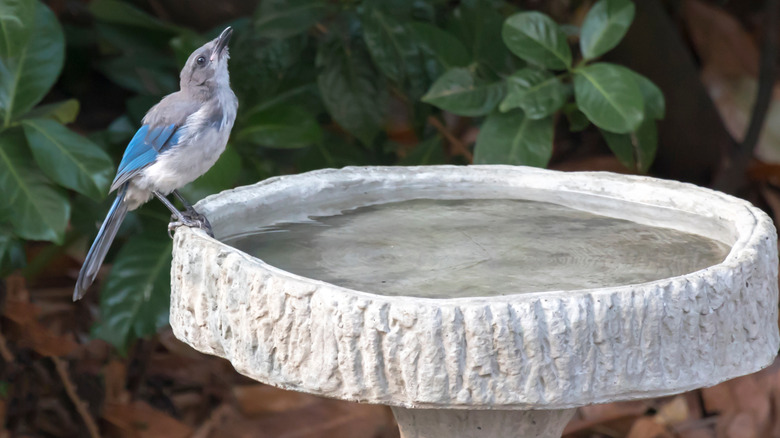
I love plain old 5% white vinegar. It has many uses in the home and garden, and is a great alternative to many synthetic products. It is safe to use around your bird bath as long as you do it sensibly. I use a 50% water, 50% white vinegar spray to do deep cleans on the bird baths. I empty the baths, spray the solution all over, and let it sit for at least 30 minutes. Then I get in there with my scrubbing brush and give the surface a good going over with a bit more vinegar solution to get rid of as many stains and as much grime as possible. I follow this up with a darn good multi-round rinse, filling and emptying the bath a few times until it doesn't smell of vinegar anymore. Don't pour vinegar water on your garden, though. Be smart and pour it down the drain or you'll kill your plants and damage your soil.
For a lighter, general clean, I'm more cautious and use a roughly 9:1 vinegar-to-water ratio, as this is just about strong enough to cut through any grime or biofilm, as long as there's not too much buildup. The scrubbing and rinsing process is still the same. Once it's as clean and well rinsed as you can get it, sit the bird bath in the sun and let it dry completely to get rid of any residual vinegar before you refill with fresh water.
Do use the right brush for the right basin
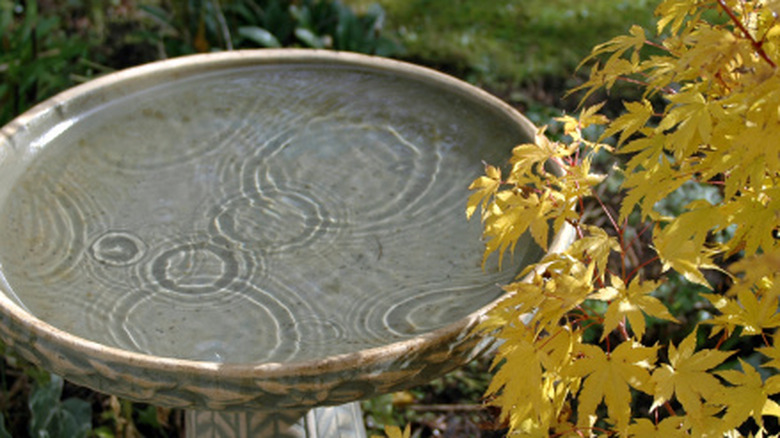
There are many different bird bath designs and materials. For my bird baths, I have a variety of materials, including some old ceramic and glass, overly large dishes, as well as a couple of concrete ones. You just can't use the same brush on cement as you would on ceramic and glass. Cement bird baths tend to be tough and they can handle powerful scrubbing with a stiff wire brush. They also need it because of their rough texture, so it's important that you clean all the little imperfections that you just can't do with a microfiber cloth.
If your bird baths are glass, ceramic, plastic, or resin, you need to be much more careful, because if you scratch these surfaces, bacteria and algae can take root there and it's very difficult to clean. Instead of a tough wire brush or steel wool, you'll need a soft nylon brush or a non-scratch scourer. Plastic and resin are, in my opinion, the worst materials for a bird bath and for pet bowls, because they are very difficult to keep clean without scratching them up. I do however like ceramic and glass. Although they will break if you drop them, they do clean up very nicely and they don't tend to scratch in the same way as plastic.
Do let the bird bath dry completely before you refill it
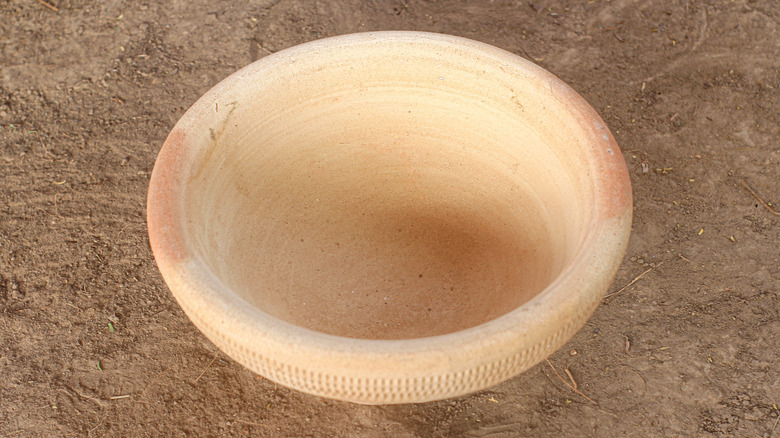
It's all too easy to finish rinsing your bird bath at the tap and immediately refill it. It makes sense and it saves you time, but you may not have managed to get rid of all traces of whatever you cleaned the bird bath with. You need to give it a drying window, preferably by sitting it in direct sunlight and letting it completely dry. This lets any traces of vinegar, for example, evaporate, so that it doesn't get back into the drinking water.
I usually clean my bird baths out in the morning, then leave them sitting in the sunshine for a couple of hours while I walk the dogs or get on with the rest of my yard work. Just before or just after lunch, I go back, refill them all, and set them back in their original positions. Allowing the baths to dry before you refill them also gives you the opportunity to examine them and check for signs of wear, deep scratches, or cracks.
Don't sit the bird bath directly under a feeder
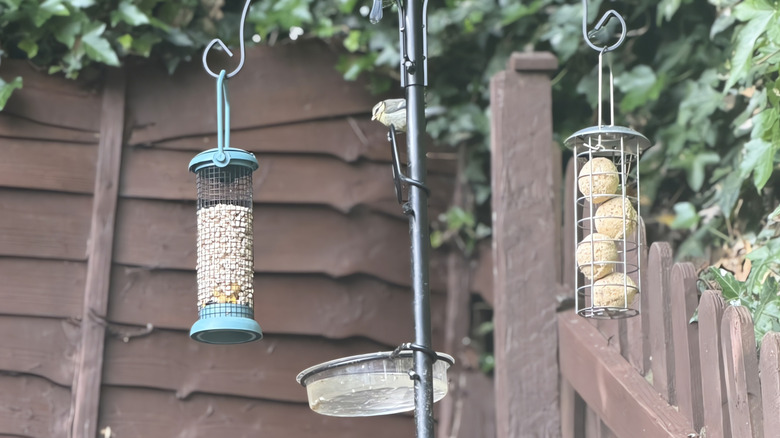
Over the years, I've seen many people try to keep their bird area confined to one small corner of their garden. They buy a beautiful, expensive birdbath, then sit it directly under the tree where they've got their bird feeder hung. Of course, all that happens is the birds sit on the feeder and drop the hulls and the seeds directly into the basin of water. There are so many different types of bird feeders, but the result is the same: The water quickly becomes cloudy and algae begins to grow as it feeds on the food waste the birds have dropped. The exception is if you're using a ground-level feeder like a bird feeding tray, in which case you obviously can't put the bath underneath it.
Birds don't need to be confined to one tiny area and it's very easy just to set the bird bath a few feet to one side of the feeder. It's a super fast, very simple step that saves a lot of frustration and a lot of extra cleaning. After all, you can't explain to a bird that they need to be less messy with their food.
Do use a very diluted bleach solution (but only in extreme circumstances)
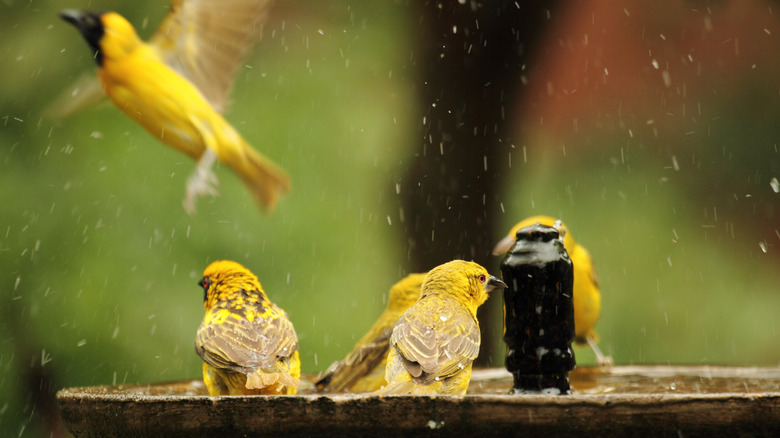
Now I did say that you shouldn't use household cleaning products in your bird bath outside of using some white vinegar and I stand by that, but there are exceptions. A bird bath that is particularly disgusting and has been left for a long time without cleaning may need something more powerful than vinegar to get the job done. Similarly, if there has been a disease outbreak specific to birds in your area or you've seen a sick bird regularly using the bird bath, then you may need to take stronger action.
Very diluted unscented bleach is safe for this kind of disinfecting deep clean, but only if it's used at a 9:1 water-to-bleach ratio. Any stronger than this, and you risk harming anything that comes back to drink or bathe later. This is not what you should be doing for your weekly clean. You should only consider bleach treatment in extreme circumstances where there's no better option. Use it just as you did with the vinegar scrub. Spray on the solution, let it soak, give it a good scrub, and rinse, rinse, rinse. I would let it dry completely, then fill with water, only scrub it with a clean brush, rinse, and let it dry again. Bleach, even diluted, is a very strong and potentially dangerous substance, so it's best to err on the side of caution and over-scrub and over-rinse to make sure that there is no residue left behind, as it could harm the wildlife using the bird bath.
Don't keep the bird bath filled if you spot a sick or dead bird
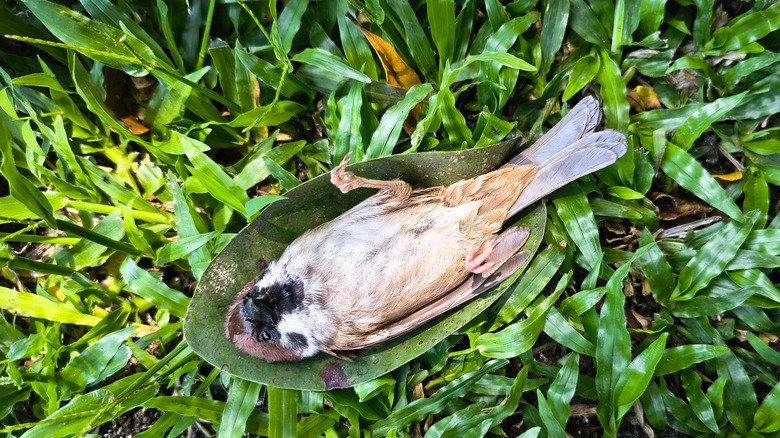
Just like with humans and other species, diseases and infections can pass between birds, including between different bird species. It's important that you are vigilant. If you see a bird nearby that seems unwell, is reluctant to fly, puffed out, oddly calm, or has other signs of ill health, you need to remove the bird bath. It could have swellings or sores on its face that indicate a type of avian pox, or it could have gummy eyes, or one or both eyes could be partially closed.
If you notice any of these signs or you find a bird nearby that's dead and hasn't obviously been killed by a predator, then you need to remove the bird bath right away to help stop the spread of the disease. It would be at this point that you would use a full bleach disinfection, and it's probably a good idea to keep the bird bath empty for a week or so, too. Depending on what you're seeing and where you live, your state wildlife agency may also want to know that you have spotted an obviously sick bird in your yard. Get a photo if you can and keep a record of how many birds you've noticed exhibiting symptoms, and the species affected. Salmonellosis and similar outbreaks can spread incredibly fast through both waterers and feeders, so make sure you remove bird feeders, empty their contents into the trash, and clean those at the same time as you do the water baths.
Do put the water bath somewhere that's partially shaded
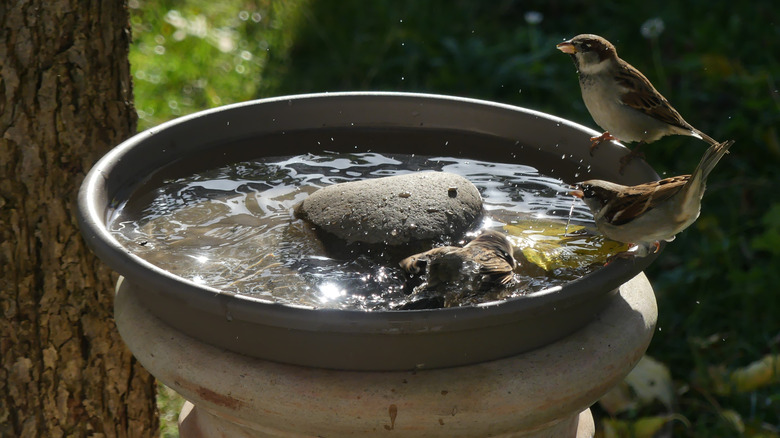
Lots of people wonder whether they should put their bird bath in the sun or the shade. For me, the shade always wins. All of my bird baths and wildlife watering stations are somewhere that's a little bit shady. I tend to go for spots that are fairly quiet, out of the way, and that have dappled sunlight, so that the water bowls aren't left out baking in the sun all day.
Lots of direct sun heats up the water, causes it to evaporate quickly, and encourages algae to take hold. You're far better off putting the bowl in the dappled shade of a tree canopy, where it will stay a little cooler and give birds a chance to drink and bathe in relative peace, without getting too hot. If you don't have any suitable shady spots for your birdbath, you can create shade by installing a small canopy or by using a shade sail that creates a large shady area in your garden that humans and animals alike can enjoy when it's too hot outside.
Do clean it more frequently during hot spells
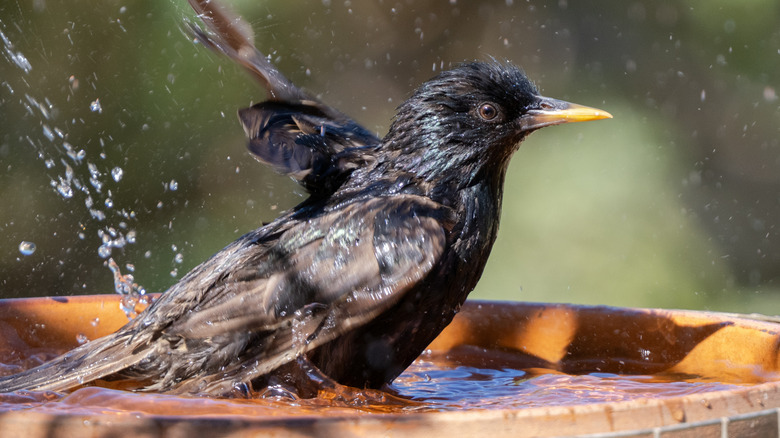
You would think that you'd have to clean the birdbath more in winter and early spring before the good weather sets in, because it's muddier and colder. But, actually, that cooler weather means that fewer problematic things like algae and mosquitoes bother your birdbath. Once the hot weather arrives, evaporation increases and bacteria and algae multiply at much faster rates. You'll need to increase the frequency with which you clean and probably have to top up or change the water every single day during the hottest periods.
If you are changing the water every day, then you may as well take the time to run a brush or cloth over the surface to just make sure it's extra clean. Even if you don't go the full vinegar cleaning route every time, getting into the habit of running a brush or a cloth over the interior of the bowl every time you change it during hot weather means you'll need to do bigger, more intensive cleans less often.
Don't put the bird bath somewhere predators can easily stake it out
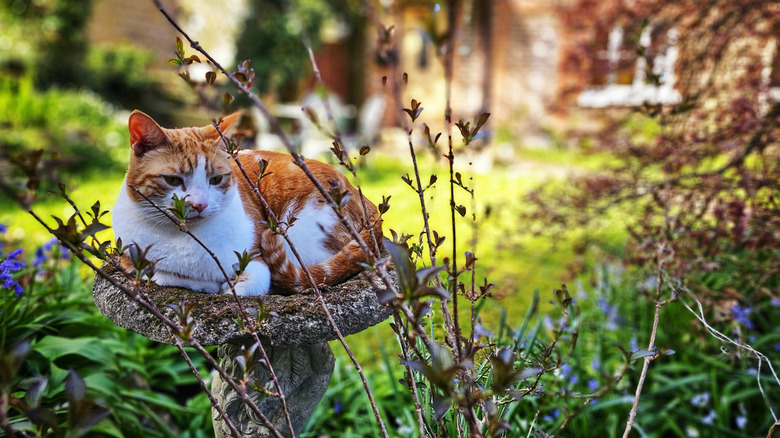
If you've got pet cats or your neighbors do, or you live in an area where there are tons of other predators who like to snack on tasty little birds, make sure you don't put your bird bath somewhere where predators can easily stake it out. That means not putting it within about 12 feet of dense shrubs and tall grasses, or anything else that a cat could use as cover from which to launch an attack on unsuspecting birds in your bird bath.
If you create a buffer of coverless ground around your bird bath, however stealthy the cat, the birds will be able to see it coming and fly away before the predator gets within striking distance. Birds don't need the cover when they are just stopping by to feed, drink, and have a quick bath. They are much better off with the bird bath positioned in a clear area, as they are safer from terrestrial predators that way. If they can see them coming, they can fly off and get out of the way.