

Replace Drawer Liners With A Common Household Waste Item That Looks Good
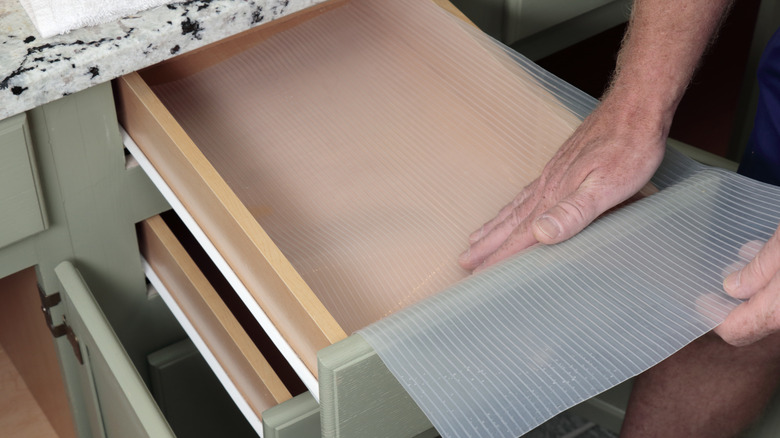
Drawer liners are an easy way to ensure your cabinetry remains top-shelf. So, if you want to avoid your once-pristine drawers and shelves from getting damaged, use shelf liners in your kitchen cabinets and other spaces. They put a protective layer between your cabinetry and the detritus of daily life. The liners can also prevent the surfaces from getting water damage that can linger on freshly washed dishes or grease that might transfer from sauces, oils, and other pantry items. It's far easier to wipe clean a liner than it is to scrub stains out of your wood, MDF, or laminate cabinetry.
Also, when done thoughtfully, liners add something extra to your home's aesthetic, though you don't need to shell out for a specialty product. There's simply no need for drawer liners when there are plenty of cute alternatives. And one of the easy DIY liners you can use might already be stashed somewhere in your home, because those stacks of magazines earmarked for the recycling bin can have an unexpected second life as drawer liners. A clever way to repurpose old magazines, they're equal parts practical and fun, and might even start a conversation or two with guests.
How to use magazines to line your drawers
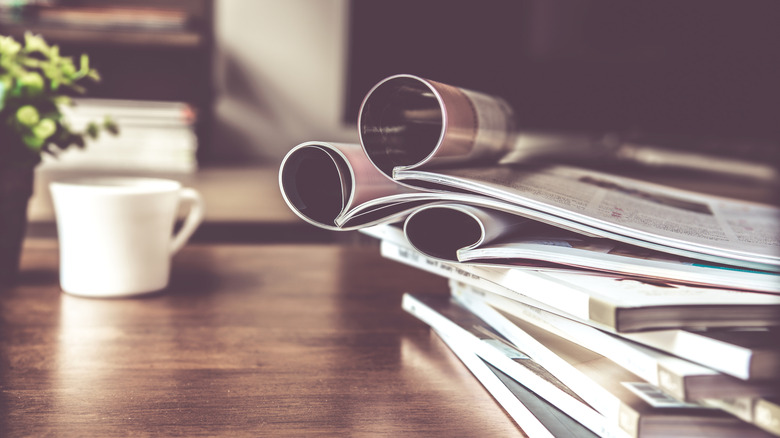
If you'd really like your DIY drawer liners to, uh, pull focus, take care when selecting the pages. Although the choice ultimately comes down to personal preference, pages with rich colors, textures, shapes, or fonts add the most visual interest. For the easiest application, remove the drawers if possible. And because you'll want precise measurements, a cloth measuring tape may be easiest to use given its flexibility.
Once measured and trimmed to the proper dimensions, affix the pages with the help of Command strips or double-sided tape. Use a scraper, or even just your hand, to smooth out any bubbles. When it comes time to remove the pages, running a hairdryer on a low setting can loosen up the adhesive, allowing you to carefully peel them free.
For an even firmer hold, reach for Mod Podge's matte formula and a flat, wide paint brush. With the pages in place, apply the sealer over top, working in sections to ensure a thin, even coat that won't wrinkle or bubble. Though the bond will be solid, you can add water to remove the papers down the road. Spray the surface with warm water, then place a damp wash cloth on top, letting it sit for up to an hour. Use a scraper to lift the layers off, repeating as necessary.