

Forget Diatomaceous Earth: The Garden-Friendly Way To Banish Ants From Your Outdoor Spaces
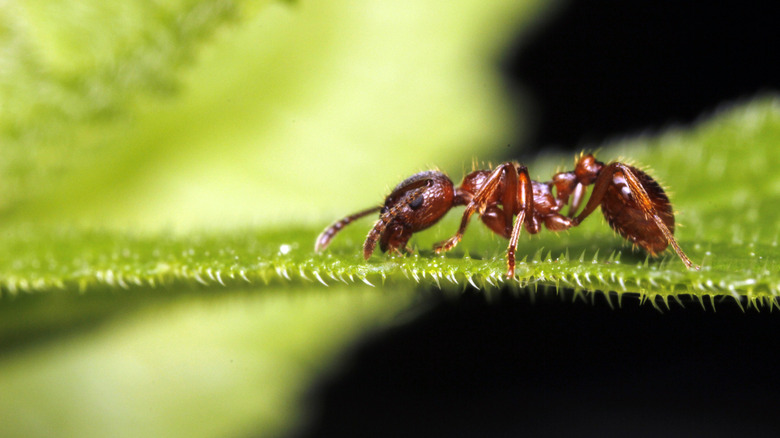
Ants have a cartoonish reputation for ruining picnics, but the truth is they can be a nuisance for almost any kind of outdoor activity. When present in large numbers in a garden, these insects can affect the health of plants by damaging roots or leaves. Several different types of ants can commonly be found in a garden, and they all can potentially cause damage.
However, ants can also be beneficial to the rest of your yard and the surrounding ecosystem; they improve soil health and prey on other pests, meaning you might want to get rid of them without harming them. Using diatomaceous earth around your garden could put an end to your ant problem, but it is likely to kill them. A different option to consider for driving ants out of the area is tea tree oil, which is an essential oil known to disrupt the scent trails ants leave behind and help repel them. Scientists believe the active ingredient in tea tree oil, terpinen-4-ol, causes ants to refuse to cross the area, and unlike with diatomaceous earth, this happens right away.
Tea tree oil can also make plants healthier by combating fungi and bacteria that cause diseases. However, you'll want to dilute tea tree oil before using it on your plants, as pure essential oils can burn or damage plant leaves. Similarly, if you spray non-diluted tea tree oil directly on ants, the substance will kill them, meaning you need to use it carefully.
How to use tea tree oil safely against ants in your garden
A 2019 study published in the International Journal of Pest Management measured the effectiveness of tea tree oil on repelling leafcutter ants, using both laboratory tests and outdoor tests. In the lab, tea tree oil at a concentration of between 1% and 10% showed the ability to disrupt the behavior of the insects, but weaker concentrations had no effect. In outdoor tests, researchers placed filter paper with a 1% concentration of tea tree oil along trails and near sources of food, and the ants avoided these areas.
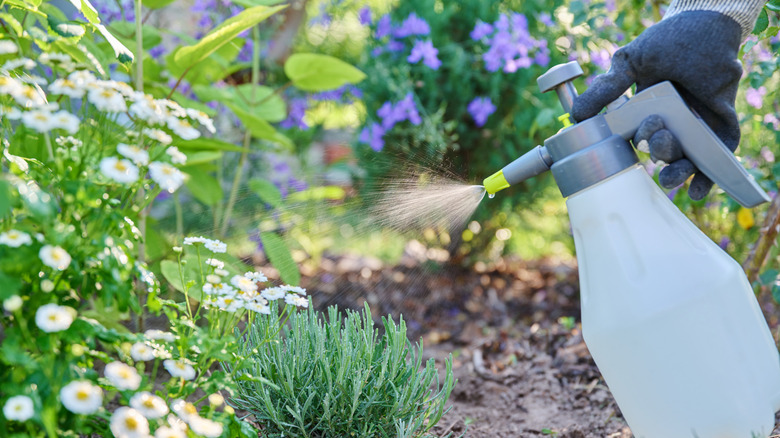
To create a 10% solution of tea tree oil for use in your own garden, add 9 parts water for every 1 part tea tree oil. For example, add about 5¼ teaspoons of tea tree oil to 1 cup of water. If you add a squirt of dish soap to this mixture, which is safe to do with tea tree oil, it will make the combination cling better to plants in your garden. Place the mixture in a spray bottle and apply it to the ants' trails to disrupt them, or spray it in a perimeter around the areas you want to protect. The scent may fade after about a week, necessitating reapplication. Make sure to shake the bottle before each use to incorporate the tea tree oil into the water and soap.
You can also use tea tree oil around your home for tasks like cleaning or air freshening. However, you do have to apply it carefully both indoors and outdoors, as it is toxic to humans and dogs if ingested. If you spray it on edible plants in the garden, thoroughly wash them after harvesting.
Why using tea tree oil can be better than diatomaceous earth
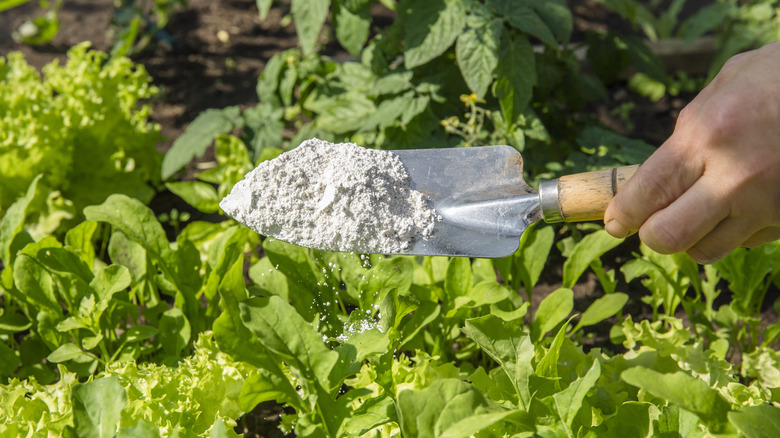
For people who want to repel pesky ants instead of killing them, applying diluted tea tree oil is preferable to using diatomaceous earth, which is specifically marketed for killing insects rather than just repelling them. Diatomaceous earth consists of fossils from aquatic creatures called diatoms. Their skeletons consist of silica, the primary ingredient in diatomaceous earth. It naturally has sharp edges (which can only be seen under a microscope), and these edges cut through the exoskeletons of insects, including ants, as they pass over the diatomaceous earth material. The silica then absorbs liquid from the ants through these tiny holes in their exoskeletons, eventually causing them to die from dehydration.
Beyond killing ants, another disadvantage to using diatomaceous earth is that it doesn't work when it's wet. The material clumps together in high humidity or after rain, meaning it won't cling to the insects effectively. (You should also reapply essential oils, like tea tree oil, after rain.) Additionally, it can take several days for the ants to die of dehydration from exposure to diatomaceous earth, meaning they'll continue to be a nuisance in the garden in the meantime. By contrast, studies show that tea tree oil immediately causes ants to avoid the areas of application, even refusing to cross the line to try to collect food, so you should see results more quickly with this method.