

Ditch Landscape Fabric For An Overlooked Alternative That's Durable And Cheaper
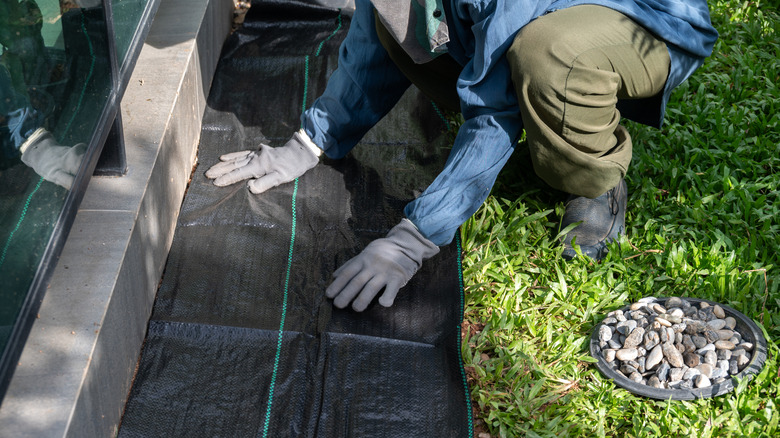
Many people go for store-bought landscaping fabric because they've heard people say it will save you a lot of time weeding your garden. We get it. However, while that sheet may smother weeds and pesky grass at the beginning, the reality is that it doesn't last very long. Weeds still eventually take root, and when their hairs embed into the fabric, they become a nightmare to pull out. At that point, removing a degraded landscape fabric becomes a hectic task. In the end, the downsides to using landscape fabric aren't worth the price point. Fortunately, you can ditch this material for a common household waste item you probably have loads of if you keep pets or animals: empty feed bags.
If you have chickens, cattle, or even horses and regularly buy feed to supplement their diet, landscaping is a smart way to repurpose those pet food bags. Save these hardy sacks from ending up in the landfill; instead, use them as weed barriers.
Typically, there are two main types of feed bags: multi-layer paper feed sacks and woven poly bags. The latter are more common and made from synthetic plastic polymers. They last longer, as they're made to be tear-resistant. In contrast, multi-layer paper feed sacks offer an eco-friendly advantage. Here's how both can be used as a weed barrier.
Turn woven poly feed bags into durable DIY landscape fabric
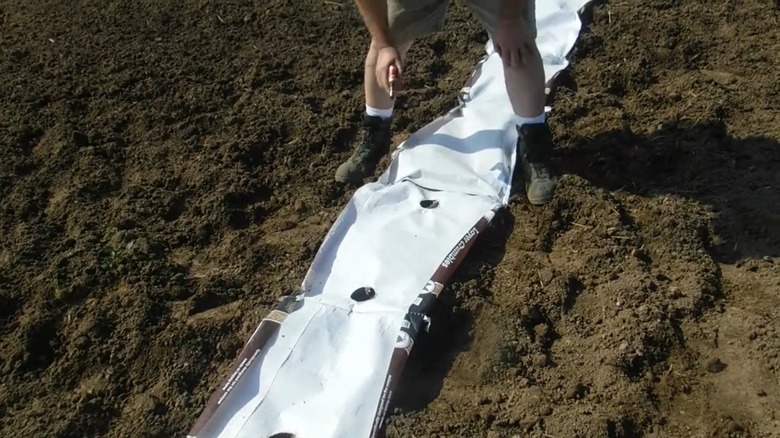
The process of turning woven poly feed bags into DIY landscape fabric is pretty straightforward. First, take the empty feed bags and cut them open. After that, lay them on the ground in overlapping rows and staple them to the ground. You can use landscape staples or even rocks to keep the material in place.
To start planting, make holes in the bags using a butane torch. Alternatively, you can cut cross slits using a utility knife. From there, scoop out the soil beneath the holes. Then, drop your seedlings or seeds in the ground below. Ensure you allow enough space between the plants. After that, sit back and enjoy a weed-free garden planted without spending a single penny on store-bought landscape fabric.
It's important to note that these woven poly feed bags (just like store-bought landscape fabric) are not biodegradable. So, when they eventually break down, microplastics will remain and contaminate your garden soil. If you'd rather avoid that, you can limit yourself to using only paper feed sacks.
Try multi-layer paper feed bags as a natural alternative
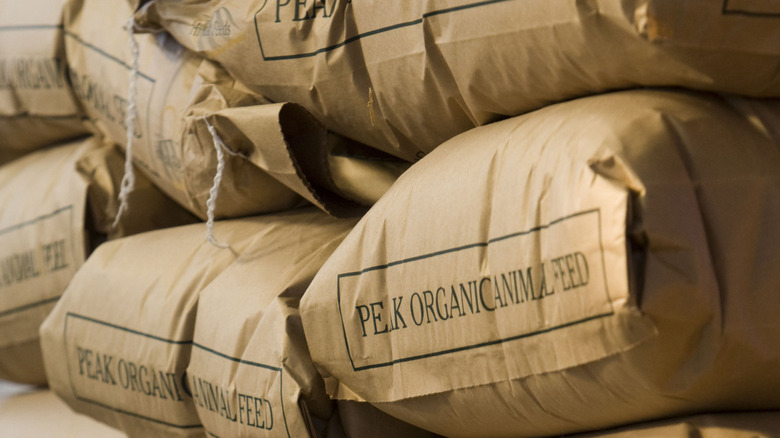
You can easily identify these kinds of feed sacks, as they clearly resemble kraft paper. Several layers of this material are put together, resulting in a sturdy bag for carrying feed. Since these sacks are made of paper, they are biodegradable. As such, they make a great natural solution that's much better for the environment than synthetic alternatives or store-bought landscape fabric. However, some may have a polyethylene liner to protect the feed from moisture. This layer can be cut out and set aside for recycling.
Use these empty paper bags the same way you'd use cardboard to mulch your garden. First, flatten them one by one. Then, arrange them on the ground, making sure they overlap to avoid any gaps. Next, spread wood mulch on top to completely cover the bags.
Keep in mind that compostable paper feed bags will deteriorate much faster than regular landscape fabric. That said, you won't need to pull the aging bags out of the ground when they can no longer hold out against weeds. Instead, cover them with a fresh layer of paper feed bags and wood mulch. Then, you can continue to enjoy a hassle-free mulch and weed control experience. The process is so easy that it's clear why there's simply no need for traditional landscape fabric anymore.