

Not Flowers Or Bird Baths: The Surprising Yard Features Pollinators Love
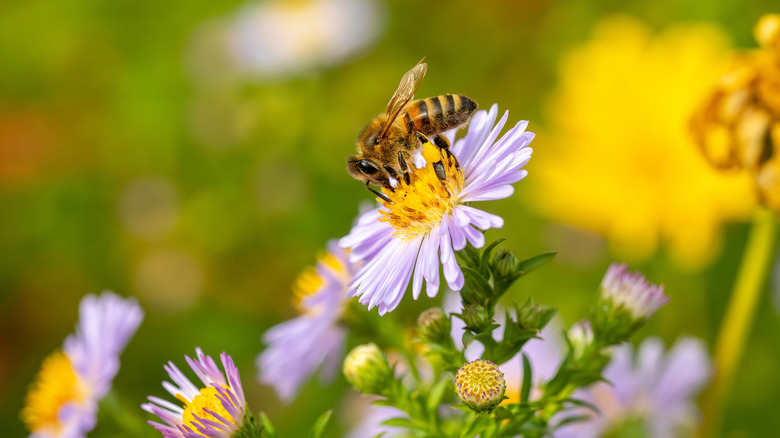
Everybody knows that pollinators love to feed on flower nectar and pollen, but we sometimes forget about their other needs. Wildlife friendly features such as growing native plants, practicing pesticide-free gardening, and leaving faded flowers and leaf litter will all help turn your yard into a pollinator haven. Water features like bird baths and puddlers are also a standard way to invite more birds and butterflies to your yard, but bare soil is something that's overlooked. Not only are patches of earth great for ground nesting insects, but when they get wet, mud provides wonderful resources that pollinators love.
Sometimes gardeners forgot that pollinators also need water if you want them to make your yard their home. Maybe you're clued into this notion and have already added a butterfly puddler, the tiny garden feature that has big butterfly payoff. But it might feel surprising to realize that mud is also an essential feature for many pollinators. Both orchard bees and mason bees use mud to line their nests. Butterflies such as Monarchs collect nutrients from mud puddles and use these dirty spots as watering holes too. Male butterflies in particular rely on the minerals they can source from mud. Without those patches of wet soil, their reproductive abilities are hindered. And if you love seeing birds around your yard as much as bees and butterflies, you'll be happy to know that birds like cliff swallows will also make use of mud to make their nests.
Tips for working mud puddles into pollinator-friendly yards
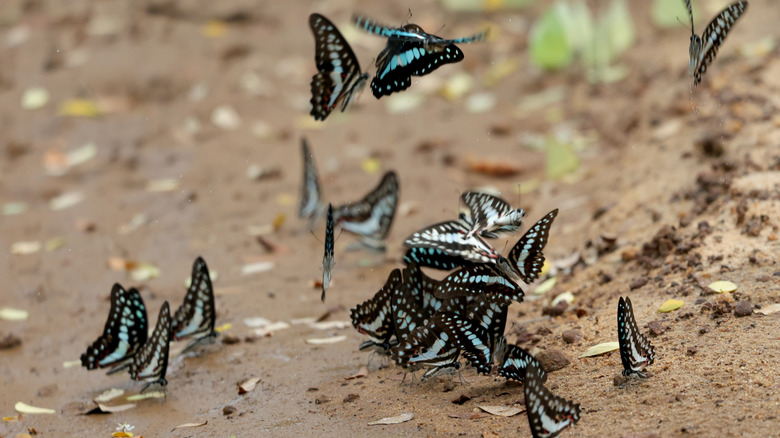
You may wonder how exactly to use mud to attract pollinators to your own yard. You can add this surprising feature in a a couple of different ways. Try to keep some spots on your property where the soil stays bare rather than covering every square inch of ground with mulch or vegetation. Look for areas of your yard or garden where puddles are naturally forming, such as near a hose faucet or in a low spot. You can also dig a shallow basin the ground in an area that's easy to keep moist. Sunny, undisturbed locations are ideal for these small pollinator-friendly features. And if you turn a pile of shells into a bug fountain to support the bees and butterflies, you could add your mud puddle just below it.
Supposing you don't have naturally forming puddles in your yard, or don't want a bare spot in your lawn, you can also create a mud puddle for butterflies to flock to in a shallow dish. A terracotta saucer would be ideal for this purpose. The ingredients you should add to your above-ground mud puddle include sand, compost, and perching pebbles. Then add only enough water to form a puddle. Keep in mind that butterflies look for these wet spots when the summer is at its hottest. Try to keep the mud dish wet when it's needed most, perhaps by using a drip hose. While one mud puddle is a great start, to really give your local pollinators what they love, add several to your property.