

Should You Kill Ants When You Find Them In Your House?
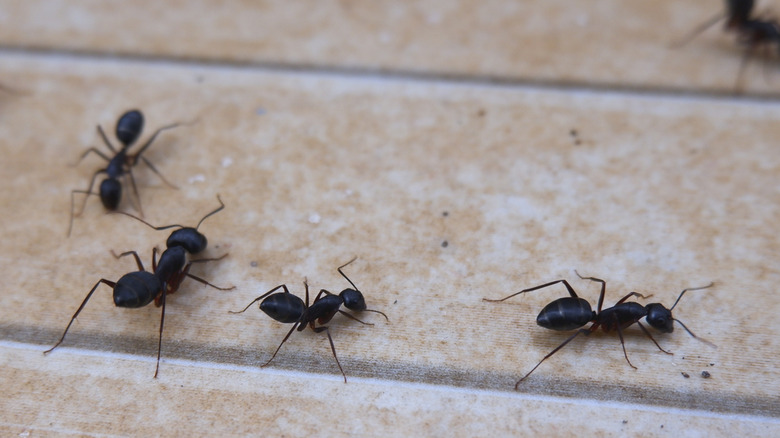
Seeing a lone ant marching across your kitchen counter sets off an automatic reflex: grab a paper towel, squish it, and carry on with your day. It feels like an instant win, but that quick press of a napkin could backfire since that single ant isn't just aimlessly wandering; it's on a reconnaissance mission. Once a scout finds a stray breadcrumb or a drop of spilled juice, it lays down an invisible pheromone trail on its way back to the nest, creating a direct highway that guides more worker ants straight back to your pantry.
Smashing that scout on sight might feel satisfying, but it rarely stops the raid. If it's already laid down a path, the rest of the nest will follow it whether the scout makes it back home or not. Even worse, squishing ants can actually trigger a nightmare scenario, depending on what kind of ant is plaguing your home: Species like Argentine or pharaoh ants operate in multi-queen colonies, and when their colony or environment is disturbed, their defense mechanism known as "budding" kicks in. This causes the colony to split apart and scatter into multiple smaller nests, potentially turning a minor kitchen nuisance into a more intense infestation.
Instead of smacking the next ant you see, take a breath and let it lead the way. Trace its path back to where it entered, set out slow-acting bait stations along the trail, and only clean up surrounding areas once the bait is established. If the stray ants you find lead to a full-blown infestation, or turn out to be structural threats like carpenter ants, call in an exterminator before major damage occurs.
How you should handle an ant problem instead of killing them
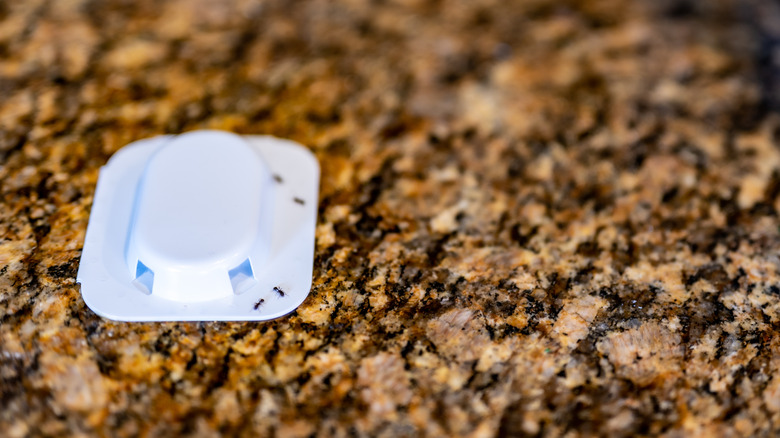
It sounds counterintuitive, but letting the ants march is one of the best ways to get rid of ants for good. Trace the line both ways — where are they heading, and where are they sneaking in? Focus on baseboards, window sills, backsplash edges, and outlet covers. Wall sockets happen to be an unexpected spot ants are hiding in your home since they create gaps that lead straight into your wall cavities.
Once you know the ants' route, bring out the secret weapon: liquid or gel ant baits.Place bait stations along their active trail and near their entry point, and resist the urge to disturb the ants checking it out. These slow-acting baits blend a sweet or protein-rich lure with a low-dose poison like borax. Because it works slowly, the workers don't die right away. Instead, they carry the poison into the heart of the nest, where sharing it with the queen can wipe out the entire colony.
After the bait line is active, you can wreck their secondary navigation trails to keep them away from your food. To erase the invisible pheromone trails scout ants leave behind, make a spray with equal parts white vinegar and water, or use warm water with a generous squirt of dish soap, and scrub down paths leading toward wherever you've seen ants gathering. This will disrupt those chemical scent markers, leaving behind a clean surface that confuses stragglers and redirects foraging traffic toward your bait stations. It may take weeks to fully destroy the nest, but you should start seeing fewer ants within a few days.