

Do Solar Panels Work In The Shade?
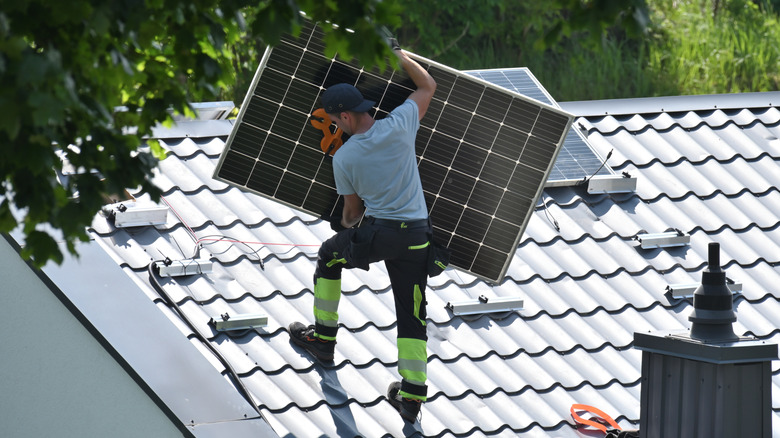
Running your whole home on solar panels sounds great. However, they can end up being quite an expensive headache if you don't know what you're doing, especially when it comes to placement. The location where they are installed can drastically affect the power output. For example, while your solar panels can still work in the shade, even a small obstruction can noticeably reduce their energy output.
If you hope to have your home powered by the sun, you need to think about the 20 percent rule for solar panels. This involves getting a system that produces 20 percent more power than your home typically needs, as it accounts for partial loss in sunlight due to clouds or other obstructions. Unfortunately, if you notice your electric bill is still so high even after installing solar panels, it could be because they are being blocked from working fully, possibly by an object creating shade in the area.
You may think just a small shadow can't be that big of a deal, but even a little can cause dramatic differences. In some cases, temporary disruptions like clouds, shade, or rain may drop energy production by 90 percent. And if your panels are constantly in the shade, you may not get nearly the amount of energy you expected, forcing you to rely more heavily on electricity from the grid.
Shade can hurt your solar panels more than you might expect
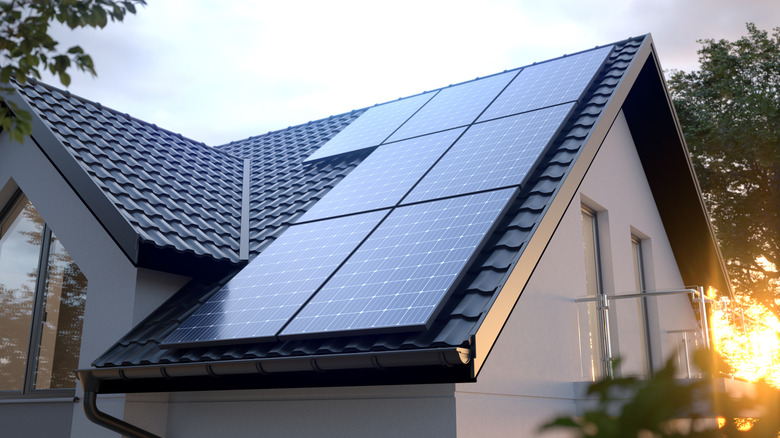
You may think that solar panels only lose their energy when completely in shade, but this is unfortunately not the case. Even if just a little bit of a panel is covered, you may notice a difference. Solar cells are typically connected in series, and modern panels commonly use bypass diodes to divide them into sections. Shading cells within one section can therefore reduce the output from more than just the individual cells being covered. If your panel is made up of three sections, a little bit of shade in one part can easily make it so that it's only at 2/3 capacity, even if the rest is in the sun. If a little bit of every section is in the shade, then it may stop your solar panels from producing energy entirely.
If your system is connected via string inverters, then you may find the situation is even worse. Because panels connected to the same string operate together, shading one panel can reduce the performance of the entire string rather than affecting only that panel. Technologies such as microinverters or power optimizers can reduce the impact of partial shading by allowing panels to operate more independently, although they can increase the system's upfront cost. This is why shade can be such a big deal, and why you want your panels to receive as much direct sunlight as possible throughout the day.
Install your solar panels correctly for maximum effectiveness
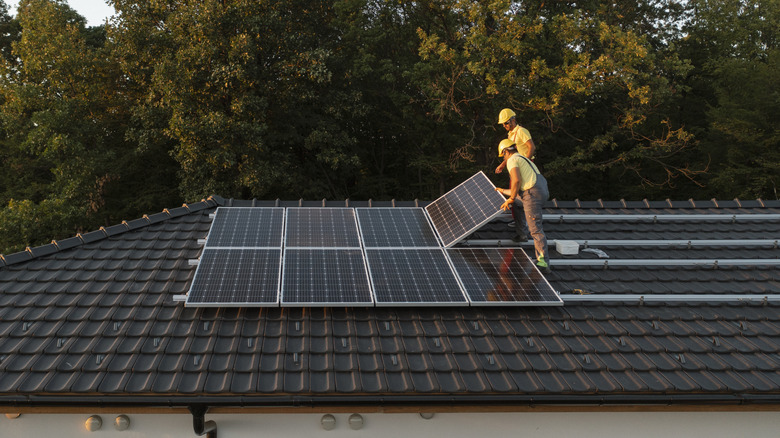
When you are looking for a permanent place to install solar panels, you want to be very careful where you put them. The best option is to set them in a place they get full sun for the entire day. In the Northern Hemisphere, south-facing panels generally receive the most sunlight throughout the day, although the ideal orientation can vary depending on the property and the homeowner's energy needs. Before installing, you must consider the angle. They need to be in the right place to fully face the sun. Panels that you can adjust between summer and winter are best, but if that's not something you'll have to deal with, you need to find the ideal position for your latitude.
Though it's a bit tedious, consider tracing out where you want your solar panels to be. Then, go up several times throughout the day, or set up a camera, so you can see how the sunlight moves. Pay particular attention to trees, chimneys, neighboring structures, and other objects that could cast shadows across the panels during peak sunlight hours. It's a lot of work, but they are expensive, so it's important to make sure you're putting them in an ideal place.
It's not just shade that causes problems either. You need to clean your solar panels regularly to keep them running. Dust and debris can also block sunlight from reaching the cells, potentially reducing the panels' efficiency. While you're cleaning them, it's a good idea to inspect them. Small cracks and chips can reduce effectiveness as well.