

What Is The 90-Minute Rule For Concrete?
We may receive a commission on purchases made from links.
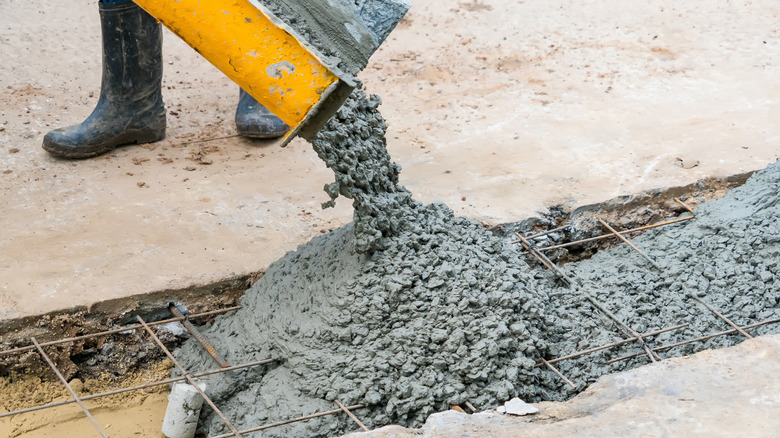
If you've laid concrete before, you might have heard of some rules, like the 4-2-1 rule for mixing concrete, but you may not be familiar with the 90-minute rule. This rule has been an industry standard for decades. Introduced in the 1930s by the American Society for Testing and Materials (ASTM), the 90-minute rule states that ready-mix concrete should be poured from the mixing truck within 90 minutes of water being added. This guidance was born from the fact that as soon as water is incorporated, the mixture is already beginning to settle and harden. Waiting too long could result in the concrete becoming difficult to work with. Engineers and contractors also had concerns that waiting too long to pour concrete could weaken the quality of the material, which could ultimately lead to structural concerns.
For many decades, the rule implied that a mixing truck would need to arrive at your doorstep and start pouring within 90 minutes of leaving the concrete facility. This could complicate concrete deliveries in rural or heavily congested areas. But, as technology has continued to evolve over the last several decades, so has the understanding of the process for pouring concrete. The 90-minute rule is probably still a good guideline, however, modern concrete formulas can last much longer with the help of certain additives, so the long-standing rule was recently dissolved.
The 90-minute rule for concrete isn't so strict today
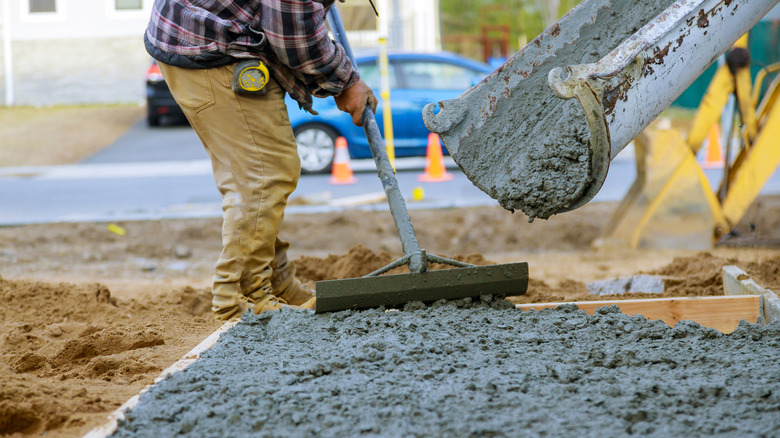
Today's concrete can typically stay workable for longer than 90-minutes due to the use of water-reducing and hydration-controlling admixtures which both work to slow the hardening process. Although admixtures have been use since the 1980s, it wasn't until April of 2021 that ASTM International updated its concrete specifications to say that the 90-minute window was no longer necessary. These developments also made concrete more environmentally friendly, since excess concrete no longer had to go to waste, and could often be processed into the next fresh batch or recycled in other ways.
Today, there is no longer a universal time limit for when ready-mix concrete must be discharged. Instead, the time limit now depends on the specific formula and agreements between the manufacture and recipient. If you're pouring concrete at a residential space, you'll most likely be working with a contractor who can help you ensure that the concrete is poured within its time frame.
It's also important to note that time isn't the only factor when it comes to concrete. Temperature also plays a major role. According to the National Ready Mixed Concrete Association (NRMCA), concrete can take twice as long to settle when the temperature drops by 20 degrees Fahrenheit. On the other hand, warmer temperatures can make concrete set faster.
Rules may vary for concrete DIY projects
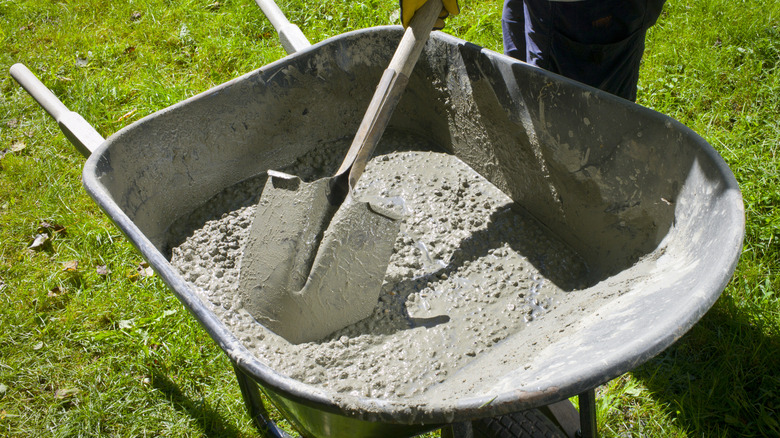
If you're gearing up for a home project that involves concrete, keep in mind that the 90-minute rule only applied to ready-mix concrete that's delivered to a jobsite, not bagged do-it-yourself products like Quikrete Concrete Mix. If you're doing a DIY project with bagged concrete, it's important to check the instructions on the product, as the amount of time you have between mixing your concrete and pouring it can vary, but is typically much shorter than 90 minutes.
While you likely won't be using ready-mix concrete for DIY projects, understanding discharge times can still help with big projects that require a professional. For example, if you're having concrete delivered to your property and there is a delay, you don't need to assume the concrete is no longer usable just because more than 90 minutes has passed. Knowing that temperature can affect concrete can also help you plan your delivery time and know what to consider before installing concrete in winter. Ultimately, though, it's always a good idea to talk to your contractor or supplier, as they will have information on the discharge time for your specific mix of concrete.