

What A Red Flag Warning Means For Outdoor Grilling Safety
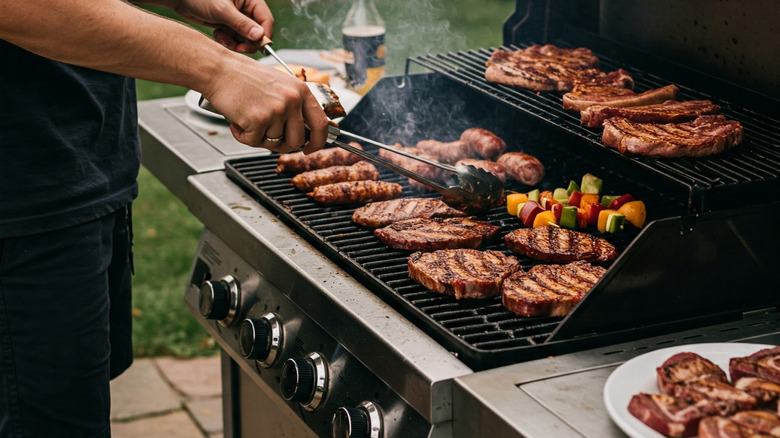
A weekend is the perfect time to haul out the grill. But while enjoying the fun of cooking on direct flames, one thing you should never forget is grilling safety. So when you hear there's a cautionary notice, specifically a Red Flag Warning, what does that mean for all ye grilling lovers? First, you must exercise extra care around fire because this warning indicates that the prevailing weather conditions point to increased possibility or risk of a fire starting or spreading pretty fast and resulting in wildfire.
For those that live in wildfire-prone regions, you understand that a stray spark or hot ember is all it takes to start a fast-moving fire that can cause untold damage to both people and property. This can happen inadvertently as you and your family are sitting outside enjoying a perfectly normal session of outdoor grilling. During a Red Flag Warning, the chances of this occurring are even higher because it's hotter, extremely dry, and the winds are stronger. That said, it's not automatically illegal to grill during a Red Flag Warning, unless there's also a local burn ban in your area. Yes, that sounds confusing, so let's break it down.
A Red Flag Warning doesn't automatically make grilling illegal (but a burn ban can)
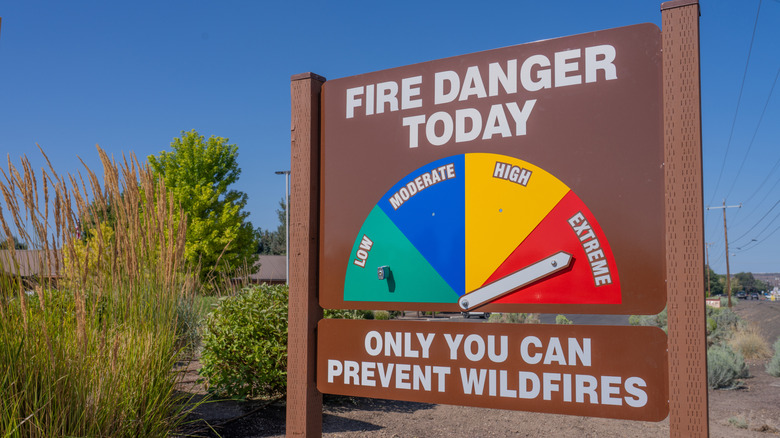
So who issues a Red Flag Warning? This is a weather warning only issued by the National Weather Service (NWS) when the following weather conditions come together: temperatures exceed 75°F, strong winds are averaging 15 mph or higher, and there's extremely low humidity (below 25%) with presence of dry fuel, e.g., dry grass. The NWS issues this warning to alert the public, fire managers, and fire agencies of the increased risk of fires. The NWS also spells out the do's and don'ts to help ensure the safety of all. And while they say outdoor burning is not recommended, they do not outrightly ban grilling. That means you do not face any legal action if you grill during a Red Flag Warning.
The instructions that are mandatory to follow usually come from your local, county, or state fire department. That's what the burn ban is. In this case, it's more than just a recommendation, it's a legal order. Failing to follow the burn ban can lead to legal consequences on your part. This order usually means all outdoor fires are prohibited in that area (until the ban is lifted), which includes fire pits, camp fires, fireworks, or recreational fires that are fueled by wood and charcoal (which includes barbecue grills). The biggest concern with outdoor grilling is if you're using solid fuel (wood or charcoal), embers can jump out and be blown by the strong winds and start a fire up to half a mile away.
How to grill safely outdoors during a Red Flag Warning
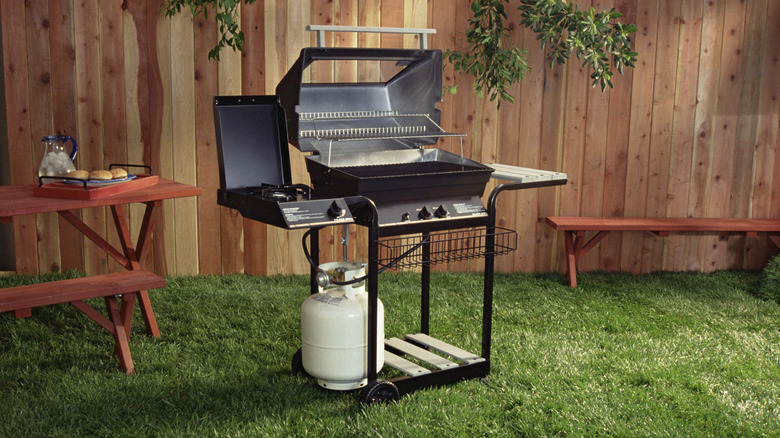
If a Red Flag Warning is accompanied by a burn ban in your area, some local authorities still allow people to use gas or electric grills. If this is the case in your area, you still must proceed with caution. And even with a red fire warning and no burn ban, it's still better to avoid outdoor grilling, and if you must, then only use gas or electric grills. The bottom line is, you don't want to take any chances with fire risks. When it comes to fire safety in general, prevention is always the best course of action.
By following a few simple guidelines, you can grill safely during a Red Flag Warning and avoid exposing yourself, others, and properties to fire hazards. First, stay very alert when grilling and never leave the fire unattended. If you need to dash into the house for something, ensure that someone takes your spot. Once done, put out any grilling fire properly. If you end up using charcoal to grill during a Red Flag Warning, then never throw burning or even smoldering charcoal on the ground.
Always have a garden hose or fire extinguisher close by so that if a fire starts, you can douse it quickly, and if you see or suspect any wildfire, call 911 immediately. And no matter what, to prevent fire hazards when outdoor grilling, the regular essential tips still apply. Keep your grill far away from your home structures and tree branches, clean your grill, check for leaks if using a propane grill, and keep pets and kids far from the grilling spot.