

The Yellow Vining Plant That Hummingbirds Will Flock To (It's Not Black-Eyed Susan)
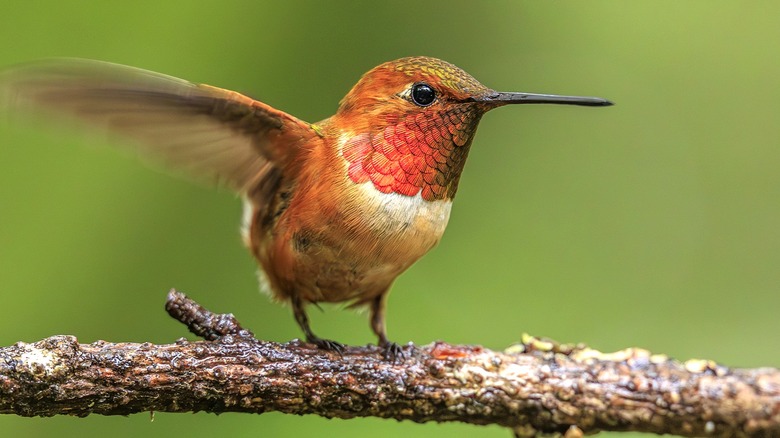
Among the many things for which southern gardeners are to be envied is the profusion of colorful flowers and vibrant wildlife that abound in the winter months. Two of these which go hand-in-hand are the bright-yellow Carolina jessamine vine (Gelsemium sempervirens), and the hummingbirds which love to drink nectar from its funnel-shaped flowers.
A perennial vine, Carolina jessamine can either be used as a ground cover or trained to climb. Whether it's scrambling up a tree, beautifying a fence, or softening a scrubby patch of dirt, the flowering vine will keep hummingbirds coming back to your yard. Hardy in USDA zones 7 to 10, the vine can grow as long as 20 feet and bursts with daffodil-like yellow flowers in late winter and spring. Its lush foliage, meanwhile, is evergreen or semi-evergreen, depending on how warm temperatures remain in a region. Along with drawing hummingbirds, this plant also attracts butterflies and other pollinators.
Keep in mind that the region in which you live, as well as the local hummingbird populations, affect whether Caroline jessamine alone can "anchor" your hummingbird garden. Hummingbirds visiting the Gulf Coast in winter are especially drawn to the plant, including the rufous hummingbird. But if you live in the Southeast and are enamored of the ruby-throat hummingbirds, be aware that this species isn't attracted to Carolina jessamine.
To your garden, consider adding additional hummingbird-attractants, such as beebalm (Monarda) and cardinal flower (Lobelia cardinalis). And you can certainly do more to attract hummingbirds by planting flowering vines together to extend the season, such as Carolina jessamine with trumpet honeysuckle (Lonicera sempervirens).
Growing the twining vine Carolina jessamine
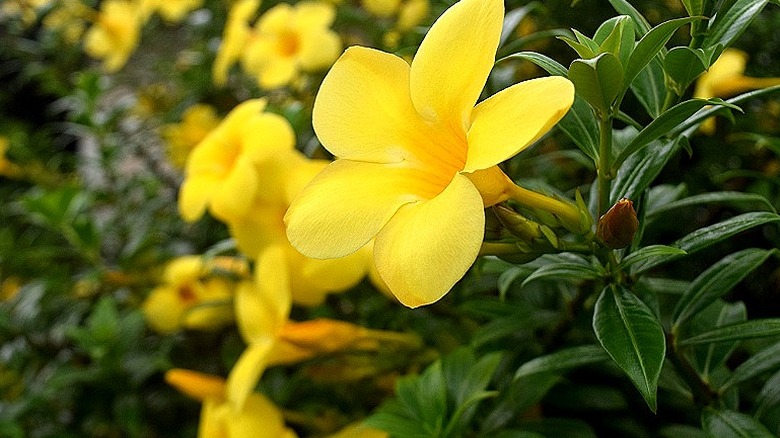
One of the yellow-flowering climbing plants that pollinators love, Carolina jessamine prefers to be planted where it'll get full sun or moderate shade. The vine tolerates a range of soil conditions; it can also handle occasional dry spells. One Carolina jessamine vine may be all you need for a modest trellis or small patch of ground, but if you're covering a large area, then set the plants according to your cultivar's planting instructions. They may need as little as 6 feet between vines, or as much as 10 times that amount! To climb, the vining plant does need to be trained against vertical surfaces, and can take a few growing seasons before it really takes off.
If you're growing Carolina jessamine as a ground cover, be aware that the bushy plant can reach up to 3 feet in height when allowed to scramble horizontally. This lushness can be an advantage when you're looking for an evergreen carpet that bursts with yellow blooms when little else is flowering. Whether you're growing it as a ground cover or vertical vine, Caroline jessamine can be shaped by pruning after its flowering season.
The vine is not without its disadvantages, which include flammability and toxicity. Don't plant Carolina jessamine too close to your home or to outbuildings, because it is extremely flammable. In addition, all parts of this plant are severely toxic if ingested, so keep pets and small children away. Finally, if you or a neighbor keep bees, avoid growing this vine, as the pollen is toxic to them.