

Can You Recycle Concrete Blocks?
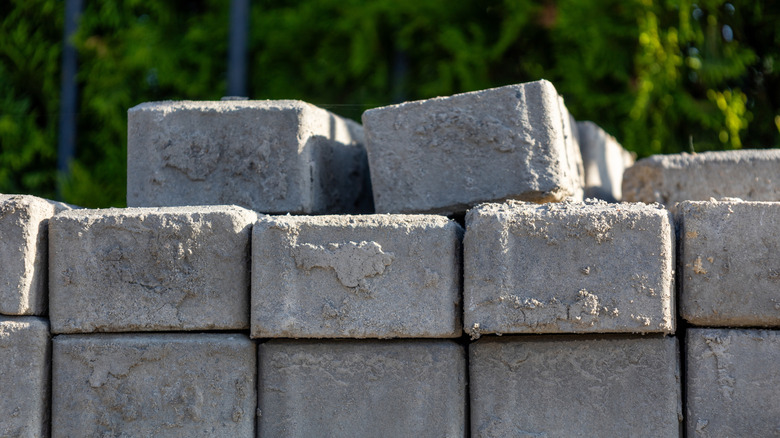
Concrete blocks are an extremely versatile building material. Having a few left over after a construction project isn't necessarily a bad thing, as concrete can be used for much more than just holding back soil in the garden. However, these heavy blocks can take up a lot of storage space, so if you find yourself with an excess of them, you may want to get at least some of the concrete blocks off your hands. Your first thought may be to simply throw the blocks away, and if you have access to a commercial dumpster, you can do just that. But considering how bad concrete production is for the environment — and how useful and durable concrete is, regardless of its form — you may want to recycle your extra blocks instead.
Whether you are recycling solid, hollow, or cellular concrete blocks, start by sweeping away any rogue nails, trash, or dirt. It's also extremely important to make sure there are no other materials on the concrete, such as plaster or plastic. Also take note of when the concrete blocks were produced, since those made before the '70s will need to be checked for asbestos. Once you've ensured that the blocks are free of debris and foreign materials, it's simply a matter of finding your nearest concrete recycling service and hauling everything out. Depending on where you live, your city or local construction company may have a concrete recycling center. You can transport the blocks over to the recycling yard yourself, or hire a company to do it for you.
Concrete blocks are easy to recycle
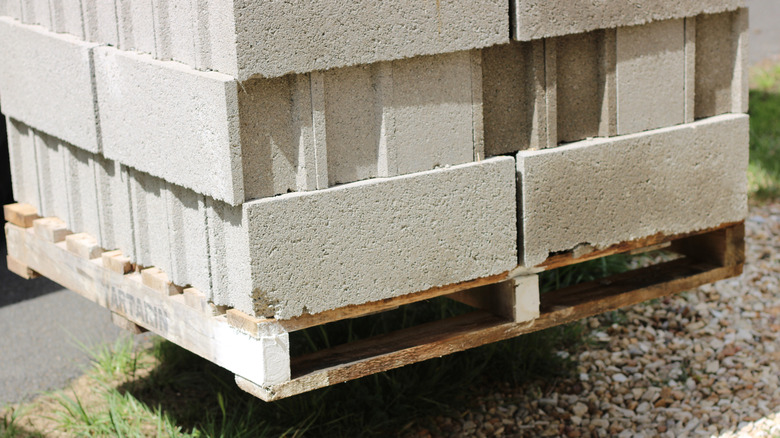
The process of recycling concrete blocks applies to larger pieces of concrete as well, though you will have to break any big slabs up into block-sized chunks to make them easier to move. After arriving at the recycling facility, the material will be crushed so the rubble can be used to make roads or walkways, though the final product tends to be a bit weaker than brand-new concrete. If you were planning on installing a new gravel path or driveway that requires an aggregate layer, you can recycle the concrete blocks yourself by smashing them up until they're small enough to act as a foundation.
You could also skip the middleman of sending your concrete blocks off to the recycling facility by checking around your community for anyone who could use them, such as a neighborhood garden or your local DIY-er. If well maintained, concrete blocks can stay strong for up to a century, so there's no need to cut their usefulness short by breaking them up before they can be used for something more structural. That's not to say there's anything wrong with taking the blocks to a recycling facility; if there's truly no other use for a concrete block, you can rest assured that recycling it is still taking an important step towards reducing waste and protecting our planet. And for your next DIY, be sure to calculate how many concrete blocks you'll need so you don't buy too much.