

What's The Best Grass For Dogs?
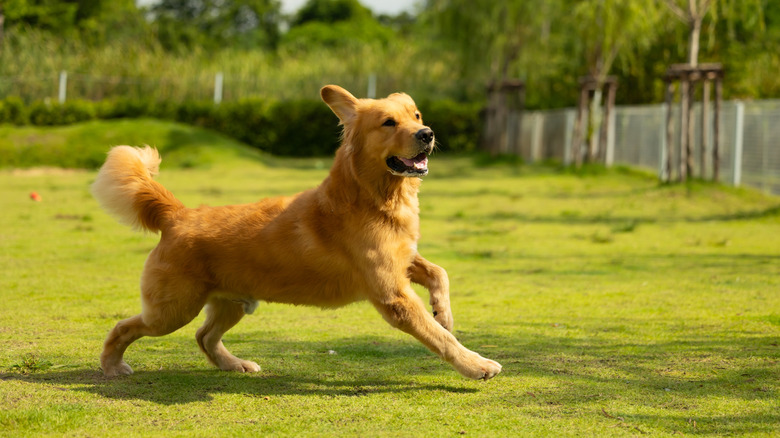
Whether you've just moved into a new home and need to put down some turf or your backyard is looking a bit too barren for your pet to enjoy, you may well be wondering what grass you should select to keep your furry friend happy. Ultimately, you'll want a turf species that can handle plenty of foot (or paw) traffic and one that's not going to die when your dog decides it's time to relieve itself, one of the common reasons for your grass turning yellow. Your ideal selection will depend on your climate and how much rough and tumble play the grass will be subjected to. For a high-traffic solution, you'll want to look at something like Bermudagrass or Zoysiagrass if you want a warm-season species, or tall fescue if a cool-season grass suits you better. For dog urine patch problems, you could consider centipedegrass or perennial ryegrass.
As a warm-season turf species, Bermudagrass is quite tough and can handle lots of foot traffic. It will grow in USDA hardiness zones 6 through 10, and will recover from constant trampling fairly quickly. Just be aware, though, that this species is regarded as invasive in states like California, Georgia, West Virginia, and North Carolina. If you live in these states or your local extension office has advised against using Bermudagrass in your area, you should find drought-tolerant Zoysiagrass a good alternative. It will grow in zones 5 through 11, so it has a slightly larger range. It has good resistance to constant foot traffic and is also heat and drought-tolerant. For zones 7 through 10, centipede grass is also a decent choice, as it is not as susceptible to damage from dog urine, thanks to its need for constant watering.
Cool-season grass varieties for dog owners
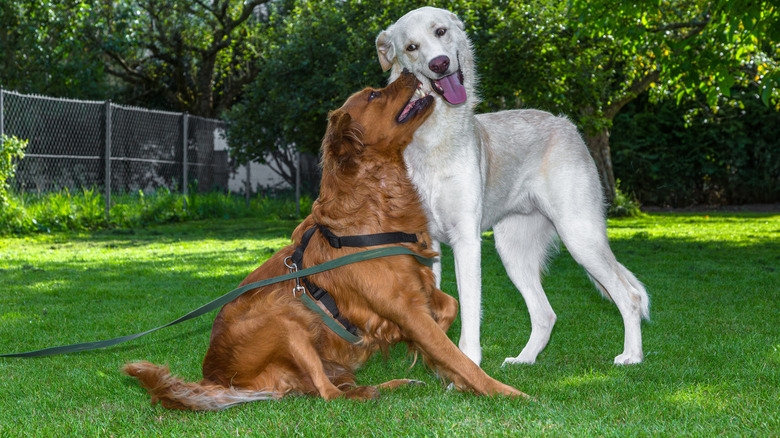
For a low-maintenance option if you live in zones 3 through 8, tall fescue is an excellent choice. Apart from being fairly durable, even if your dog loves to roll and romp across it often, it also requires very little supplementary watering. Plus, it's a fairly disease and pest-resistant species, which means you won't have to worry about your pet being exposed to any harmful chemicals that might otherwise be needed to treat lawn problems. The only drawback with using this species is that it's a clumping rather than spreading grass, so any bare patches that do crop up will have to be reseeded. However, it is regarded as one of the best types of grass for patching dog urine spots.
As an alternative, you might want to overseed those bare patches with perennial ryegrass, which is also a cool-season species that thrives in the same zones. Perennial ryegrass has good tolerance to paw traffic and can handle dog urine fairly well, probably because it also needs ample water to thrive. It's another clumping species, which is why it's often used to fill in bare patches, as it sprouts and grows quickly. Finally, don't forget to pick up any dog poop before mowing your lawn to prevent the spread of bacteria.