

How Far Off Your Property Line Should You Build A Fence?
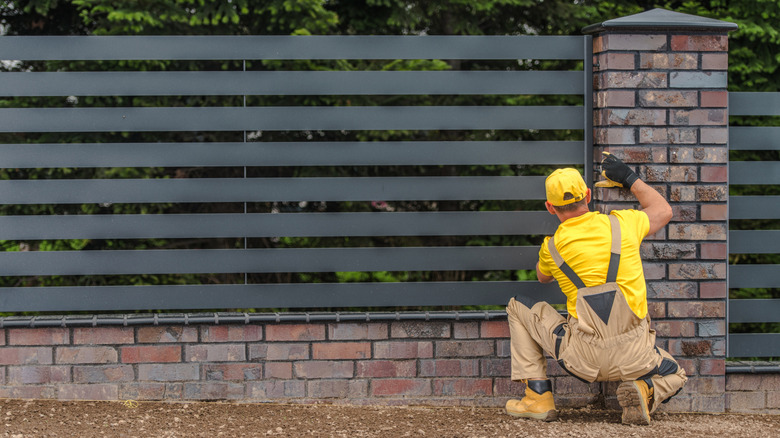
If you're planning to build a stylish wood fence to provide privacy in your yard, you may spend a lot of time picking out the materials to ensure the best lifespan for the most reasonable cost. You also need to decide on a design that provides the desired privacy and airflow levels.
However, as you're making these decisions, don't ignore one of the most important choices: Where should you install the fence? You want to place it in a location that provides the benefits you're seeking, but you also need to understand fence-building laws that affect homeowners in your location. In some places, you can build your fence directly on the property line. In other locations, it may need to be constructed as far as 10 feet back from the property line. As a basic, general rule, most locations require that any fence you erect must be completely on your side of the property line without touching the boundary.
Rather than relying on generalities, though, you should always do research on local laws before starting any fencing project. If you build too close to the property line to match the required setback in your municipality, you could receive a fine from the local government. In the worst-case scenario, you may have to remove the fence.
Working with professionals should protect your project
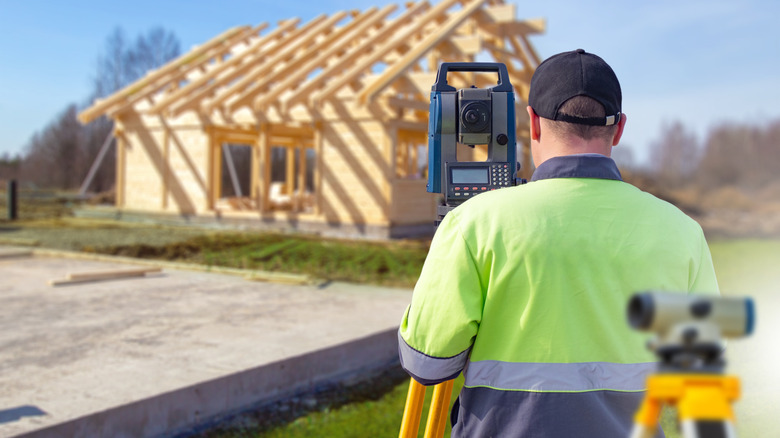
One of the mistakes everyone makes when installing a fence is failing to confirm the location of the property line before starting construction. You can hire a licensed surveyor to verify the property line. This pro will take measurements and review property records. Rather than assuming the property line's location based on an old fence or what the neighbor tells you, the surveyor will find the precise property line.
With an accurate survey in hand, you can work with a local contractor to build the fence. This pro should understand zoning and setback rules in your municipality. If you're going to do the construction work yourself, you may want to ask for help from your surveyor, an attorney, or an engineer who understands building codes and setback laws in your area. Hiring these pros can give you legal protection. You can also contact the local building department and zoning office to determine what setback rules apply to your project. To ensure you're following the law, you may have to file a permit that shows the fence's location before beginning construction.
There's a cost of at least a few hundred dollars involved with hiring a surveyor to officially mark the property line and other professionals to advise you on where you can build the fence. However, this cost would be far less than the price of getting into a legal battle with a neighbor concerning a fence that's over the property line or having to remove the fence because it violates local laws.
Other factors to consider when picking your fence's location

Even after having performing a survey and learning about the local setback laws that apply to fences, you should consider a few other factors before beginning your construction. The setback rules may differ based on the fence's position on your lot. You may be able to build a back yard fence closer to the property line than a front yard fence, for example. If you and your neighbor want to share maintenance and responsibility for the fence, you may be able to ignore setback rules and put it directly on the property line with permission from the local municipality. Other municipalities prohibit this type of agreement, meaning it would have to be built according to local setback laws and owned entirely by one neighbor.
If you live in a neighborhood with a homeowners' association (HOA), you may have further restrictions on where you can build the fence. Some HOA setback rules differ from the city's rules. Many states allow HOAs to fine homeowners who violate their rules. Depending on your HOA, you could even receive a fine for building the fence too far from the property line.
You may wonder why fences need setbacks. In cities, utility companies and municipal workers may need space to work near the property line without having to deal with a fence. Having a uniform setback location can make it easier for motorists to see pedestrians walking along sidewalks and near the road at corner lots. You'll frequently find more restrictive setback rules for fences in cities than in rural areas.