

This Overlooked Part Of A Shade Tree Helps Control Erosion, And It's Not The Roots
It's no secret that tree roots are invaluable weapons in the fight against erosion. After all, roots hold soil in place, often extending much further from the tree's trunk than might be imagined. For that reason, it's usually preferable to plant trees with laterally-spreading roots, rather than those that go straight down when erosion is your concern. But less well understood is that the opposite end of a tree, its leaf system, is also crucial when it comes to preventing erosion.
So what exactly is this overlooked way that trees reduce soil erosion while beautifying your yard? First, a tree's canopy system acts much like a building's awning, by redirecting water away from where you don't want it to go. Often, this is a sloping area in which gravity is all too willing to help rain-loosened soil wash away the surface. Second, leaf or needle litter from the previous season's foliage provides additional protection once it hits the ground by preventing raindrops from reaching the soil underneath it.
In this way, a tree's canopy system provides two layers of above-ground protection. Why is this multi-system approach so important? Erosion control, which helps protect residential property and the surrounding environment. It prevents dirty stormwater from entering local waterways, while reducing risks of dangerous landslides. Your lawns and gardens are also better protected from flooding and sediment buildup. Finally, any slopes on your property stay where they should, rather than slowly eroding into your driveway and yard.
How to utilize anti-erosion techniques in your yard
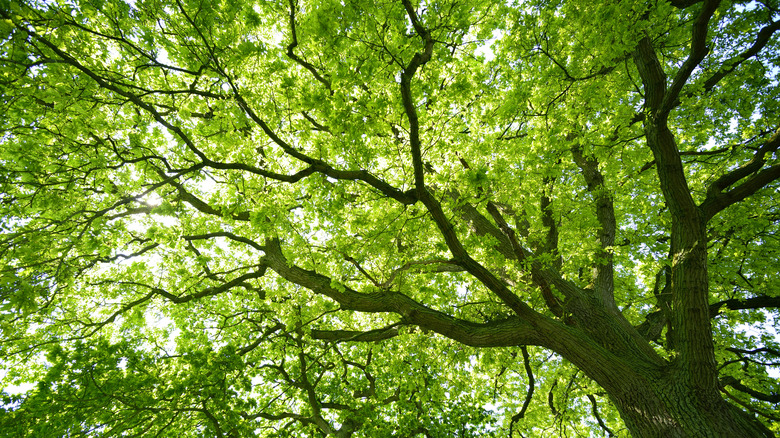
A tree canopy is the ultimate natural shade idea, providing generous pockets of relief from scorching-hot days. But trees with substantial branch and leaf systems also help control erosion, especially on slopes. If you have bare, hilly areas, consider adding both taller trees and other vegetation to protect local waterways and your own property. There's much each homeowner can do to help lessen and filter runoff and decrease flooding.
Focus on trees that thrive in your area's climate, and combine deep roots with generous canopies. In general, useful anti-erosion trees include oak (Quercus spp.), serviceberry (Amelanchier canadensis), sycamore (Platanus spp.), dogwood (Cornus spp.), Eastern redbud (Cercis canadensis), tulip poplar/yellow poplar (Liriodendron tulipifera), and Eastern red cedar (Juniperus virginiana). Your local extension service can offer additional suggestions.
Other useful tips for gardening on a slope to control erosion start, of course, by avoiding cutting down existing trees whenever possible. In addition, let those trees' fallen leaves remain on the ground to help protect the soil underneath from the elements. Between trees, establish shrubs and other vegetation, and add compost around trees and smaller plants to help the plants retain moisture. Compost also helps filter muddy runoff. If you're noticing more visible tree roots with each passing season, add additional organic matter around the trees to help protect them. Finally, consider rain gardens and drainage systems to help control and channel water rather than allow it to erode the soil.