

Peat Moss And Coconut Coir Have Environmental Costs: Try This Eco-Friendly Alternative Instead
We may receive a commission on purchases made from links.
When you're looking for gardening additions that can boost the health of your soil, waste by-products like wood ash and fish emulsion are often popular and eco-friendly choices. For improving aeration and moisture retention peat moss, seems like a natural choice, but it's one of the most unsustainable soil additives on the market. Peat moss is a naturally occurring product that forms slowly in bogs, and removing it has climate and habitat impacts. As an alternative, some people end up choosing another questionable product, coconut coir, but the coconut coir industry requires significant water and chemical inputs. For a product that's truly natural and sustainable, leaf mold is a better choice that can either be purchased or processed in your own backyard.
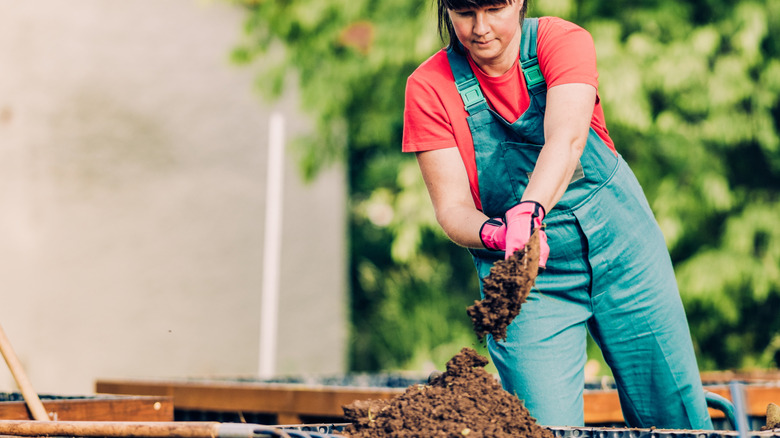
Like coconut coir and peat moss, composted leaf mold retains water. Able to hold up to five times its own weight in water, leaf mold is helpful for loose, sandy soils. It can also reduce compaction and improve drainage in heavy clay soils because it opens up pore spaces so water and air can move through. Soils with rich organic matter stay moist, which in turn helps keep soil temperatures stable and encourages a healthy soil biome, directly impacting the health of your plants. Whether you make leaf mold or buy it, you can use it like regular compost by applying about 2 to 3 inches on your trees, shrubs, or perennials, and mixing it into DIY soil mix for container gardens.
Make leaf mold for a greener alternative
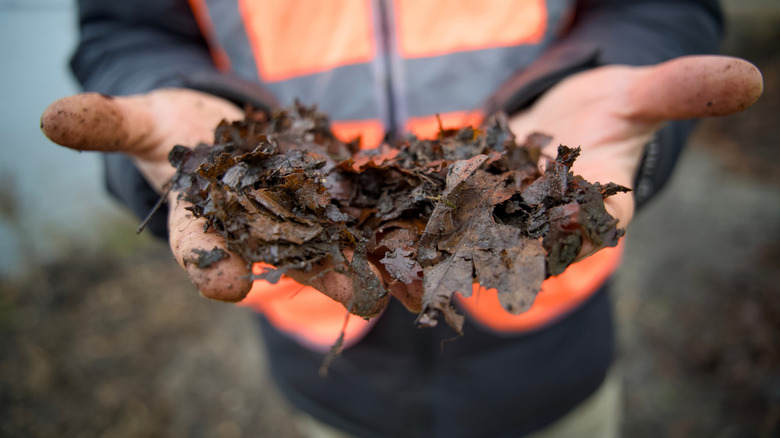
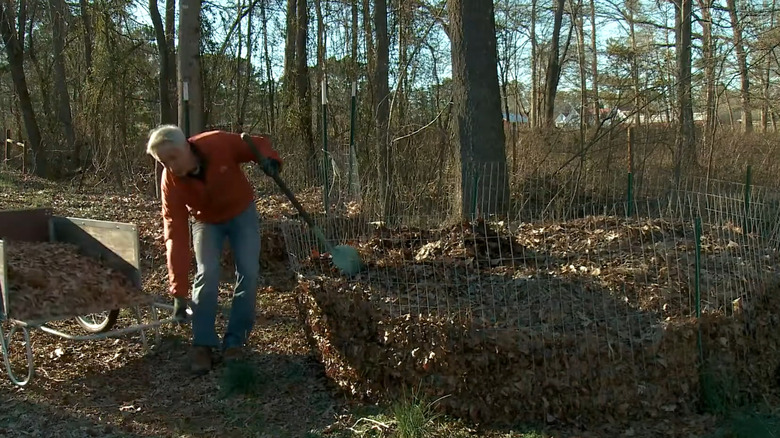
Even though fallen leaves are a waste product that come out of backyards everywhere, sometimes bulk or bagged leaf mold can be difficult to find or expensive to ship. If a search leaves you empty handed, you can make your own using the leaves that you normally rake up. All you really need to make your own leaf mold is some leaves and a compost system, so whether you have a small rotating bin on your balcony or you want to make your own from a large circle of wire mesh in the backyard, this is something anyone can do. Leaves will even decompose in a trash bag poked full of holes. If you're making circles of wire mesh, use ½-inch Hardware Cloth – which is available from Home Depot for about $100 for a 25-foot roll — ensuring the grid is small enough to keep decaying leaves contained.
Whatever method you choose, layer the leaves in and sprinkle them with water as you go. Once they're added to your compost heap, make sure to keep them moist. You can even add nitrogen fertilizers to speed up the decomposition process. Leaf mold is usually ready in about 6 months to a year, but it depends on the type of leaves. You can speed up the process by shredding the leaves with a lawn mower or leaf mulcher. Once it has turned dark and crumbly, you can use leaf mold for tomatoes and other plants.
More tips for making and using leaf mold
In addition to improving soil structure and drainage, leaf mold slowly releases nutrients into your soil throughout the growing season. Fall is the best time to spread it on your garden beds, layering it on top of the soil where it will provide some protection for your plants and soil and break down over the winter. You can also apply it in the spring, and the earthworms and soil microbes will work it into the soil. You can also use the leaf mold to create a "tea" for watering plants, which may be ideal for houseplants. Be aware that using a thick layer of leaf mold can block sunlight, which might not be what you want on turf, groundcovers, and ornamental grasses. For the best results, apply it around plants that are used to understory conditions.
If you don't have any leaves and you want some, check with your local municipality because sometimes cities have leaf pickup days and you can grab a few bags then. You can also ask neighbors, local gardening groups, and town composting centers. In addition to posting on Facebook, it's also worth asking local parks if you can rake up leaves, since leaf removal policies may vary and some are happy to have you take them. Whatever your source, avoid the leaves of black walnut trees, which contain a chemical compound that's harmful to other plants. It's also best to stay away from leaves that were collected from busy roadside ditches, because they can contain pollutants.