

What Happens If You Mix Dish Soap And Bleach?
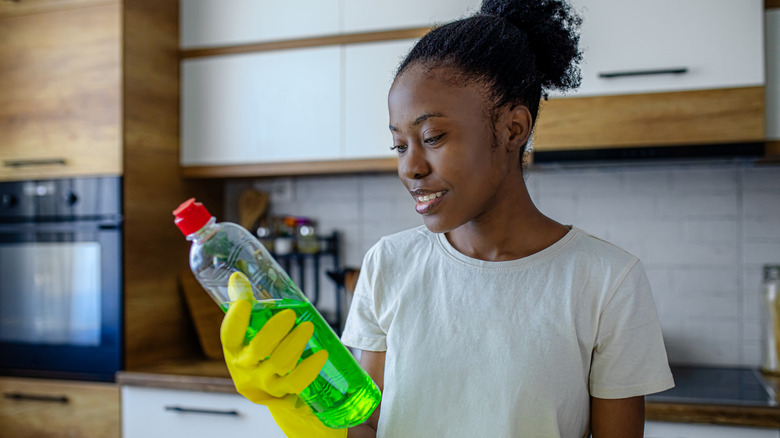
By now, we should all be aware that there are several common cleaning products that should never be mixed with bleach. Vinegar and bleach, for example, create dangerous chlorine gas, while rubbing alcohol and bleach combine to produce chloroform. If you're not keen on the idea of causing serious damage to your respiratory system or knocking yourself out spy movie-style during your next deep clean, it's a better idea to err on the side of caution and use bleach purely as a solo cleaning agent. But what about dish soap? Certainly, something that's gentle and safe enough to clean baby ducks and wash our plates shouldn't cause any major problems if it comes into contact with bleach, right? Wrong.
Well, mostly wrong. It's certainly safer to avoid putting yourself in this precarious situation, but not all dish soaps will react with bleach or produce enough dangerous compounds to actually cause harm. Dish soap is mainly comprised of surfactants like sodium laureth sulfate or sodium lauryl sulfate, which help to cut through stubborn grease and create suds. When combined with bleach, these surfactants don't cause major issues, but they can decrease the effectiveness of the overall formula.
The real danger here lies in the ingredients that you might have a harder time nailing down, like fragrances and additional cleaning boosters. While combining bleach and dish soap is sometimes recommended as a disinfection method on social media, this is a popular TikTok cleaning trend to avoid. Even if you get lucky and don't face dangerous consequences, your clean won't be as effective as it would be if you were to just stick with one product.
Situations where this combination might be dangerous
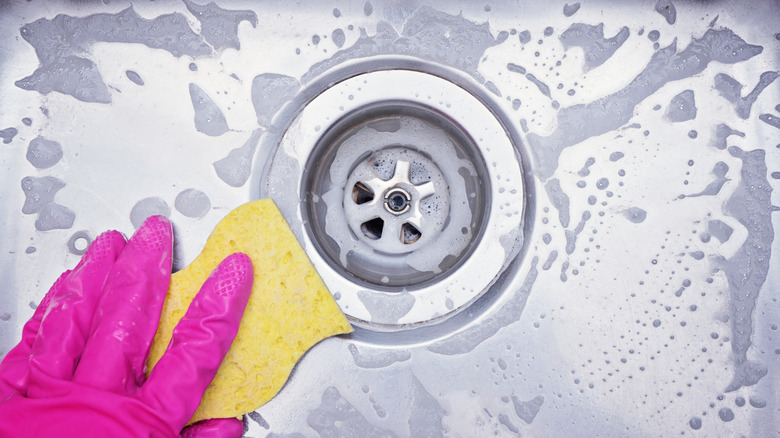
So why is combining some dish soaps with bleach so risky? Bleach is a diluted form of sodium hypochlorite. This compound doesn't play nice when it comes into contact with nitrogen, which is why it's such a bad idea to mix it with cleaners that contain ammonia (nitrogen trihydride) or other amines (a more general category of nitrogen-based compounds). The chemical reaction between these two substances produces chloramine or chlorine gas, depending on the exact formulas at play, and both are very dangerous to breathe in.
Standard dish soaps don't contain ammonia as it's a bit harsh for regular dishwashing, but things get more mysterious when we get down to the fragrances. Even if you take a long, hard look at the label on your soap, the exact chemical formula of the fragrance included is nonexistent — most just include "fragrance" as an ingredient.
This means that you're left to go in completely blind. As mentioned, bleach won't react with the primary ingredients in dish soap, so if you're dealing with gases from the combination, it shouldn't cause an emergency situation. Still — better safe than sorry. An unventilated space and a large quantity of cleaning products can make even a tiny reaction a big problem, and at the end of the day, this combination does nothing to boost your cleaning power. There are plenty of uses for bleach around your home, but regardless of the situation, it should be handled carefully and left unmixed.