

What Does It Mean When A Gas Stove Flame Is Too High?
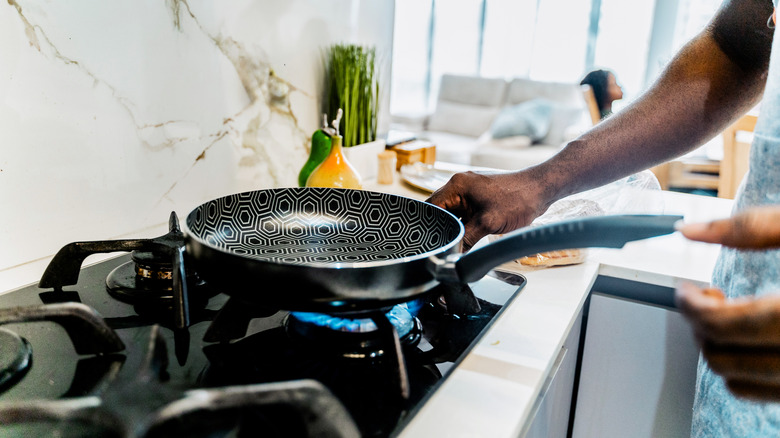
Transitioning from an electric or induction stovetop to a gas model can create a bit of a learning curve. Working with an open flame requires a bit of extra caution, and minor adjustments to your burner can feel like they make massive differences in your pan's temperature and cook time. A bit of variation between stovetops is normal and might take some getting used to, but if you're noticing flames that are excessively high or out of control, it could be a sign that you're dealing with a bigger problem. Debris, misaligned burner caps, a burner knob in need of adjustment, or issues with the gas supply could result in high flames. Before you decide it's time to ditch gas-powered appliances altogether, however, rest assured that these are all easy fixes.
Unlike your gas burner not lighting or your stove not being able to maintain a flame, an overpowered burner isn't usually a signal that something is broken or in need of a replacement — in fact, everything is working a little too well. To get to work diagnosing the issue, start off with a deep clean and a quick inspection. Unplug the appliance, then remove the burner grates, caps, and bases. Give everything a scrub with some soapy water, then take a pin or paperclip to the nooks and crannies in the base to make sure there's no lingering debris. Reassemble the stovetop, making sure everything is properly aligned and sitting flush. If the flame is still too high after a quick test, it's likely a burner knob or gas issue.
Other issues that could cause a high flame
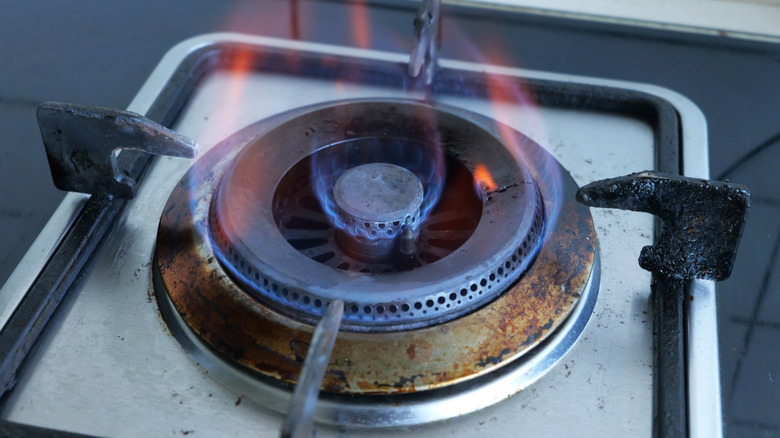
For a burner that seems to come out with guns-a-blazing even on low, a simple adjustment to your burner knob could do the trick. Specific instructions can be found in your stove's manual, but the general process is as follows: Ignite your burner and set it on low, then remove the knob. Place a flathead screwdriver into the now-exposed valve shaft, then reduce the flame to your desired height for this setting. After putting the burner knob back on, the flame height should be much less extreme across the board, giving you a more manageable output across different settings. If the flames are high on multiple burners, repeat this process on each one until you're satisfied.
If all else fails, the final step in your troubleshooting process should be to consider the combustible source that's powering the flame: the gas. Natural gas isn't something you want to play around with — after all, if you suspect there's a gas leak in your house, it qualifies as a true emergency situation — so it's best to call out a professional for these tweaks. If you're using your stove with propane and it's intended to be used with natural gas, the result can be a too-high flame. The range can be converted by a pro to work better with this type of fuel. The same goes for issues with the gas supply pressure — a faulty regulator can result in too much gas being fed to the burner, but this should be a repair that's performed by a qualified technician.