

More Unexpected Than Mock Orange: The Privacy Hedge You Should Plant Instead
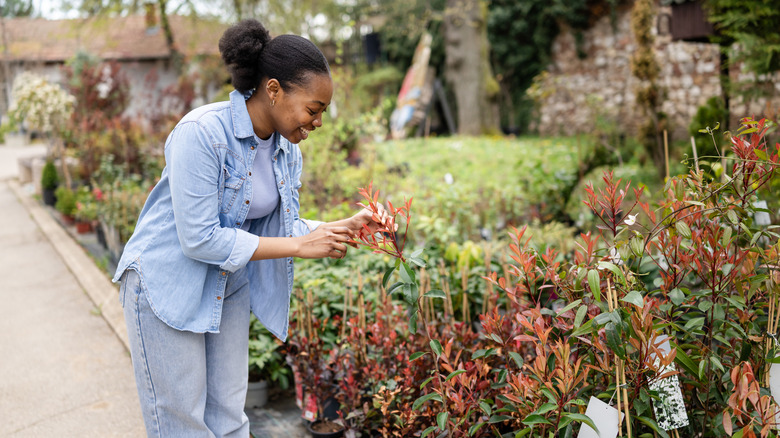
If you've been looking for a more unusual species to grow as a privacy hedge, you may well have come across a form of mock orange (Murraya paniculata), a citrus-smelling shrub that's heat-tolerant and also commonly referred to as orange jessamine. However, this species is regarded as invasive in Florida, as birds love the berries and freely spread the seeds. If you like the idea of a fragrant, glossy-leaved hedge but want to consider something less expected, there's an attractive alternative worth knowing about: lilly pilly (Acmena or Syzygium smithii).
This attractive rounded tree or shrub is native to Australia and is particularly well suited to life as a privacy hedge because its dense foliage responds well to regular clipping and shaping. It's a rainforest species that will only grow in USDA hardiness zones 9 through 11, but if you're lucky enough to garden in these warmer regions, lilly pilly offers plenty of ornamental appeal beyond its screening ability.
Not only do these plants have glossy, deep green leaves, but they also sport masses of fragrant white flowers in summer, followed by pink or white berries in the fall. These are edible and can be made into a delicious jam. Plus, the plants feature fresh growth that often emerges pink, adding an extra splash of color to a trimmed hedge. You'll also find that lilly pillies attract bees, butterflies, and the birds that are most likely to try to eat your garden berries, including thrushes, robins, and blue jays.
How to grow a lilly pilly privacy hedge in your yard
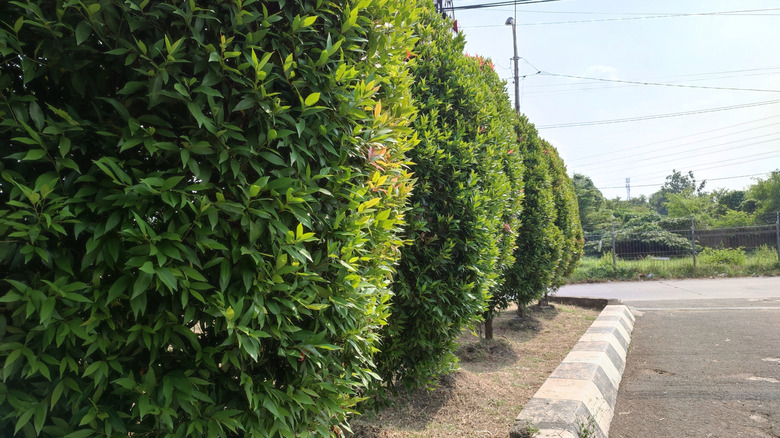
Lilly pillies can grow happily in full sun or even part shade in well-drained soil. They're not fussy about soil type and can even handle poor ones. As trees, they can reach a maximum height of 25 feet with a canopy spread of up to 15 feet. However, if you plan to grow this species as a hedge, you can keep the height more manageable with regular pruning, which also encourages the dense, bushy growth you want for a privacy screen. Generally, you want to space your plants around 31 inches apart if you want a nice dense hedge. When you first plant your young specimens, make sure you keep them well watered until they've had time to settle in. After that, lilly pillies are relatively drought-resistant and can also grow happily in coastal gardens.
Although this species can handle light frosts, you'll want to protect young plants during their first year of growth. There's also one drawback worth considering before you commit to this unusual hedge: the berries do drop to the ground and can become a cleanup problem. Therefore, you want to ensure that you don't grow lilly pillies near paths or walkways where the fallen fruit could become a slip hazard. For growing alongside paths, you might want to explore other hedge species that are safe for planting next to your house, as they'll also be fine adjacent to walkways.