

When Preparing Garden Beds, Use This Plastic Sheet Trick To Boost Solarization
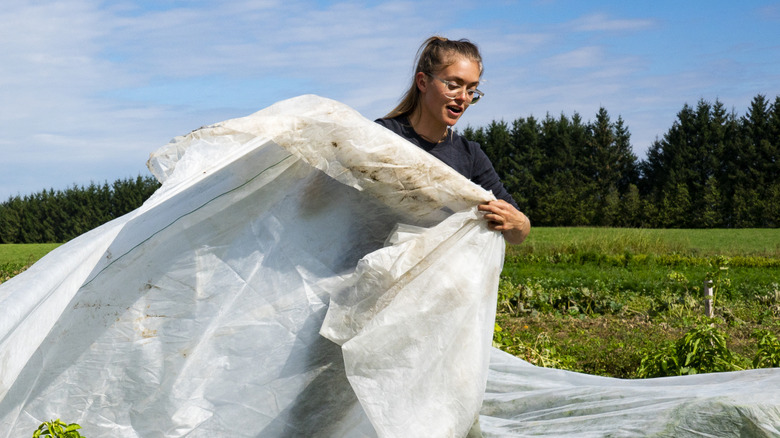
If you've notice a resurgence of weeds, pests, and plant diseases after trying soil solarization, you've probably wondered what mistakes you're making when trying to prepare the soil, but it might not be your fault. It could be that the ground temperature didn't get hot enough to kill off seedlings and other dirt-dwelling nuisances. While there are varying opinions about how plastic tarp thickness, material, and light filtration grade could influence its effectiveness, the key to boosting solarization could be less about the plastic sheet type and more about how you layer it with other plastic materials to trap sunlight to properly heat the soil. By using multiple layers of plastic to create a pocket of insulated air, you could help elevate the temperature to the recommended range even if you don't live in a hot climate. Like giving your soil a plush down coat, the idea is to create an air pocket between the upper and lower sheet. Warm air stays trapped between, which elevates the overall temperature that can be transferred to the soil underneath.
When successful, soil solarization keeps weeds and pests away by bringing the topsoil temperature to an inhabitable level (approximately 120 to 140 degrees Fahrenheit) over a month-long period — sometimes longer for colder areas. If your solarization attempt didn't go as planned, don't give up yet. This pest-control method is worth another try since it's considered a more eco-friendly way to prepare garden soil compared to using chemical weed and pest control treatments on your beds.
How to use layers of plastic sheets to improve soil solarization
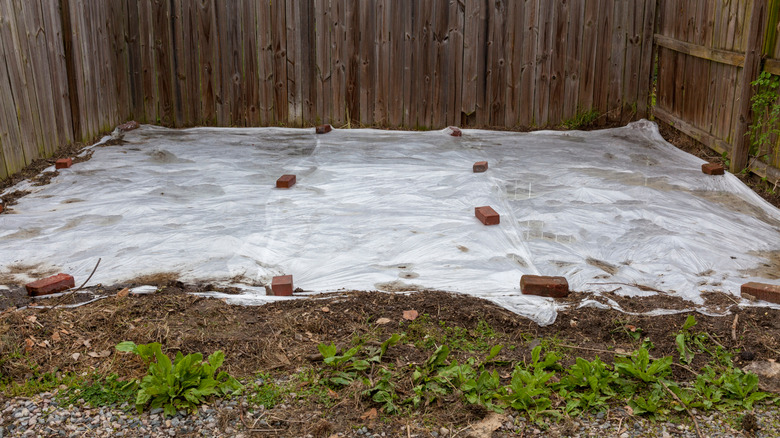
Effective soil solarization may still be possible for gardeners in colder climates or in areas that experience frequent fog or cloudy conditions, so long as you layer up. All you need is two clear plastic sheets, PVC piping, and a bunch of empty clear plastic water bottles or beverage containers. The first plastic sheet layer should rest flat against the soil without air pockets to maximize the heat transfer to the ground. Create a square around the outer edges of the first layer with PVC piping. Depending on how wide your garden bed is, you may want to lay additional PVC piping in a grid pattern or put plastic bottles in the middle to keep the upper sheet from touching the lower sheet. This is crucial to create a space where heat can gather. After pulling the second layer of plastic sheeting over top, weigh down the edges with bricks, rocks, or dirt.
Through this method, research shows soil temperature could increase up to 10 degrees Fahrenheit. This could make it more successful at sterilizing large batches of soil compared to using a single thick plastic tarp or layering two sheets directly on top of each other with no air in between. For a larger-scale example, a 1997 study published by the University of California Division of Agriculture & Natural Resources discussed how using plastic sheets inside a greenhouse created higher soil temperatures than plastic sheets left out in the open. So why not try a scaled-down version in your backyard?