

What's The Difference Between Purple And Yellow Painter's Tape?
We may receive a commission on purchases made from links.
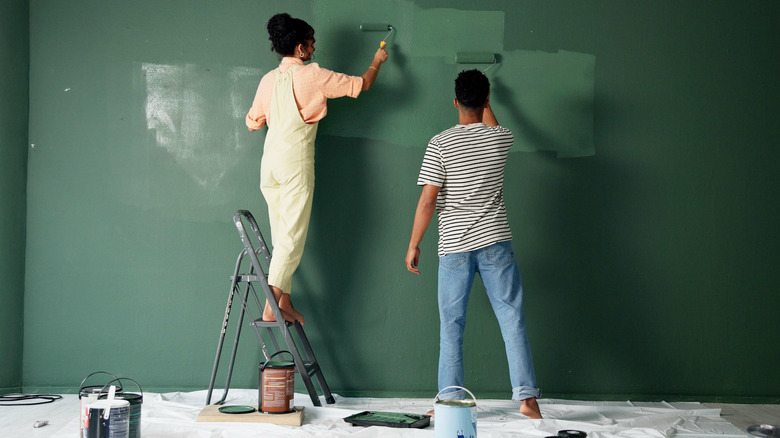
You're ready to paint the room red — or, more likely, teal, taupe, or a warm shade of white. For both homeowners and designers, picking the perfect shade of paint is a vital part of home decoration, but it's far from the only crucial step in the preparation process. You can absolutely achieve a professional-looking finish without shelling out for professional work, as long as you avoid a few amateur mistakes that can ruin your paint job. Chief among them is not using the correct tools. While most people know that painter's tape helps create crisp edges and protects areas from stray splotches of paint, not everyone realizes that the go-to blue painter's tape isn't the only option. Purple painter's tape, for example, has a low degree of adhesion, while yellow painter's tape creates the crispest lines.
That standard blue roll of tape is great for most interior surfaces, but it isn't ideal for every paint job. It's surprisingly important to choose the right kind of painter's tape for your specific project. The different colors aren't simply a matter of aesthetics. Rather, the various shades — purple, yellow, green, and, yes, that multipurpose blue — signal different formulations and degrees of adhesion. While each hue will stick to most surfaces and provide a barrier between the paintbrush, roller, or sprayer and the area you want to keep paint-free — be it baseboard, door frame, crown molding, or ceiling — there are key differences. Both purple and yellow types of painter's tape are designed to reduce damage to particularly delicate surfaces. The key distinction is that some yellow painter's tapes, such as FrogTape Delicate Surface Painter's Tape, feature paint-blocking technology that ensures sharp edges.
How to choose the right painter's tape for delicate surfaces
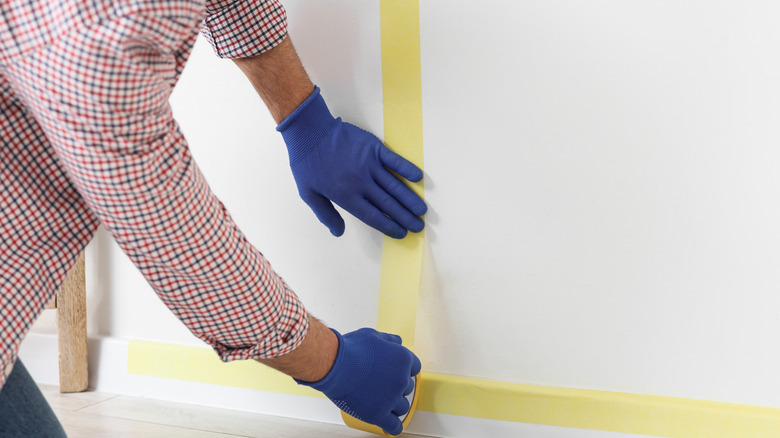
As mentioned, the biggest difference between purple and yellow painter's tape and multipurpose blue painter's tape is the degree of adhesion. Purple painter's tape has a low-tack adhesive that makes it easy to remove without causing damage to delicate surfaces, such as wallpaper, wood paneling, veneer, plaster, and freshly painted walls. You can also leave it in place for longer periods without worry. For example, you can leave Scotch Purple Delicate Surface Painter's Tape in place for up to 60 days, giving you plenty of time to complete a paint job. If you're working with a material that's easily scratched or prone to peeling, reach for the purple painter's tape.
Note, however, that some brands use their purple and yellow painter's tape for other purposes. A yellow roll used for exterior surfaces could, for example, have a stronger adhesive and be made of weatherproof plastic. That's the case for 3M Yellow Automotive Refinish Masking Tape. Always double-check the manufacturer's instructions before buying painter's tape.
Like purple painter's tape, yellow painter's tape typically has a light adhesive that's ideal for delicate surfaces. Though timing varies by brand, this type of tape is generally safe to use after 24 hours of paint application. That means you could paint your walls and tackle the baseboards the next day. Like its purple counterpart, yellow painter's tape can often remain on a surface for up to 60 days. Some yellow tape also features an absorbent polymer coating that, when dampened with a cloth, turns into a gel that seals tightly, giving you ultra-crisp edges. To ensure success, try this viral hack that gives you flawless paint lines every time without leaks: brush a coat of paint on top of the tape.