

Retire Your Plastic Cutting Boards: There's A Cleaner, Safer, Better Option
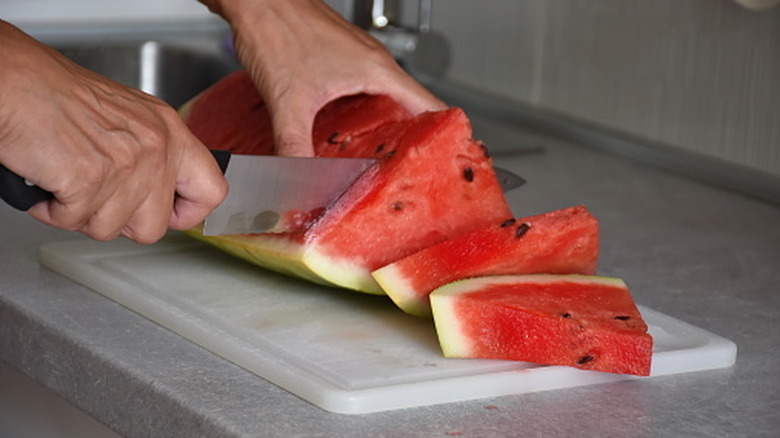
Plastic cutting boards have a reputation in many kitchens these days for being less than ideal. The main issue is that scratches and cuts from knives chip away at the material, releasing thousands of microplastics into our food. That's why some believe it's time to ditch the plastic cutting boards for cleaner and safer options. While you may have heard of the traditional wood cutting board, a less common alternative could be a better choice — not to mention a more like-for-like comparison to a typical plastic cutting board, minus the microplastics. Rubber cutting boards have existed since the 1960s. While often used in professional restaurants, their popularity has grown thanks to their flexibility as an alternative to wood and plastic.
Synthetic rubber cutting boards were put to use in Japan by sushi chefs as a way to boost cooking hygiene. One particularly popular rubber cutting board, the Parker Asahi Cookin' Cut, is water-resistant. While the material isn't necessarily antibacterial, its low water absorption helps prevent the creation of microbial breeding grounds.
Aside from cleanliness, another reason chefs love these cutting boards is their flexibility. As chef and restaurateur Russell Jackson previously explained to GQ, "You definitely feel the difference." Jackson added that a rubber cutting board "has a little bit of flex, a little bit more give." This softer texture also means the rubber cutting board is easier on knives, which can prevent them from dulling as quickly.
How does a rubber cutting board compare to alternatives?
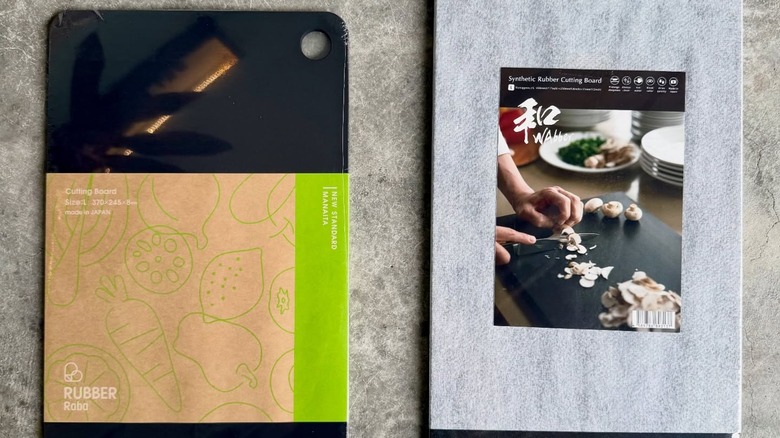
Rubber cutting boards can outperform other cutting boards in many ways, which is why they are favored by professional chefs. Compared to plastic, synthetic rubber doesn't gouge as easily and sheds less microscopic material. If a rubber cutting board does end up with scratches over time, it's possible to sand it down to remove any noticeable crevices. However, while rubber cutting boards can be flexible like their plastic cousins, they are not nearly as lightweight. Rubber cutting boards are also more expensive than plastic and often can't be placed in a dishwasher.
Alternatively, compared to wood cutting boards, rubber still has a few advantages. First, glued wood cutting boards can split after many washes. Rubber won't do that. Additionally, wooden cutting boards can grow mold for many overlooked reasons, such as deep cracks or excess moisture absorption. Rubber cutting boards are generally made from one solid, non-porous material, so you're less likely to experience this issue. And, when it comes to cleaning and care, a rubber cutting board can be hand-washed with mild soap and hot water to remove any debris. It outperforms wood in maintenance, which may occasionally require treatment with a mineral oil.
There are plenty of other types of cutting boards, of course. Some folks wonder if titanium cutting boards are truly worth buying. While they can be a clean and safe option, like rubber, some folks don't like the sound of the metal clashing with other metals – another point in the rubber cutting board's favor.