

Think Twice Before Planting This Skunk-Like Fragrant Shrub

Finding a plant with both charming flowers and interesting foliage to add to your garden isn't an easy feat. If you're in this situation, you'll likely be delighted when you come across a shrub with rounded leaves that start out a striking shade of red and fade into a mellow green over time, clusters of adorable white blooms, and berries that are sweet and edible when ripe. If you're looking to refresh your backyard on a budget with a project, white stopper (Eugenia axillaris) is arguably the perfect way to add more life and visual interest.
White stopper does, however, have a drawback. While its flowers are aromatic and lovely to look at, the foliage produces a smell that some people find, quite frankly, disgusting. Some gardeners describe the odor less offensively — it's musk-like or rich and deep. Others don't hold back with their criticism, describing white stopper as a beautiful plant that is causing an awful smell in your yard — something akin to that of a skunk or even a zoo.
If you're considering planting this Florida native shrub in a garden border, beside a pathway, or near a sitting area for its good looks and tolerance for sandy soils and drought, you may want to think twice. However, that doesn't mean you have to leave those areas bare and boring. There are ways to plant white stopper in your garden that minimize the scent, along with alternative shrub species that have more pleasant aromas and like similar conditions.
How to plant white stopper to minimize its stench
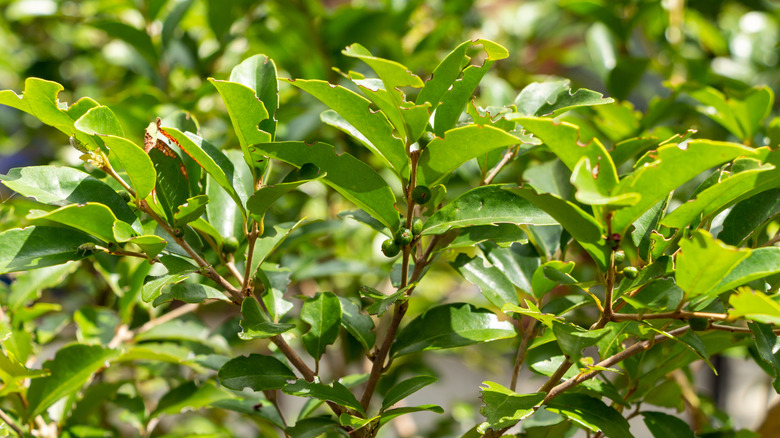
The first thing to test is whether the white stopper actually smells nasty to you. Not everyone can detect a scent from this plant, and some don't mind the smell it gives off. So, you may want to check this plant out in a garden center first to see if you're one of the lucky ones who aren't bothered by the smell. Just keep in mind that your guests might smell things differently! Another key tip is that the white stopper scent is reported to be stronger on hot, sunny days where the air isn't moving much. So, given that this plant can grow in partial shade, you may want to try planting it in a partly covered spot that stays a little cooler and ideally benefits from a regular breeze.
If you'd prefer to avoid white stopper altogether, however, there are some alternative plants you could look at instead. For example, bay laurel (Laurus nobilis) is a fragrant herb that grows well in similar hardiness zones to the white stopper — zones 8 to 10, to be exact. While it doesn't offer edible fruit like the white stopper, it can still enhance your diet because you can use its bay leaves to season everything from stews and meat roasts to seafood dishes and rice.
Alternatively, if you're really set on having something which produces edible fruit, why not opt for Natal plum (Carissa macrocarpa)? This romantic flowering shrub produces pleasant-smelling flowers, followed by tasty red fruits comparable to cranberries, and does well in hardiness zones 9 to 11.