

Wood Cladding Isn't The Only Way To Get A Rustic Exterior: Try These Durable Panels Instead
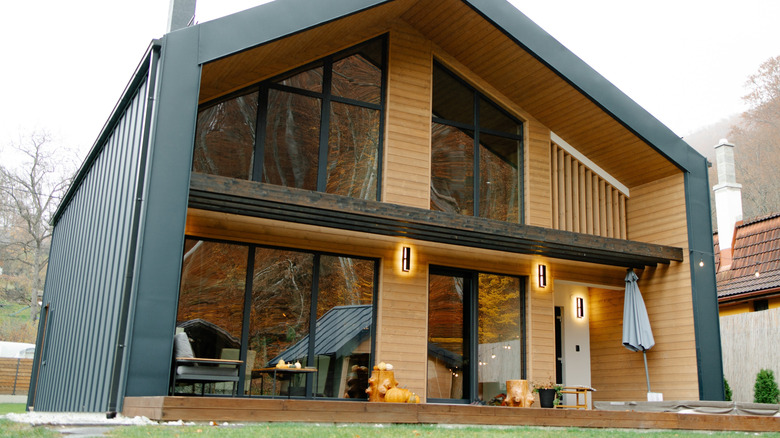
Out of all the rustic design trends you can't ignore, cladding sits near the top of the list. It's so rustic, you can almost hear the wind whistling through the mist-drenched forest nearby or the crash of the sea against the beach. Fine, we're being a little dramatic, but you get our point. Wood cladding might be the common go-to, but there's another low-maintenance, durable material to consider: corten steel panels.
Corrosion resistance tensile strength steel (a.k.a., corten) is created by incorporating copper, nickel, phosphorus, and chromium into carbon steel. Mixing in these elements ensures that rust sets on the outer face of the cladding panel, creating a stunning patina effect. It also blocks rust from eating away at the interior of the panel, giving corten steel cladding a huge advantage over its wood counterpart.
But durability isn't the only reason you should consider using exterior wall cladding made from corten steel. The color evolution is something to be seen to be believed. Upon installation, the panels have the traditional gray steel surface, but within a few weeks, the color begins to shift. Around six months, they take on a warm orange then deepen in tone around three or so years in. After about 20 years or so, the wood-like brown red shifts to tones ranging from purple-gray to deep brown. If you want a deeper rust color right away though, you don't have to wait; install pre-weathered panels instead to skip past the initial gray hues.
What to know before deciding to install corten steel cladding
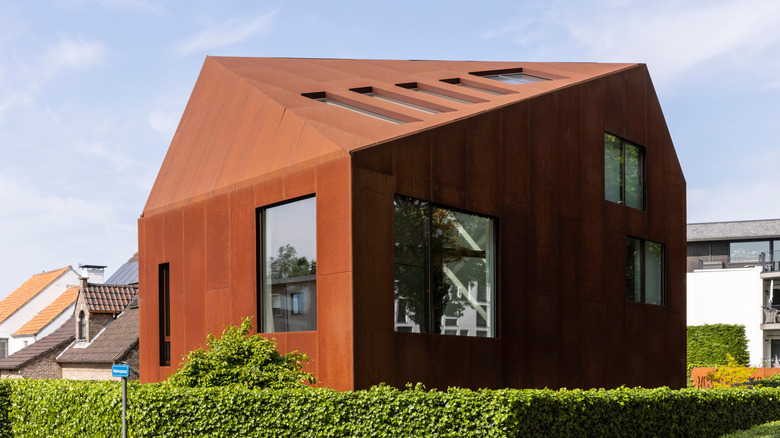
There are a few things to consider when deciding whether corten steel cladding is right for you. First up, location. To build up the layers of rust on top of the panels, it needs to experience both rainy days and sunshine. Too much rain without time to dry out will increase the chances of corrosion. Homes by the sea may not be a good choice for corten steel cladding either; the salt in the air may disrupt the patina's growth.
Because the panels are made of steel, the installation process is slightly more intricate. It's key that the walls the cladding will be installed on are strong enough to hold the heavy metal panels. It's also important to build in enough space and ventilation for rain and other water to drain away from the building instead of getting trapped behind the panels. Typically, it's worth hiring a specialist to install corten steel cladding, which, perhaps inevitably, increases the cost.
Speaking of cost, corten steel cladding isn't exactly known for being budget-friendly. It's generally priced higher than other metal cladding options, thanks to the copper, chromium, and the other good stuff that creates its famous patina. But there's good news: this trending exterior finish adds curb appeal that's less expensive than fiber cement cladding. And once corten cladding is installed, it's virtually maintenance free. Simply rinse off the cladding once a year, check under the panels for dirt, and make sure the hardware is intact. Treat it right, and your corten steel cladding could last for up to a century.