

The Pruning Trick Every Gardener Should Know To Get More Blooms From The Chinese Neillia
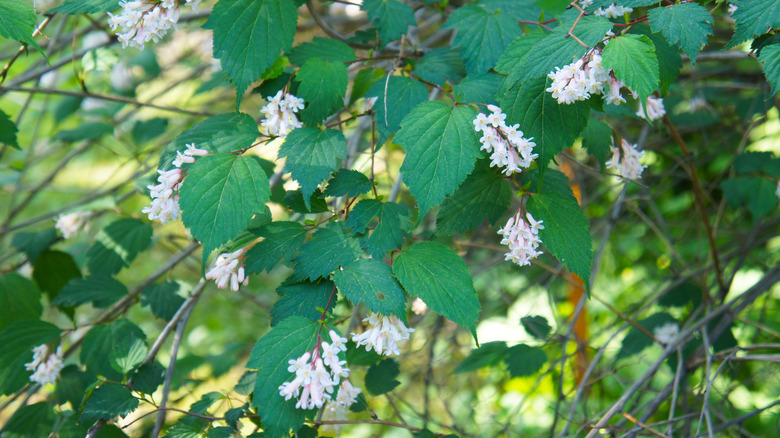
When writer Charles Dickens wrote, "Nature gives to every time and season some beauties of its own," he understood the intricacies of gardening and its timing. After all, not all plants follow the same timeline. They flower or fruit during different seasons and, as a result, each species has its own pruning window. If you're striving to get more blooms on your Chinese neillia (Neillia sinensis), pull out your pruning shears after the flowers fade in the summer.
Chinese neillia, a deciduous shrub hardy to USDA hardiness zones 5 to 7, is one of many spring-flowering shrubs that should be pruned immediately after blooming. Between May and July, clusters of tubular flowers in shades of white and pink appear on thin, arched branches. The shrub maxes out at a height and spread of 5 to 6 feet, growing best in partial shade to full sun. Throughout the year, the foliage of Chinese neillia adds color to the garden, with purplish-bronze leaves in the spring that shift to dark green in the summer, and then lighten to yellow come fall.
When pruning flowering plants, your strategy should always be guided by whether the shrub's flowers emerge on old wood or new wood. Chinese neillia blooms on old wood, meaning that next year's blooms will form on the current season's wood. That's why the shrubs need to be pruned promptly after flowering.
How to prune a Chinese neillia
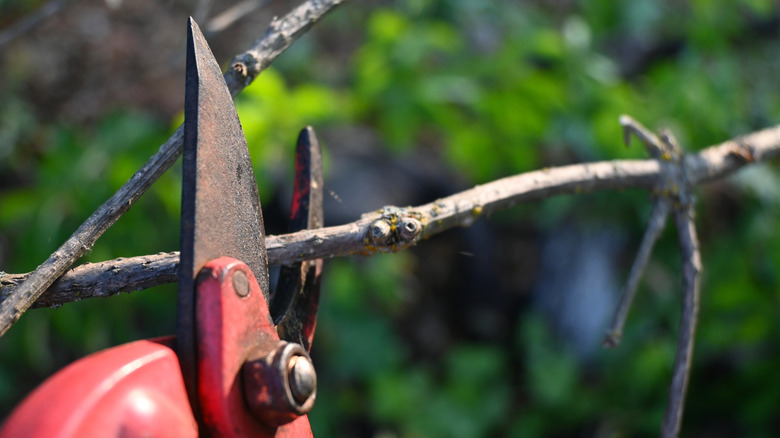
If you're a bit of a procrastinator, pruning a Chinese neillia is a task that can't be held off. Prune it within 30 to 45 days after it has stopped flowering. Putting this off for too long means the plant won't have enough time to grow wood that next year's buds will grow on. You also don't want to risk snipping off new buds.
To prune the Chinese neillia, identify the textured, peeling old wood, in comparison with the smoother bark of younger branches. Thin out old, weak stems, particularly in the interior of the shrub. As always, choose the best pruning tools for your task and remember the best practices of pruning. For example, follow the three D rule for proper pruning: Remove dead, diseased, and damaged branches. Also, cut off one of any two branches that are intersecting, and pluck suckers stemming from the roots of the plant to keep it tidy.
This somewhat tedious task of pruning not gives your Chinese neillia time to prepare for next year's blooms, but it also keeps the plant healthier overall. Thinning out the interior of the shrub allows more sunlight and airflow to reach all areas of the plant, not only those along the exterior. Greater circulation through the plant helps to keep mold, bacteria, and fungi at bay. Also, minimizing branches that rub against each other reduces openings for pests or other diseases to affect the plant.