

The Late-Blooming Perennial That Enjoys Shade And Moisture As Much As Hostas And Astilbes
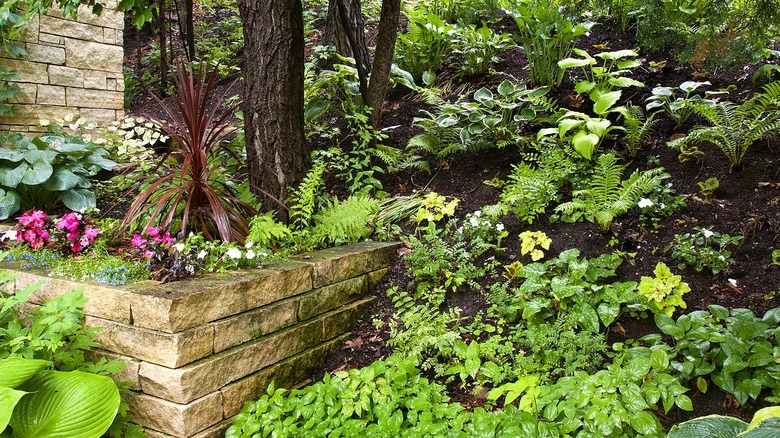
There's nothing quite like fall blooms to lift the spirits as summer comes to an end. Add to that a flower that will light up a shady, moist corner, and you're golden — or at least, pink, purple, or white! Those are the colors that the charming turtlehead flower (Chelone obliqua) comes in. The perennial graces gardens from late summer into autumn. And much like other shade-loving plants, like the astilbe and the hosta, it's a natural for damp garden spots.
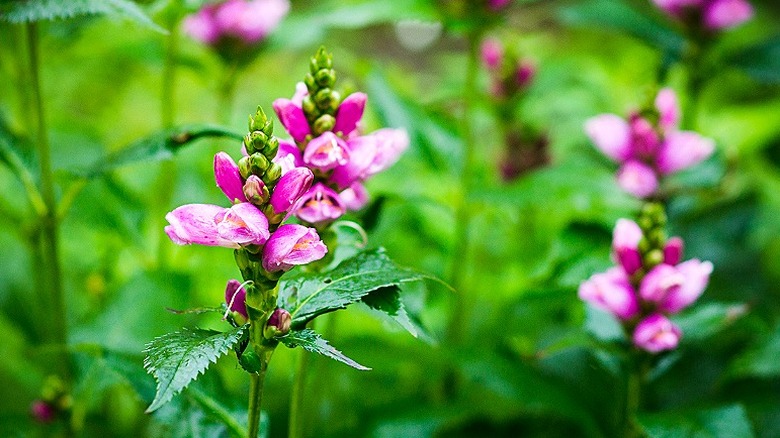
Turtleheads grow in leafy clumps that can reach 3 feet tall and 2 feet wide. From late July through October, the plant's flowers rise above the foliage in shapes that put many in mind of a turtlehead, while others compare them to snapdragons or shells. In any case, the flowers come in shades of rose, white, or lavender, depending on the hybrid or cultivar you choose, and grow into columns along long stems. Turtleheads, also known as shellflowers, are winter hardy in zones 5 through 9.
What's more, this colorful perennial also acts as a host plant for butterflies, so you can count the turtlehead among the end-of-summer plants that will keep your garden full of pollinators through fall. For added drama, you might consider cultivars like 'Black Ace,' with leaves so green they look black, or 'Hot Lips,' which pairs bright pink flowers with bronze leaves.
Shade-tolerant turtleheads crave moist beds
As said, turtleheads thrive in partial shade, much like hostas and astilbes do. If you do need to plant it in full sun, however, mulching around the bedding area will help the flowers retain needed moisture. Conversely, a turtlehead grown in full shade can also prosper. In that situation, staking or pinching the plant back can help to mitigate its tendency to become "leggy" when grown in deep shade.
Less open to negotiation with these charming flowers? Their soil conditions. Turtleheads cannot tolerate dry garden areas, except for brief periods. Plant them where the soil is naturally moist, or make sure to keep them well-watered and mulched. They can also grow in wet, boggy sites. The plants' soil should be rich in humus and fertile, so consider adding well-aged compost to improve both nutrient levels and textures if the growing area needs improvement.
Turtleheads can be added to your garden either by seeding them directly, or by planting cuttings and seedling plugs in late spring to early summer. Set them about 12 to 18 inches apart. They also respond well to division, so if you or a neighbor has a crowded clump, divide them into their new shady, moist area. If the plants do get overcrowded or exposed to drought, they may develop the plant disease known as mildew. Prevent powdery mildew from taking over the bed by avoiding those conditions. Pruning can help in such cases, and open up the foliage.