

The Drought-Tolerant Grass That Thrives In Sandy Soil

Although sandy soil is fairly easy to work with when you're planting trees and shrubs, it has one downside: it doesn't retain moisture very well. This can spell doom for turfgrass, especially during a drought, when your lush spring lawn can easily turn into a dust bowl in the summer heat. It's a frustrating soil type to have if you're trying to cultivate a water-wise yard or reduce your reliance on irrigation. It's even worse when there are water restrictions and you aren't able to water your grass at all — even if you wanted to. You could consider replacing your lawn with drought-tolerant ground covers you can easily grow in your garden. Alternatively, there's a grass species called creeping red fescue (Festuca rubra) that thrives in dry, sandy soil.
As long as you live somewhere suitable for cool-season grasses — that is, in USDA Hardiness Zones 3 through 6 — this perennial grass should grow well in your yard. Apart from being drought-tolerant once established, this species can also handle a bit of shade. Despite having red in its common name, the plant's slender blades are actually medium to dark green. It's the flower stems, or culms, that are ruby to purple in hue. Creeping red fescue spreads via underground rhizomes and has an abundant root system that's responsible for the grass' drought tolerance. Note that this species is considered invasive in some western states, so check with your local extension office before planting it in your yard.
Establishing a creeping red fescue lawn takes less work (and water) than you think
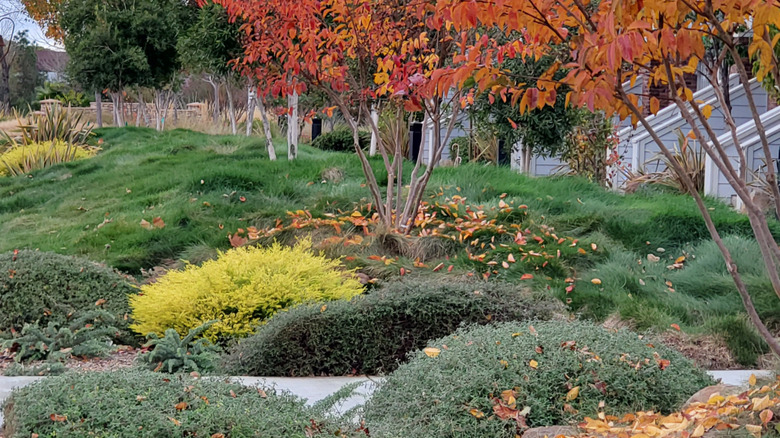
To create an ornamental lawn of creeping red fescue, mix some compost or organic matter into the soil, then seed the area at a rate of about 2 to 4 pounds of grass seed for every 1,000 square feet. This is the easiest way to improve sandy soil for gardening and help it retain moisture better. After seeding the grass, water the soil well to help the seeds germinate and ensure the seedlings establish strong root systems. Apply a starter fertilizer, and stay off the lawn area during the initial growth period. Creeping red fescue doesn't handle heavy foot traffic well, even when it's established. Aside from its invasive tendencies, this is the only reason you should think twice before planting red fescue grass seed.
Once your grass is growing well, you can start mowing it. Set your lawn mower blades to at least 2.5 inches high to preserve blade health and keep weeds to a minimum. It's also recommended that you leave the clippings on the ground to add nutrients to the soil. Fertilize your creeping red fescue lawn in spring and fall using no more than 2 pounds of nitrogen per 1,000 square feet per year. Avoid mowing your lawn during drought, which should also alleviate any problems with brown patches. Water this alternative turfgrass during extended periods of dry weather — an occasional deep soaking that penetrates the top 4 to 6 inches of soil works better than short, frequent bursts of irrigation. Allow the lawn to dry out between sessions to encourage deeper root growth and healthier grass.